With more than 10‑year industry experience, Shandong Headpowder delivers full‑service pneumatic‑conveying systems and blowers, undertaking nationwide turn‑key powder‑handling projects.
White clay, a vital raw material in industries such as ceramics, papermaking, and chemical processing, demands efficient and reliable transportation solutions to maintain smooth production workflows. Pneumatic conveying systems, particularly those engineered for white clay, provide a solution that merges efficiency, flexibility, and minimal product contamination. This article explores the operation process and working principle of white clay pneumatic conveyors, detailing how they enhance material handling in industrial settings.
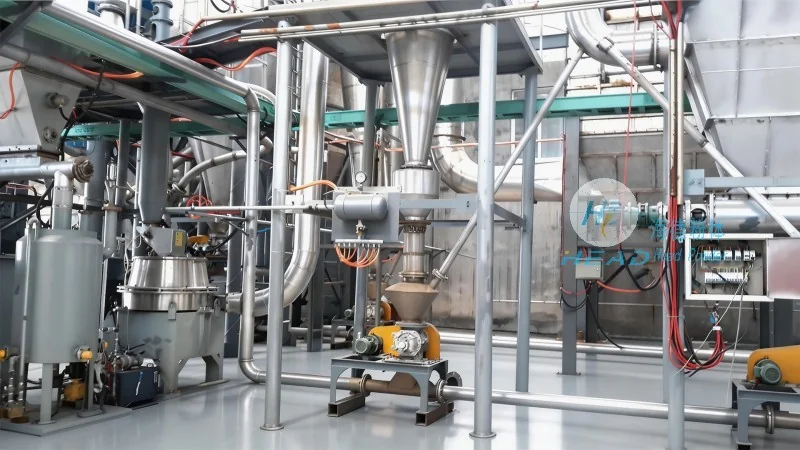
As a leading manufacturer in the realm of material handling equipment, Shandong HeadPowder Engineering Co., Ltd. specializes in designing and producing high-quality pneumatic conveying systems tailored to diverse industrial needs. With a commitment to innovation and customer satisfaction, the company has positioned itself as a trusted partner for businesses seeking reliable solutions for white clay and other bulk materials. HeadPowder's expertise lies in addressing the unique challenges of handling white clay, such as its fine particle size and potential for dust generation, by developing systems that effectively mitigate these issues.
A typical white clay pneumatic conveyor comprises several key components that collaborate to achieve efficient material transport. These components include the hopper (for material storage and feeding), the air compressor (to generate the necessary air pressure), the conveying line (often constructed from stainless steel or other corrosion-resistant materials to prevent material degradation), the control system (for regulating air flow and pressure), and the discharge unit (for delivering the material to the target location). Each component plays a critical role in ensuring the system operates smoothly and maintains the quality of the white clay being transported.
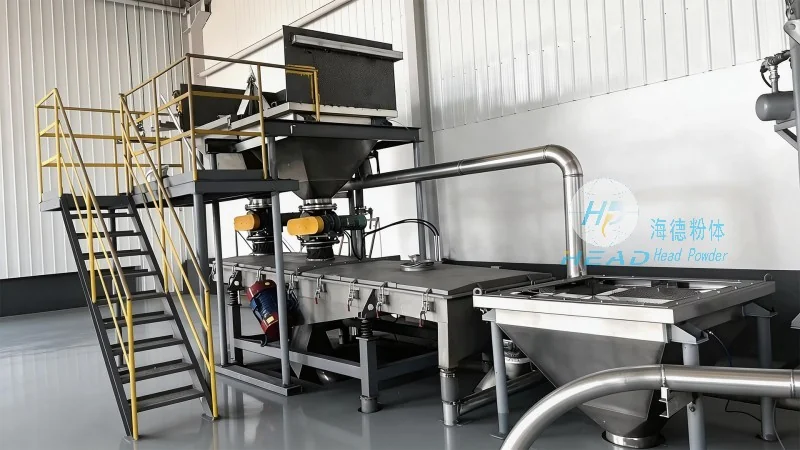
The operation of a white clay pneumatic conveyor involves a series of steps designed to move the material from the source to the destination efficiently. The process typically starts with loading white clay into the hopper. The material is then fed into the conveying line via a rotary valve or similar feeding mechanism. Simultaneously, the air compressor generates high-pressure air, which is introduced into the conveying line. The air and material mixture travels through the line under pressure, with the air providing the necessary force to move the clay particles. The conveying line may include bends, expansions, or other components to guide the material to the discharge point. At the end of the line, the air and material are separated, with the air being filtered and recycled, and the white clay being discharged into the receiving container. The control system monitors the entire process, adjusting air pressure and flow as needed to maintain optimal performance and prevent system overload.
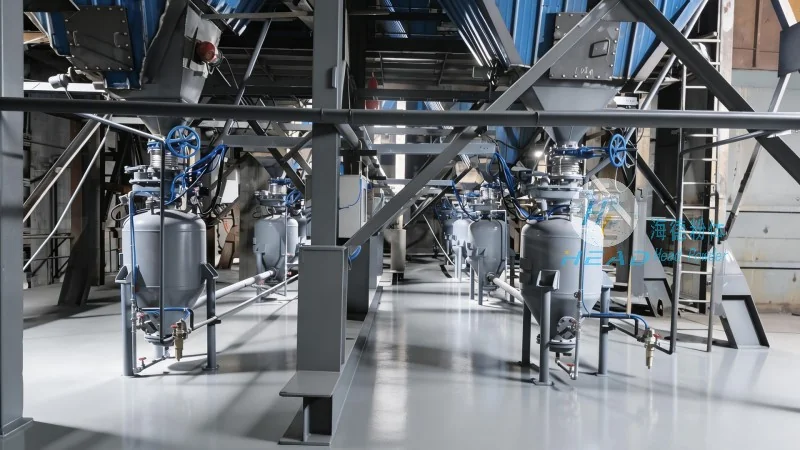
The working principle of a white clay pneumatic conveyor is based on the principle of pneumatic transport, where material is conveyed using a gas (usually air) as the medium. The system operates by creating a pressure differential between the inlet and outlet of the conveying line. The air compressor provides the necessary pressure, and the material is suspended and carried by the air stream. The velocity of the air and the particle size of the white clay determine the conveying capacity and efficiency of the system. For white clay, which is typically fine and lightweight, the system is designed to maintain a stable air flow to prevent particle settling or blockages. The use of corrosion-resistant materials and proper maintenance ensures that the system operates reliably over extended periods, minimizing downtime and maintenance costs.
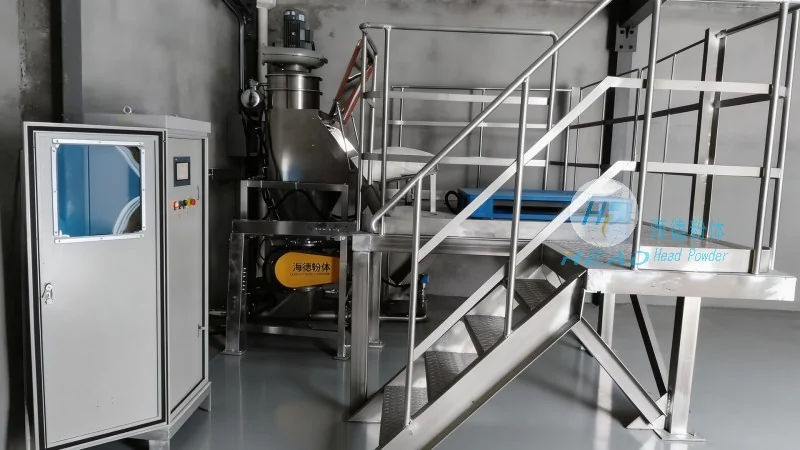
White clay pneumatic conveyors offer several advantages over traditional material handling methods, such as belt conveyors or bucket elevators. These advantages include reduced product contamination, as the material is enclosed within the conveying line, preventing exposure to dust and other contaminants. The system also provides a more hygienic and controlled environment, which is particularly important for industries where product quality and safety are critical, such as food and pharmaceuticals. Additionally, pneumatic conveyors are more flexible in terms of layout, as they can be installed in various configurations to suit the specific needs of a facility. The ability to transport materials over long distances and through multiple levels without the need for intermediate storage or transfer points further enhances their efficiency. Finally, the low maintenance requirements and energy efficiency of modern pneumatic conveying systems make them a cost-effective solution for long-term material handling needs.
White clay pneumatic conveyors are widely utilized across various industries due to their versatility and efficiency. In the ceramics industry, they are employed to transport raw white clay from storage to production lines, ensuring a consistent supply of material for manufacturing ceramic products. In the papermaking industry, they help transport white clay as a filler or coating material, improving the quality and properties of the paper. The chemical industry also leverages these systems to handle white clay as a raw material in the production of various chemicals. Additionally, in the food and pharmaceutical sectors, pneumatic conveyors are preferred for their ability to maintain a clean and sterile environment, preventing contamination of the white clay and ensuring product safety.

 Shandong Headpowder Engineering Co., Ltd.
 156-6277-7102(Manager Zhang)
  0531-83386006
  Zhangqiu District, Jinan City, Shandong Province, China
telephone
WeChatconsult
top