With more than 10‑year industry experience, Shandong Headpowder delivers full‑service pneumatic‑conveying systems and blowers, undertaking nationwide turn‑key powder‑handling projects.
Phosphates are essential chemical compounds widely used in various industries, including agriculture, food processing, and manufacturing. The efficient handling and transportation of these materials are critical for maintaining production efficiency and safety. Pneumatic conveying systems have emerged as a reliable solution for transporting phosphates, offering advantages such as dust-free operation, low maintenance, and the ability to handle a wide range of particle sizes. This article provides an overview of phosphates and introduces the fundamental working principles of pneumatic conveying systems, with a focus on the applications and benefits of such systems in industrial settings.

Phosphates are inorganic salts derived from phosphoric acid, and they play a vital role in many industrial processes. In agriculture, phosphates are key components of fertilizers, promoting plant growth and soil fertility. In the food industry, they are used as additives for flavor enhancement and texture improvement. Additionally, phosphates are utilized in the production of detergents, detergents, and other chemical products. The diverse applications of phosphates highlight the importance of reliable and efficient material handling systems to ensure consistent quality and productivity.
Pneumatic conveying systems utilize air or other gases to transport bulk materials, such as powders and granules, from one location to another. These systems are particularly suitable for handling phosphates due to their ability to transport materials in a closed system, minimizing dust exposure and environmental contamination. The core components of a pneumatic conveying system typically include a material feed hopper, a conveyor line (either positive or negative pressure), a separation or collection unit, and a control system. The system operates by creating a pressure differential, either by blowing air into the system (positive pressure) or by creating a vacuum (negative pressure), to move the material through the pipeline.
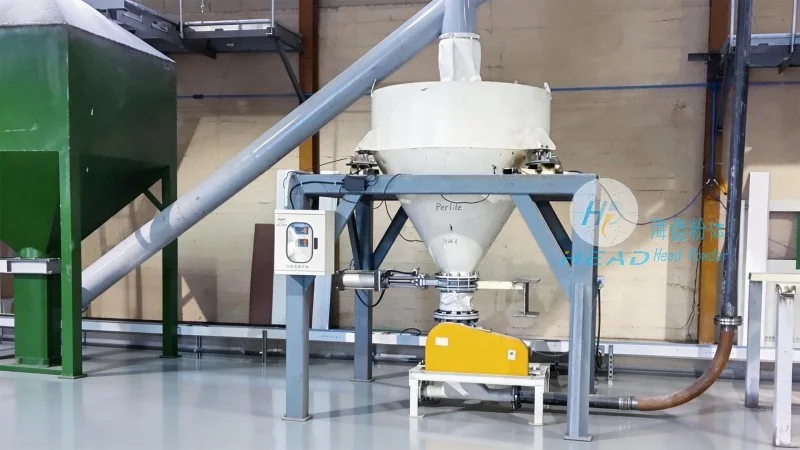
The working principle of a pneumatic conveying system for phosphates involves several key steps. First, the phosphate material is fed into the system from a hopper or storage silo. The material is then introduced into the conveyor line, where it is mixed with air or gas. The air flow is controlled to ensure the material is carried along the pipeline without clogging or segregation. The system may use a combination of positive and negative pressure zones to optimize material transport, especially for long-distance or complex layouts. The material is then separated from the air at the receiving end, typically through a cyclone or filter, and collected in a designated container. This process ensures that the phosphates are transported safely and efficiently, maintaining their quality and preventing contamination.
Implementing pneumatic conveying systems for phosphate handling offers several advantages over traditional methods like belt conveyors or bucket elevators. One of the primary benefits is the ability to operate in a dust-free environment, which enhances workplace safety and reduces the risk of respiratory issues for operators. Additionally, pneumatic systems are more flexible in terms of layout, allowing for complex routing and integration with other processing equipment. They also provide better control over material flow, reducing the likelihood of clogging or material degradation. Furthermore, these systems require less maintenance compared to mechanical conveyors, as they have fewer moving parts and are less susceptible to wear and tear from abrasive materials like phosphates.
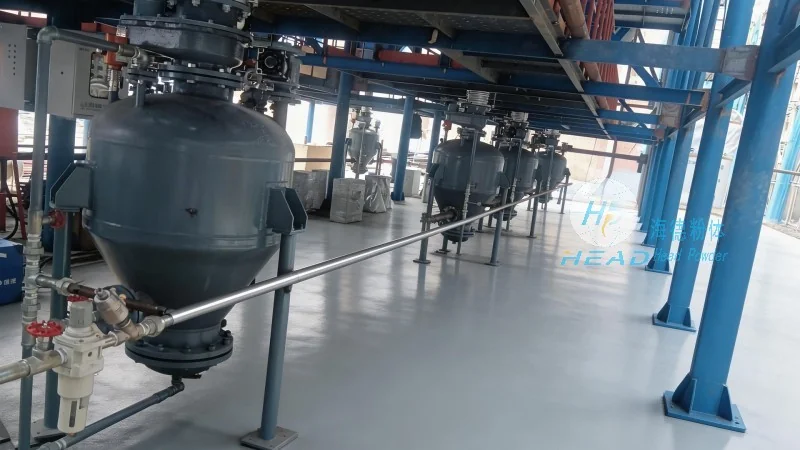
Pneumatic conveying systems are widely used in industrial applications involving phosphates. For example, in fertilizer production plants, these systems are used to transport phosphate powders from storage silos to mixing and packaging units. In food processing facilities, they help move phosphate additives from bulk storage to production lines, ensuring consistent quality and minimal exposure to contaminants. Additionally, in chemical manufacturing, pneumatic conveyors are employed to transport phosphates to reactors and processing equipment, facilitating smooth production workflows. The adaptability of pneumatic systems makes them suitable for various industries and applications, contributing to improved operational efficiency and product quality.
Phosphates are critical materials in many industrial sectors, and the efficient handling of these substances is essential for maintaining productivity and safety. Pneumatic conveying systems provide a reliable and effective solution for transporting phosphates, offering advantages such as dust-free operation, flexibility, and low maintenance. By understanding the working principles of these systems, industries can optimize their material handling processes and enhance overall operational performance. As a leading provider of engineering solutions, Shandong HeadPowder Engineering Co., Ltd. specializes in designing and implementing pneumatic conveying systems tailored to the specific needs of phosphate handling applications, ensuring that clients achieve optimal performance and reliability in their industrial operations.

 Shandong Headpowder Engineering Co., Ltd.
 156-6277-7102(Manager Zhang)
  0531-83386006
  Zhangqiu District, Jinan City, Shandong Province, China
telephone
WeChatconsult
top