With more than 10‑year industry experience, Shandong Headpowder delivers full‑service pneumatic‑conveying systems and blowers, undertaking nationwide turn‑key powder‑handling projects.
Pneumatic conveying, or air conveying, is a sophisticated method used to transport bulk materials such as powders, granules, and fine particles within the petrochemical industry. This technology relies on the movement of air or other gases through a pipeline to carry the material from one location to another. The fundamental principle involves creating a flow of air that entrains the material particles, allowing them to be transported along the pipeline. There are two primary system types: positive pressure and negative pressure. Positive pressure systems utilize a blower to generate air pressure that pushes the material through the pipeline, while negative pressure systems employ a vacuum to draw the material into the pipeline. The choice between these systems depends on factors like the material's physical properties, the distance of transport, and the required flow rate. For instance, positive pressure systems are often preferred for long-distance or high-volume transport due to their ability to maintain consistent pressure and flow.
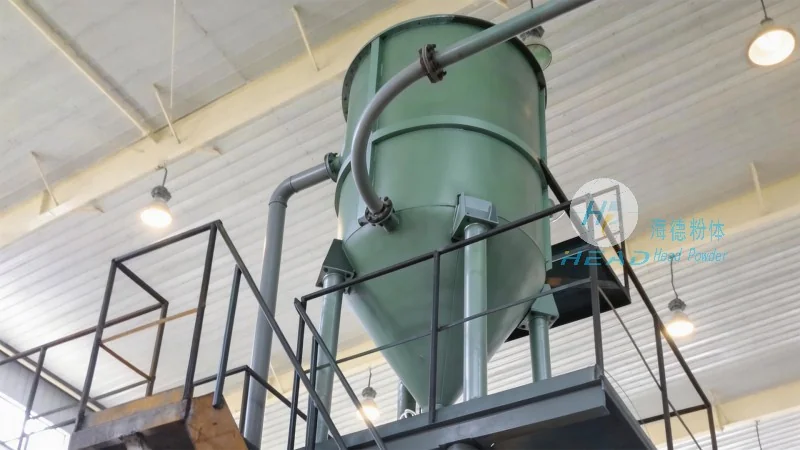
The application of pneumatic conveying in the petrochemical sector is defined by several distinctive characteristics that make it well-suited for industrial environments. First, it offers high efficiency and reliability, enabling continuous and automated material handling that supports smooth production operations. This is particularly critical in petrochemical plants where consistent supply of raw materials or intermediates is essential for maintaining production rates. Second, the technology provides enhanced safety features, as it eliminates the need for manual handling of potentially hazardous materials, reducing the risk of accidents, exposure to toxic substances, or contamination. Third, pneumatic conveying systems are flexible and can be easily integrated into existing production facilities, adapting to various process requirements without major structural changes. For example, in chemical processing plants, these systems are commonly used to transport powders from storage silos to reactors, mixing units, or packaging areas, ensuring seamless material flow and minimizing downtime.
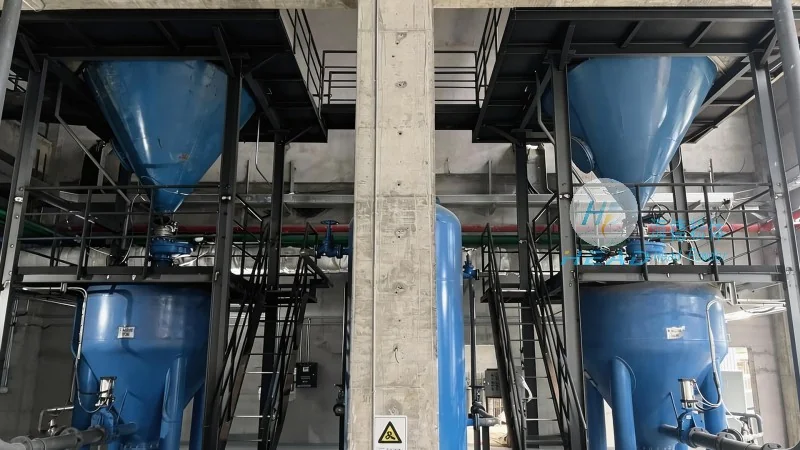
A typical pneumatic conveying system comprises several key components that work in concert to achieve efficient material transport. These components include a feeder, a conveying line, a separator, and a receiver. The feeder is responsible for introducing the material into the pipeline at a controlled rate, ensuring a consistent flow. The conveying line, often constructed from stainless steel or other corrosion-resistant materials, serves as the pathway for the material and air mixture. The separator, such as a cyclone or bag filter, is positioned at the end of the line to separate the material from the air, allowing the material to be collected in the receiver. The receiver then stores the material for further processing or use. The operational mechanism begins with the feeder releasing material into the pipeline, where it is entrained by the air flow generated by the blower or vacuum system. The air velocity must be sufficient to lift and transport the material particles, which depends on the particle size, density, and shape. Proper design of the system ensures that the air velocity is maintained at an optimal level to prevent material deposition or blockage in the pipeline, thereby maintaining system efficiency and preventing operational issues.
Implementing pneumatic conveying in petrochemical operations yields several advantages that contribute to improved operational performance. These benefits include enhanced process control, as the system can be precisely regulated to match production demands, ensuring that material flow aligns with production schedules. It also improves product quality by reducing material contamination and exposure to external factors, such as moisture or air, which can affect the material's properties. Additionally, pneumatic conveying systems can be designed to handle a wide range of materials, from fine powders to coarse granules, making them versatile for various petrochemical applications. However, there are challenges that must be addressed when deploying such systems. For instance, regular maintenance is required to ensure optimal performance, as components like the blower, separator, or feeder may wear out over time due to the abrasive or corrosive nature of the materials being conveyed. Furthermore, the system design must account for the specific characteristics of the materials, such as moisture content or particle size distribution, to avoid system inefficiencies or failures. In the petrochemical industry, where materials can be highly reactive or toxic, selecting appropriate materials for the conveying system is crucial to ensure safety and longevity.
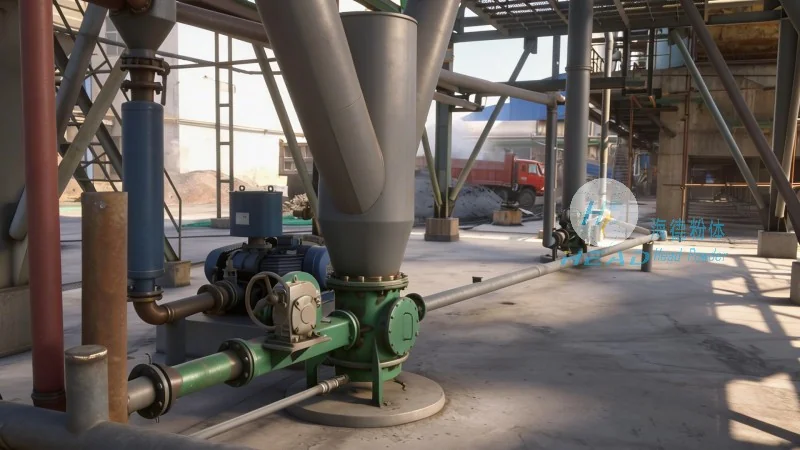
Shandong HeadPowder Engineering Co., Ltd., a reputable company specializing in material handling solutions, has successfully implemented pneumatic conveying systems in numerous petrochemical plants. One notable case involved a large-scale chemical plant that required the transport of catalyst powders from storage silos to reactors. The company designed a positive pressure pneumatic conveying system with a high-capacity blower and a high-efficiency cyclone separator. The system was integrated into the existing production line, and the material flow was optimized to meet the plant's production rate of 500 tons per day. The implementation resulted in a significant reduction in handling time and labor costs, as manual material transport was replaced by automated conveying. Moreover, the system maintained the quality and safety of the catalyst powders, ensuring consistent performance in the reactors. This project exemplifies the effectiveness of pneumatic conveying in enhancing operational efficiency and reliability in the petrochemical sector, while adhering to safety and quality standards.

 Shandong Headpowder Engineering Co., Ltd.
 156-6277-7102(Manager Zhang)
  0531-83386006
  Zhangqiu District, Jinan City, Shandong Province, China
telephone
WeChatconsult
top