With more than 10‑year industry experience, Shandong Headpowder delivers full‑service pneumatic‑conveying systems and blowers, undertaking nationwide turn‑key powder‑handling projects.
Resin powder pneumatic conveying equipment is a specialized system designed to transport resin powders through a pipeline using compressed air or other gas as the driving force. This technology is widely used in various industrial sectors, including chemical manufacturing, pharmaceuticals, and food processing, where the efficient and safe handling of fine powders is critical. The equipment plays a vital role in maintaining product quality, ensuring consistent flow rates, and minimizing material loss during the conveying process.
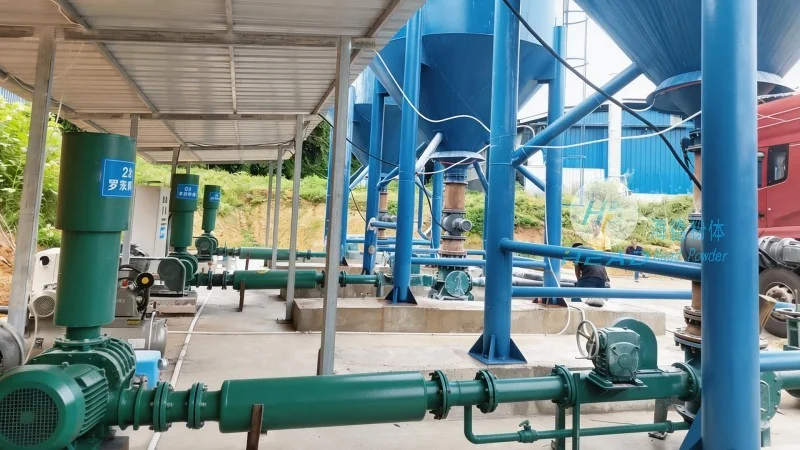
At its core, a resin powder pneumatic conveying system consists of several key components that work in tandem to achieve reliable material transport. These components typically include a hopper or feeder for material storage and feeding, a conveying line (usually made of stainless steel or other corrosion-resistant materials to handle resin powders), a compressor or blower to generate the necessary air pressure, and a control system to regulate the flow and pressure. The system may also incorporate additional features such as filters, cyclones, or dust collectors to ensure the purity of the conveyed material and protect the equipment from contamination.
The design of resin powder pneumatic conveying equipment is guided by several fundamental principles to ensure optimal performance and efficiency. One of the primary principles is the selection of appropriate air velocity and pressure to maintain a stable flow of resin powders. The air velocity must be high enough to keep the powder particles suspended in the air stream but low enough to prevent excessive wear on the conveying line and equipment components. This balance is crucial for preventing clogging, ensuring consistent flow rates, and minimizing the risk of material degradation.
Another critical design principle is the consideration of particle size and density of the resin powder. Different resin powders have varying physical properties, and the equipment must be tailored to handle these characteristics effectively. For instance, finer resin powders may require higher air velocities to maintain suspension, while coarser powders might need lower velocities to avoid excessive pressure drops and energy consumption. The design also takes into account the moisture content and hygroscopic nature of the resin powder, as moisture can affect the flowability and cause caking or agglomeration, which can impact the conveying efficiency.

The hopper or feeder is the initial component where resin powders are stored and introduced into the system. It is typically designed with a sloped bottom to facilitate smooth material discharge and may include a rotary valve or gate valve to control the flow rate. The hopper is often equipped with a venting system to allow air to escape as material is added, preventing pressure buildup and ensuring consistent feeding. The conveying line, usually made of stainless steel or other corrosion-resistant materials, is designed to withstand the abrasive nature of resin powders and the high-pressure air flow. The line may be straight or include bends and elbows, and its diameter is carefully selected to balance pressure drop and flow capacity.
The compressor or blower is responsible for generating the compressed air or gas that propels the resin powder through the conveying line. The choice of compressor type (e.g., rotary lobe, centrifugal, or positive displacement) depends on the specific application requirements, such as the required air volume, pressure, and energy efficiency. The control system, which may include sensors, valves, and a programmable logic controller (PLC), monitors and regulates the air pressure, flow rate, and material level in the hopper. This system ensures that the conveying process operates within safe and efficient parameters, preventing overpressure, underflow, or other operational issues.
Resin powder pneumatic conveying equipment offers several advantages over traditional mechanical conveying methods. One of the most significant benefits is the ability to transport materials over long distances without the need for multiple transfer points or intermediate storage. This reduces the risk of material contamination and loss, as the entire conveying process is contained within a sealed system. Additionally, the equipment allows for precise control over the flow rate and pressure, enabling consistent and uniform material distribution to downstream processes, such as mixing, blending, or packaging.
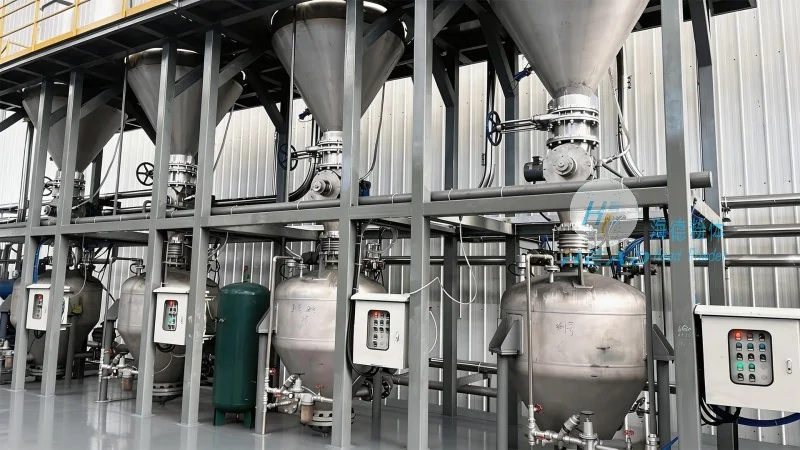
Another advantage is the minimal maintenance required compared to mechanical systems. Since there are no moving parts in direct contact with the resin powder (except for the hopper and feeder), the risk of wear and tear is significantly reduced. This results in lower maintenance costs and longer equipment lifespan. Furthermore, the sealed system design helps maintain the purity of the resin powder, preventing exposure to air, moisture, or contaminants, which is essential for applications where product quality is paramount, such as in pharmaceutical or food industries.
Resin powder pneumatic conveying equipment is widely used in various industries that handle fine powders. In the chemical industry, it is commonly employed to transport resin powders used in the production of plastics, coatings, and adhesives. The equipment ensures that these materials are conveyed safely and efficiently from storage to processing units, minimizing the risk of dust explosions and material loss. In the pharmaceutical industry, the sealed and sanitary design of the equipment is crucial for maintaining the purity and sterility of drug powders, ensuring compliance with regulatory standards. Similarly, in the food industry, the equipment is used to transport food-grade resin powders, such as those used in confectionery or bakery products, where hygiene and product quality are critical.
Resin powder pneumatic conveying equipment is a sophisticated and essential technology for the efficient and safe handling of resin powders in various industrial applications. Its design principles, which focus on maintaining stable flow, controlling air velocity and pressure, and considering the physical properties of the material, ensure optimal performance and reliability. The key components, including the hopper, conveying line, compressor, and control system, work together to achieve consistent and contaminant-free material transport. As industries continue to demand higher efficiency and product quality, the importance of well-designed pneumatic conveying systems will only grow. For companies operating in sectors that rely on resin powders, investing in reliable pneumatic conveying equipment is a strategic decision that enhances operational efficiency, reduces costs, and ensures compliance with industry standards.

 Shandong Headpowder Engineering Co., Ltd.
 156-6277-7102(Manager Zhang)
  0531-83386006
  Zhangqiu District, Jinan City, Shandong Province, China
telephone
WeChatconsult
top