

What is Rubber Powder Pneumatic Conveying Equipment? And What Are Its Design Principles?
Rubber powder, a critical raw material in industries such as tire manufacturing, rubber product processing, and recycling, requires efficient and reliable transportation methods to maintain smooth production workflows. Pneumatic conveying systems have become the preferred solution for handling rubber powder due to their ability to transport materials in a dust-free, hygienic manner, reducing contamination risks and enhancing operational efficiency. This article explores the fundamental aspects of rubber powder pneumatic conveying equipment, focusing on its design principles and technical considerations for effective operation.
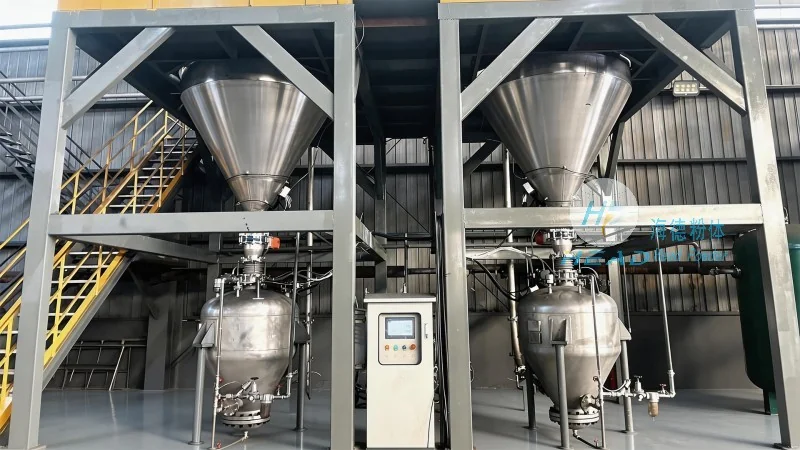
About HeadPowder: Your Trusted Partner in Pneumatic Conveying Solutions
Shandong HeadPowder Engineering Co., Ltd., commonly known as HeadPowder, is a leading manufacturer and supplier of advanced pneumatic conveying equipment tailored for the rubber industry. HeadPowder, headquartered in Shandong, China, has built a reputation for innovation and quality, serving as a trusted partner for businesses seeking reliable solutions for rubber powder handling. The company leverages extensive experience and research to develop customized systems that meet unique client demands, ensuring performance, durability, and energy efficiency.
Understanding Pneumatic Conveying: The Core Principle
Pneumatic conveying, or air conveying, transports bulk materials like rubber powder through pipelines using compressed air. This process relies on pressure differentials to propel material forward. Two primary system types exist: pressure (compressed air pushes material) and vacuum (vacuum pulls material). The choice depends on material properties, transport distance, and required flow rates. For rubber powder, system selection balances particle size, density, and moisture content to prevent blockages or degradation.
Design Principles of Rubber Powder Pneumatic Conveying Equipment
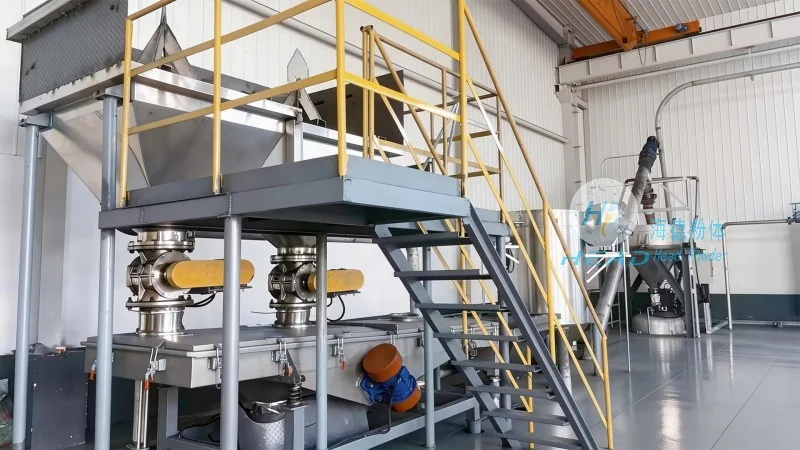
The design of rubber powder pneumatic conveying equipment involves careful consideration of material characteristics, system layout, air flow management, and component selection. Material properties—such as particle size, density, and moisture—dictate conveying velocity and pressure needs. Larger or denser particles may require higher air velocities to avoid system issues, while smaller particles need lower velocities to minimize wear. System layout, including pipeline bends, vertical/horizontal runs, and component placement (e.g., feeders, cyclones), minimizes pressure losses and ensures smooth flow. Air flow management, via compressor sizing, duct design, and control valves, maintains consistent performance by optimizing air velocity and pressure.
Key Components of Rubber Powder Pneumatic Conveying Systems
Rubber powder pneumatic conveying systems consist of several critical components working in tandem: 1. **Feeder**: Delivers rubber powder at controlled rates, with options like rotary valves, screw feeders, or vibrating feeders based on material properties and flow needs. 2. **Air Compressor**: Provides compressed air to drive the system, with choices ranging from rotary screw to centrifugal compressors depending on pressure/flow requirements. 3. **Ductwork**: Forms the pipeline, typically made of stainless steel or plastic, with diameter and length selected to minimize pressure losses. 4. **Cyclone Separator**: Separates rubber powder from the air stream using centrifugal force, directing heavier particles to a collection hopper while releasing air through the top. 5. **Filter**: Removes residual dust from the air, ensuring environmental compliance and air quality. 6. **Control System**: Monitors and regulates air flow, pressure, and material feed rates, using sensors, valves, and control panels for real-time adjustments.
Advantages of Rubber Powder Pneumatic Conveying Equipment
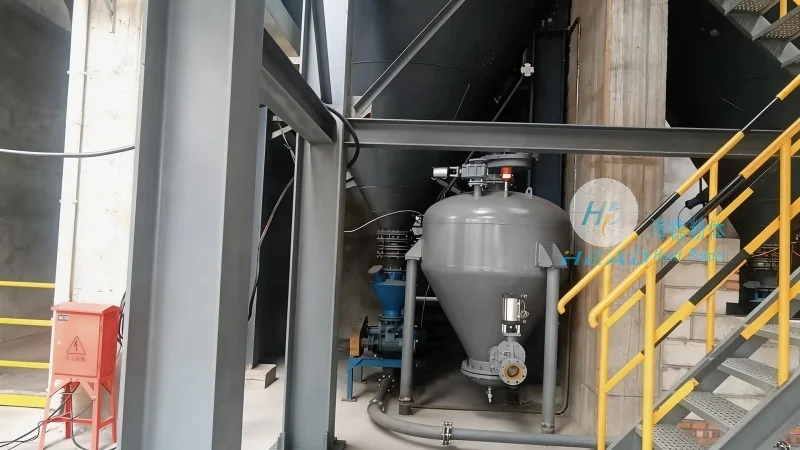
Implementing rubber powder pneumatic conveying equipment offers significant benefits over traditional methods: 1. **Dust-Free Operation**: Closed pipelines prevent dust release, improving air quality and reducing worker health risks. 2. **Hygienic Handling**: Ensures rubber powder is handled in a clean manner, critical for industries like food or pharmaceuticals. 3. **Reduced Labor Costs**: Automated systems minimize manual labor, lowering operational costs. 4. **Space Efficiency**: Compact pipeline layouts optimize space in facilities with limited floor area. 5. **Energy Efficiency**: Modern systems use variable speed drives and optimized air flow to reduce energy consumption and long-term operating costs.
Applications of Rubber Powder Pneumatic Conveying Equipment
Rubber powder pneumatic conveying equipment is widely used across industries relying on rubber powder as a raw material: 1. **Tire Manufacturing**: Transports rubber powder from storage to mixing/compounding stages, enhancing tire durability. 2. **Rubber Product Processing**: Delivers rubber powder to processing equipment for products like gloves and seals. 3. **Rubber Recycling**: Moves recycled rubber powder from sorting to reprocessing, streamlining material recovery. 4. **Chemical/Pharmaceutical Industries**: Provides clean transport for rubber powder used in adhesives and sealants.