With more than 10‑year industry experience, Shandong Headpowder delivers full‑service pneumatic‑conveying systems and blowers, undertaking nationwide turn‑key powder‑handling projects.
For industries dealing with calcium carbonate limestone powders, the selection of an efficient and reliable pneumatic conveying system is crucial. This equipment not only ensures the safe and stable transport of powders but also plays a key role in improving production efficiency and reducing operational costs. Understanding the structure and working principle of such equipment is essential for users to make informed decisions and optimize their production processes.
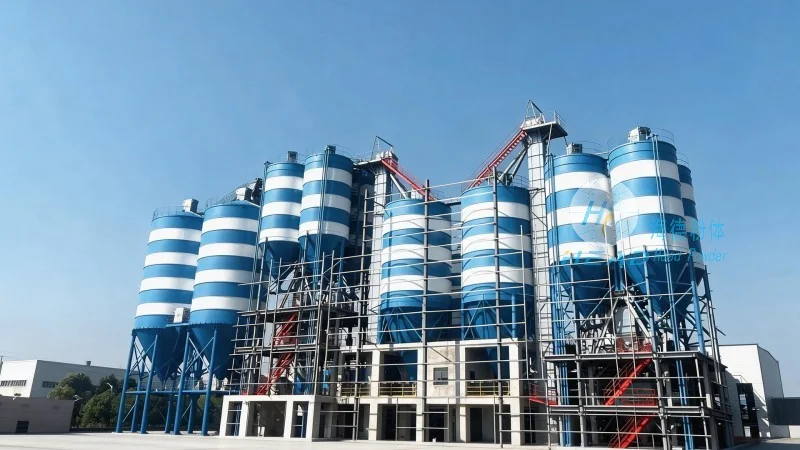
The pneumatic conveying equipment for calcium carbonate limestone powders is a specialized system designed to transport bulk powders through a pipeline using air or gas as the conveying medium. This technology has become increasingly popular in various industries, including chemical, food, and pharmaceutical sectors, due to its advantages over traditional mechanical conveying methods. The equipment typically consists of several key components that work in coordination to achieve efficient powder transport.
1. Feeder: The feeder is the first component in the system, responsible for feeding the limestone powder into the conveying pipeline. It ensures a consistent and controlled flow of material, preventing blockages and maintaining the stability of the conveying process. The design of the feeder can vary, with options like screw feeders, rotary valves, or vibratory feeders, depending on the specific requirements of the application.
2. Pneumatic Conveying Pipeline: The pipeline is the main channel through which the powder and air mixture travels. It is usually made of stainless steel or other corrosion-resistant materials to handle the abrasive nature of limestone powders. The pipeline system includes bends, elbows, and straight sections, which are designed to minimize pressure loss and ensure smooth flow. Proper sealing and maintenance of the pipeline are critical to prevent powder leakage and maintain system efficiency.
3. Blower or Air Compressor: The blower or air compressor provides the necessary air pressure to move the powder through the pipeline. It generates a high-velocity air stream that entrains the powder particles, forming a dense phase or dilute phase conveying system. The choice between a positive displacement blower and a centrifugal blower depends on the specific conveying requirements, such as the distance, material properties, and desired flow rate.
4. Separation and Collection System: At the end of the conveying pipeline, the powder and air mixture is separated. The separation system typically includes a cyclone separator or a bag filter, which removes the powder from the air stream. The collected powder is then discharged into a storage bin or processing unit, while the clean air is either recirculated or released to the atmosphere.
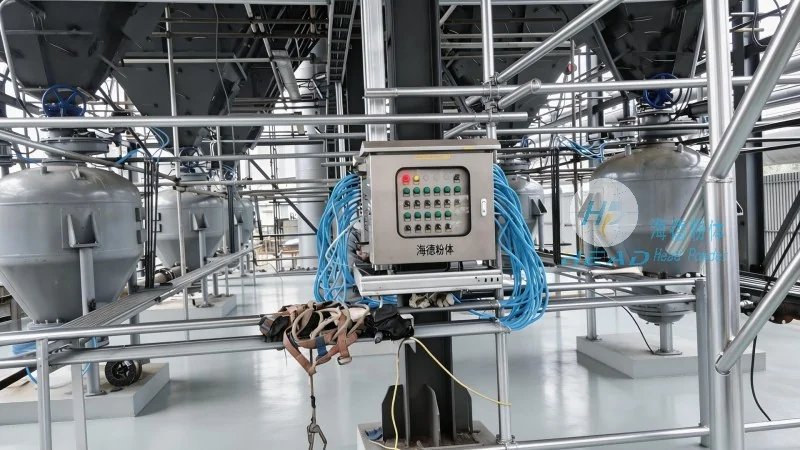
5. Control System: The control system monitors and regulates the operation of the entire pneumatic conveying equipment. It includes sensors for pressure, flow rate, and level, as well as control valves and actuators. The control system ensures that the equipment operates within safe and efficient parameters, automatically adjusting the air pressure and feed rate as needed to maintain stable conveying conditions.
The working principle of the calcium carbonate limestone powder pneumatic conveying equipment is based on the principle of fluidization and particle entrainment. When the blower generates a high-velocity air stream, it creates a pressure difference between the inlet and outlet of the pipeline. The powder particles are drawn into the air stream and carried along the pipeline due to the drag force exerted by the air. The mixture of powder and air travels through the pipeline, and at the receiving end, the separation system separates the powder from the air. The air is then cleaned and either recirculated or vented, while the powder is collected for further use.
In a dense phase conveying system, the air velocity is lower, and the powder particles are carried in a more concentrated form, reducing the risk of particle degradation and equipment wear. This system is suitable for transporting sensitive powders or over longer distances. In contrast, a dilute phase system uses higher air velocities, which is more suitable for shorter distances and less abrasive materials.
The calcium carbonate limestone powder pneumatic conveying equipment is widely used in various industries due to its versatility and efficiency. Some common applications include:
1. Chemical Industry: In the production of calcium carbonate-based products, such as coatings, plastics, and paper, the equipment is used to transport raw materials and finished products between processing units.
2. Food Industry: For the handling of limestone powders used as food additives or in the production of dairy products, the equipment ensures hygienic and efficient transport.
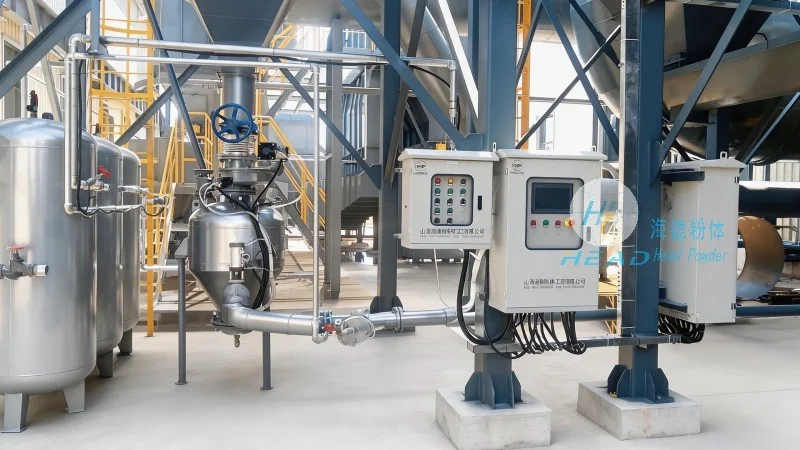
3. Pharmaceutical Industry: In the manufacturing of calcium carbonate-based pharmaceuticals, the equipment provides a clean and controlled conveying process, meeting stringent quality and safety standards.
The benefits of using this equipment include:
1. Reduced Labor Costs: The automated operation of the system reduces the need for manual handling of powders, minimizing labor costs and improving workplace safety.
2. Improved Product Quality: The controlled conveying process prevents powder degradation, caking, or contamination, ensuring consistent product quality.
3. Enhanced Efficiency: The equipment can transport powders over long distances with minimal pressure loss, improving overall production efficiency.

 Shandong Headpowder Engineering Co., Ltd.
 156-6277-7102(Manager Zhang)
  0531-83386006
  Zhangqiu District, Jinan City, Shandong Province, China
telephone
WeChatconsult
top