With more than 10‑year industry experience, Shandong Headpowder delivers full‑service pneumatic‑conveying systems and blowers, undertaking nationwide turn‑key powder‑handling projects.
Wool processing facilities often face the critical decision of choosing between positive pressure and negative pressure conveying systems. The choice significantly impacts operational efficiency, material handling costs, and overall production quality. Understanding the fundamental differences and key factors influencing each system is essential for making an informed decision. This article explores the nuances of positive and negative pressure conveying for wool, providing insights into how to distinguish between them and select the optimal solution for your specific needs.
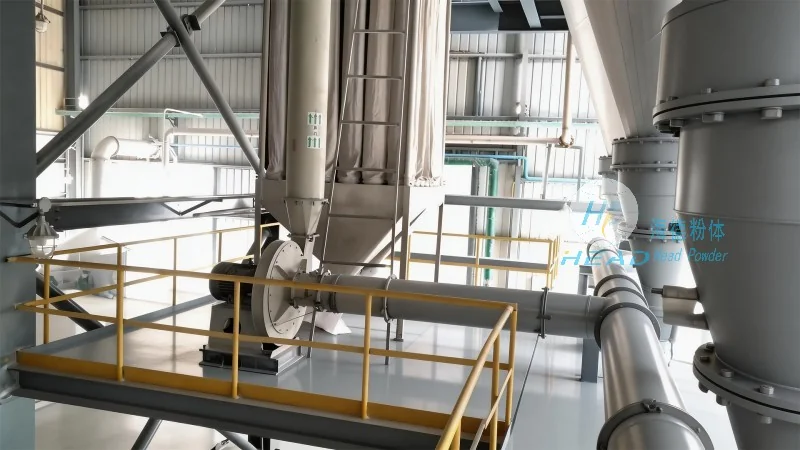
Wool conveying systems are designed to transport raw wool or processed fibers from one point to another within a processing facility. The two primary methods are positive pressure conveying and negative pressure conveying. Positive pressure conveying involves blowing air and wool particles through a pipeline using a positive pressure fan, while negative pressure conveying uses a vacuum system to draw wool into the pipeline. Each method has distinct characteristics, advantages, and applications, making it crucial to evaluate them based on the specific requirements of your wool processing operation.
Positive pressure conveying, also known as pressure blow or pneumatic conveying, operates by generating a positive pressure within the conveying line. This is typically achieved using a high-pressure fan that forces air and wool particles through the pipeline. The system works by creating a pressure differential, where the pressure inside the pipeline is higher than the ambient air pressure. This method is particularly effective for transporting wool over longer distances and handling larger volumes of material. It is commonly used in large-scale wool processing plants where the material needs to be moved from storage areas to processing units or between different stages of production.
Key advantages of positive pressure conveying for wool include high material throughput, consistent flow rates, and the ability to handle a wide range of particle sizes and moisture levels. The positive pressure system ensures that the wool is transported efficiently without clogging, as the air flow maintains the material in suspension. Additionally, positive pressure conveying can be more energy-efficient for long-distance applications compared to negative pressure systems, as it requires less power to maintain the pressure differential over extended distances.
Negative pressure conveying, or vacuum conveying, operates by creating a vacuum inside the conveying line. This is achieved using a vacuum pump or a fan that draws air and wool particles into the pipeline. The system works by reducing the pressure inside the pipeline below the ambient air pressure, causing the wool to be drawn into the line. Negative pressure conveying is often preferred for shorter distances and applications where noise control and minimal dust generation are critical. It is commonly used in smaller processing facilities or in areas where the wool needs to be transported from a point of generation to a collection point, such as from a carding machine to a bale.
Key advantages of negative pressure conveying for wool include lower noise levels, reduced dust emissions, and the ability to handle fine or delicate wool fibers without causing damage. The vacuum system is gentler on the material, making it suitable for applications where the wool's quality needs to be preserved. However, negative pressure conveying is generally less efficient for long-distance transport and may require more frequent maintenance due to the higher air volume needed to maintain the vacuum.
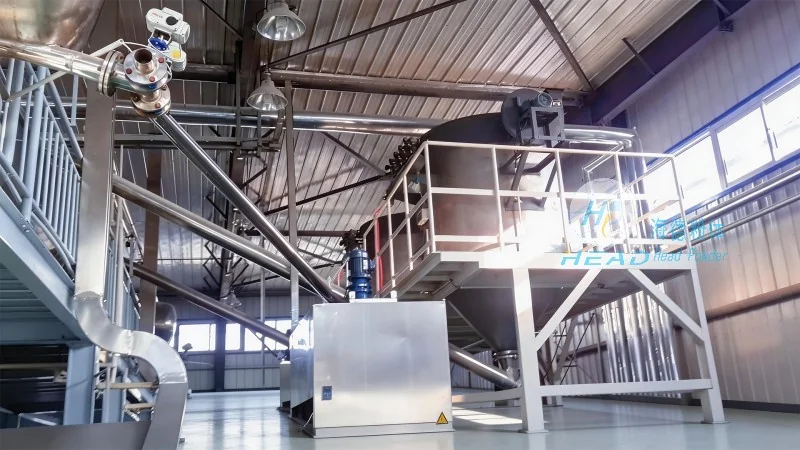
When comparing positive and negative pressure conveying for wool, several key differences emerge that influence the choice of system. The most significant difference is the direction of air flow and the pressure differential. Positive pressure systems use an outward flow of air, while negative pressure systems use an inward flow. This affects the system's energy consumption, as positive pressure requires more power to maintain pressure, whereas negative pressure consumes more energy to create and maintain the vacuum.
Another critical difference is the distance and volume of material that can be transported. Positive pressure conveying is typically used for long-distance transport (up to several hundred meters) and high-volume applications, whereas negative pressure conveying is suitable for short distances (typically up to 50 meters) and lower volumes. The particle size and moisture content of the wool also play a role, as positive pressure systems are better suited for larger, more abrasive particles, while negative pressure systems are ideal for fine, dry wool.
Maintenance and operational costs are also factors to consider. Positive pressure systems may require more robust components to withstand higher pressures and abrasive materials, leading to higher initial costs but potentially lower long-term maintenance. Negative pressure systems, while less expensive to install, may require more frequent filter changes and pump maintenance due to the higher air volume and dust load.
Selecting the appropriate conveying system for wool involves evaluating several factors to ensure optimal performance and cost-effectiveness. The primary factors include the distance between the source and destination of the wool, the volume of material to be transported, the characteristics of the wool (such as fiber length, moisture content, and dust levels), and the environmental requirements of the processing facility (e.g., noise levels, dust control).
For example, if a wool processing plant needs to transport wool from a storage silo to a carding machine located 200 meters away, a positive pressure conveying system would be more suitable due to its ability to handle long distances and high volumes. Conversely, if the wool is being transported from a small carding machine to a nearby collection bin within 30 meters, a negative pressure system might be more appropriate due to its lower noise and gentler handling of fine fibers.
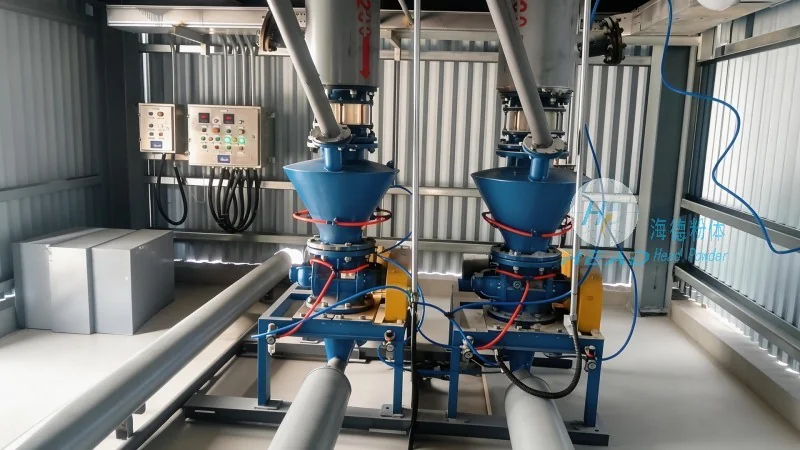
The operational environment also plays a role. In facilities where noise pollution is a concern, negative pressure conveying is preferred as it operates more quietly. In industrial settings where dust control is critical, both systems can be effective, but positive pressure systems may require additional filtration to prevent dust from escaping the pipeline.
Shandong HeadPowder Engineering Co., Ltd., a leading manufacturer of industrial conveying equipment based in China, specializes in providing tailored solutions for wool processing facilities. With years of experience in the industry, HeadPowder understands the unique challenges of wool handling and offers both positive and negative pressure conveying systems designed to meet specific operational needs. The company's team of engineers and technicians works closely with clients to assess their processing requirements and recommend the most efficient and cost-effective conveying solution.
HeadPowder's positive pressure conveying systems are engineered with high-efficiency fans, durable stainless steel or plastic pipelines, and advanced control systems to ensure reliable and consistent operation. These systems are capable of handling large volumes of wool over long distances while maintaining low energy consumption. The company's negative pressure conveying solutions feature quiet vacuum pumps, fine filtration systems, and gentle material handling mechanisms to protect delicate wool fibers and minimize dust emissions.
HeadPowder recognizes that no two wool processing facilities are identical, and thus, no single conveying system is universally optimal. The company offers customized solutions that integrate both positive and negative pressure components as needed. For instance, a facility might use a positive pressure system for long-distance transport from storage to processing units and a negative pressure system for short-distance transport within the processing area. This hybrid approach allows for maximum efficiency and flexibility.
HeadPowder's commitment to quality and customer satisfaction is evident in its product design and after-sales support. The company provides comprehensive technical support, including installation guidance, maintenance services, and troubleshooting assistance. By partnering with HeadPowder, wool processing facilities can enhance their operational efficiency, reduce material handling costs, and improve overall production quality.

 Shandong Headpowder Engineering Co., Ltd.
 156-6277-7102(Manager Zhang)
  0531-83386006
  Zhangqiu District, Jinan City, Shandong Province, China
telephone
WeChatconsult
top