With more than 10‑year industry experience, Shandong Headpowder delivers full‑service pneumatic‑conveying systems and blowers, undertaking nationwide turn‑key powder‑handling projects.
HeadPowder, a leading engineering company based in Shandong, China, specializes in the design and implementation of pneumatic conveying systems tailored for the transportation of rare earth powders. This article explores the different types of pneumatic conveying systems and their practical applications in the rare earth powder handling industry.
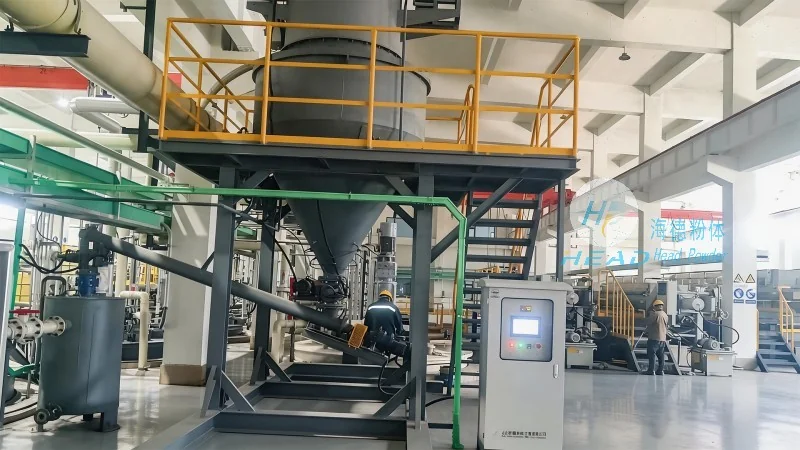
Pneumatic conveying systems are widely used in the rare earth industry due to their efficiency in handling fine powders like rare earth oxides and compounds. These systems utilize air or gas to transport materials from one location to another, offering advantages such as low maintenance, minimal product contamination, and the ability to handle materials in a closed system. The primary types of pneumatic conveying systems include positive pressure, negative pressure, and mixed pressure systems, each with distinct characteristics and applications.
1. **Positive Pressure Systems**: In positive pressure systems, air is supplied under pressure to the conveying line, pushing the material forward. This type is suitable for long-distance transport and can handle materials with higher moisture content or abrasive properties. The system operates by injecting air at the inlet, creating a positive pressure that moves the powder through the pipeline. Positive pressure systems are commonly used in rare earth processing plants where materials need to be transported over several hundred meters.
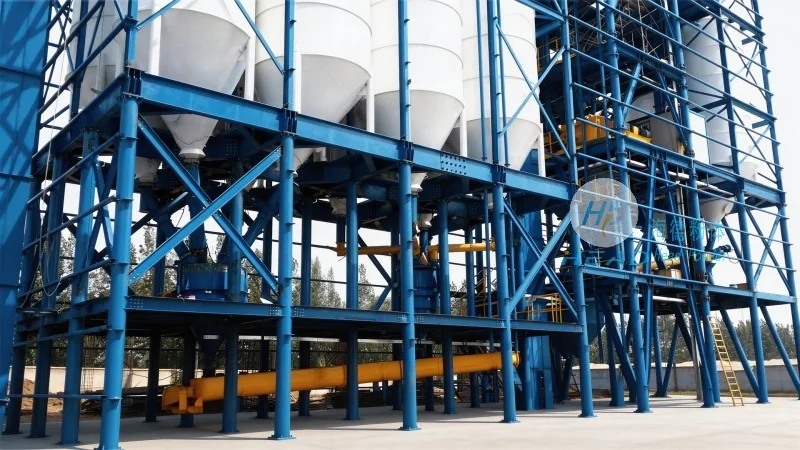
2. **Negative Pressure (Vacuum) Systems**: Negative pressure systems use a vacuum at the receiving end to draw material into the conveying line. This method is ideal for short-distance transport and applications where the material is sensitive to pressure changes or where the receiving point is at a lower elevation. The vacuum is created by a fan or blower at the discharge end, pulling the powder from the source to the destination. Negative pressure systems are often employed in rare earth powder handling for their ability to maintain a clean environment and minimize dust emissions.
3. **Mixed Pressure Systems**: Mixed pressure systems combine elements of both positive and negative pressure. They use a positive pressure at the inlet to start the flow and a negative pressure at the discharge to assist in material transfer. This hybrid approach is beneficial for applications requiring intermediate transport distances or when dealing with materials that have varying flow characteristics. Mixed pressure systems offer flexibility and can adapt to different operational conditions in rare earth powder processing.
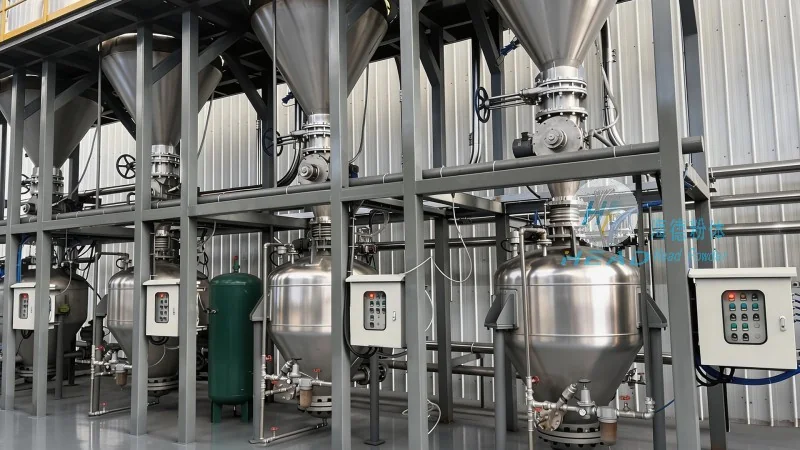
1. **Processing Plant Material Transfer**: In rare earth processing plants, pneumatic conveying systems are used to transport raw materials, intermediate products, and finished powders between different processing stages. For example, after crushing and grinding, rare earth ores are conveyed from the grinding mills to the flotation or magnetic separation units using positive pressure systems. This ensures a continuous and efficient flow of materials, reducing downtime and improving overall plant productivity.
2. **Storage and Handling**: Pneumatic conveying systems are also utilized for the transfer of rare earth powders from storage silos to processing equipment or packaging lines. Negative pressure systems are often preferred for this application as they minimize dust dispersion and maintain a clean working environment. The systems can handle large volumes of material, ensuring that storage and handling operations are carried out safely and efficiently.
3. **Quality Control and Sampling**: In quality control processes, pneumatic conveying systems are used to transport small samples of rare earth powders for analysis. This allows for rapid and accurate testing of material properties, such as particle size distribution and impurity levels. The closed system ensures that the samples remain uncontaminated and that the analysis results are reliable, which is crucial for maintaining product quality in the rare earth industry.

When designing pneumatic conveying systems for rare earth powders, several factors must be considered to ensure optimal performance and reliability. These include the particle size and density of the material, the distance to be conveyed, the required flow rate, and the environmental conditions. HeadPowder, with its expertise in rare earth processing, provides comprehensive engineering solutions that address these factors. The company's engineers conduct thorough material analysis and process simulations to select the most suitable system type and configuration. Additionally, the systems are designed with components that can withstand the abrasive nature of rare earth powders, such as high-quality stainless steel pipelines and wear-resistant valves.
HeadPowder Engineering Co., Ltd., located in Shandong, China, offers advanced pneumatic conveying systems tailored for the efficient and safe transport of rare earth powders. By understanding the different types of systems and their practical applications, industries can enhance their material handling processes, improve productivity, and ensure compliance with environmental standards. The company's commitment to quality and innovation makes it a trusted partner in the rare earth processing sector, providing reliable solutions for the transportation of these critical materials.

 Shandong Headpowder Engineering Co., Ltd.
 156-6277-7102(Manager Zhang)
  0531-83386006
  Zhangqiu District, Jinan City, Shandong Province, China
telephone
WeChatconsult
top