With more than 10‑year industry experience, Shandong Headpowder delivers full‑service pneumatic‑conveying systems and blowers, undertaking nationwide turn‑key powder‑handling projects.
In industrial production, the transport of synthetic fibers requires efficient and reliable conveying equipment to ensure smooth production processes. Pneumatic conveying systems, as an advanced material handling technology, have found wide applications in the synthetic fiber industry. This article introduces the different types of pneumatic conveying systems and explores their practical applications in synthetic fiber transport, helping relevant enterprises choose appropriate conveying solutions.
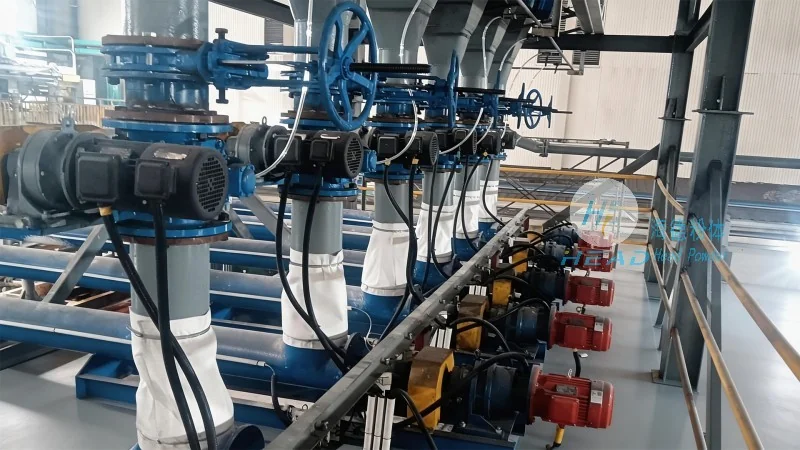
Gas conveying systems use compressed air or gas as a driving force to transport solid materials (such as synthetic fibers) from one location to another. Compared with traditional mechanical conveying equipment, pneumatic conveying systems offer numerous advantages. Firstly, they enable contactless transport, avoiding friction and wear between materials and equipment, which is particularly suitable for synthetic fibers with high quality requirements. Secondly, the system has a simple structure, small footprint, and relatively easy installation and maintenance. Additionally, the system can flexibly change the transport path to adapt to complex factory layouts. These advantages make pneumatic conveying systems an ideal choice for synthetic fiber transport.
Based on the conveying method and working pressure, pneumatic conveying systems are mainly divided into suction, pressure, and mixed types. Each type has its specific application scenarios and characteristics, allowing enterprises to select the appropriate system according to their production needs.
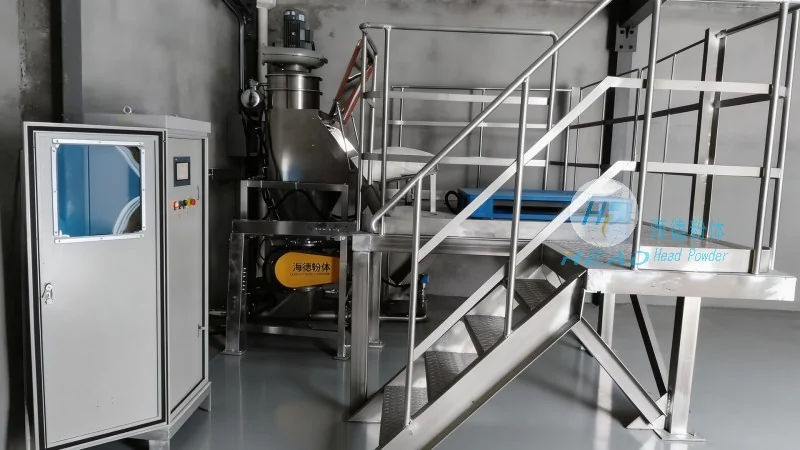
The suction system uses a vacuum pump to generate negative pressure, drawing materials from the hopper into the transport pipeline. This system is typically used for short-distance, low-pressure transport tasks. For synthetic fibers, the suction system is particularly suitable for drawing fibers from hoppers or bins and transporting them to processing equipment. Its advantages include dust-free transport, environmental friendliness, and the ability to perform multi-point unloading. However, the suction system has a limited transport distance, usually not exceeding 50 meters, and may require multiple vacuum pumps or increased pipe diameter for long-distance transport.
The pressure system uses a compressor to generate positive pressure, pressing materials from the hopper into the transport pipeline. Compared with the suction system, the pressure system can transport over longer distances, typically hundreds of meters or more. In the production line of polyester fibers, the pressure system is often used to transport polyester chips from the raw material warehouse to the melt spinning equipment. Through the pressure system, stable transport can be ensured, avoiding blockages and clogging and thus improving production efficiency. The advantages of the pressure system include long transport distance and high transport capacity, capable of handling large material volumes. However, the pressure system requires high pressure, with higher requirements for pipes and valves, and may generate some dust, requiring corresponding dust removal measures.
The mixed system combines the characteristics of both suction and pressure systems, working together with a vacuum pump and compressor to achieve material transport. This system is suitable for long-distance transport with flexible unloading points. For synthetic fiber transport, the mixed system can simultaneously draw fibers from multiple hoppers and transport them to different processing equipment. The advantages of the mixed system include long transport distance and multiple unloading points, meeting complex production needs. However, the equipment complexity of the mixed system is higher, and the investment and maintenance costs are also relatively high.
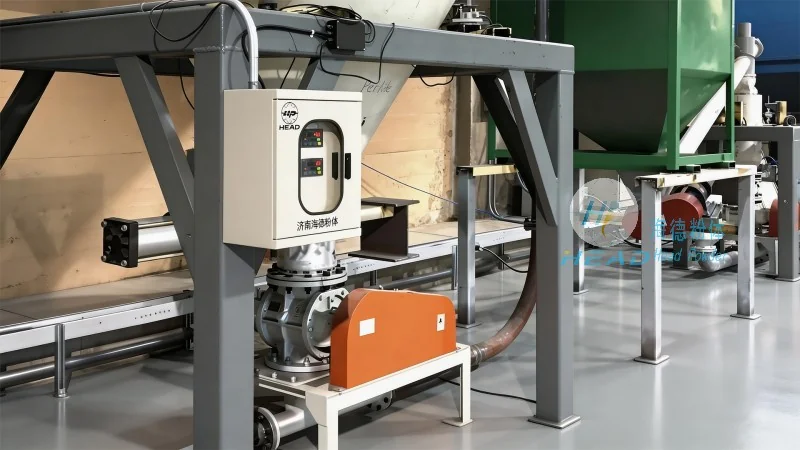
In practical production, pneumatic conveying systems are widely applied in synthetic fiber transport. For example, in the production process of polyester fibers, gas conveying systems are used to transport polyester chips from the hopper to the melt spinning equipment. Through the pressure system, stable transport can be ensured, avoiding blockages and clogging and thus improving production efficiency. Similarly, in nylon fiber production, the suction system is used to draw dried fibers from the fiber dryer and transport them to the packaging equipment. This system not only maintains the dry state of the fibers but also reduces dust generation, protecting the health of operators.
Enterprises need to consider multiple factors when selecting a pneumatic conveying system to ensure efficient operation. Firstly, the properties of the material are a key factor, including fiber particle size, density, moisture content, and whether they are fragile. Synthetic fibers are typically fine and prone to scattering, so appropriate pipeline diameter and air velocity must be selected to avoid fiber blockage or loss. Secondly, transport distance and volume are also important considerations. Long-distance, high-volume transport requires pressure systems, while short-distance, low-volume transport can use suction systems. Additionally, the system's energy consumption and maintenance costs are factors that enterprises need to weigh. By comprehensively considering these factors, enterprises can select the most suitable pneumatic conveying system to achieve stable and efficient synthetic fiber transport.

 Shandong Headpowder Engineering Co., Ltd.
 156-6277-7102(Manager Zhang)
  0531-83386006
  Zhangqiu District, Jinan City, Shandong Province, China
telephone
WeChatconsult
top