With more than 10‑year industry experience, Shandong Headpowder delivers full‑service pneumatic‑conveying systems and blowers, undertaking nationwide turn‑key powder‑handling projects.
Welcome to Shandong HeadPowder Engineering Co., Ltd., a leading provider in the field of material handling solutions. Our company specializes in advanced pneumatic conveying systems, particularly for handling materials like barium carbonate. This article aims to explore the concept of barium carbonate pneumatic conveying, its classification, and practical applications in various industries.
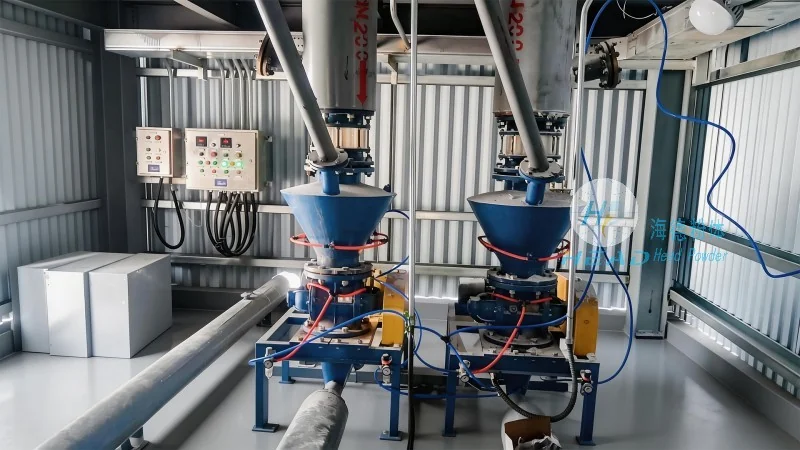
Pneumatic conveying is a method of transporting bulk materials through a pipeline using air or other gases as the conveying medium. In the case of barium carbonate, which is a white crystalline powder commonly used in industries such as ceramics, glass, and pharmaceuticals, pneumatic conveying offers an efficient and reliable way to move this material from one location to another. The process involves creating a flow of air within a sealed pipeline, which then carries the barium carbonate particles along with it. This technique is particularly advantageous for materials that are sensitive to moisture or require a dust-free environment during transport.
Pneumatic conveying systems can be broadly classified into two main types: dilute-phase and dense-phase. Dilute-phase systems operate at higher air velocities, typically transporting materials in a suspended state, while dense-phase systems use lower air velocities to move material in a more compact form. For barium carbonate, the choice between these systems depends on factors like the material's properties, the distance to be conveyed, and the required flow rate. Dilute-phase systems are often used for short-distance transport with high throughput, whereas dense-phase systems are preferred for longer distances or when handling more sensitive materials.
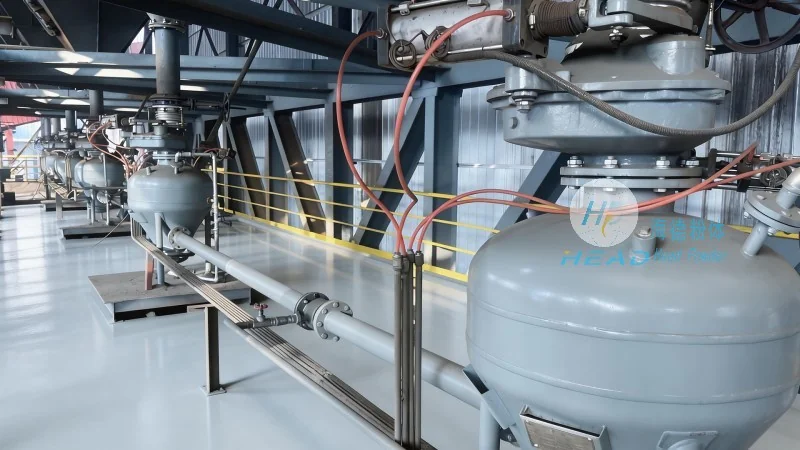
The application of pneumatic conveying in the handling of barium carbonate is widespread across multiple sectors. In the ceramics industry, barium carbonate is used as a flux to lower the melting point of glass and to improve the whiteness and opacity of ceramic products. Pneumatic conveying ensures that this material is delivered to the production line in a controlled manner, maintaining consistent quality and preventing contamination. Similarly, in the glass manufacturing sector, barium carbonate is incorporated into glass formulations to enhance optical properties and to reduce the coefficient of thermal expansion. The ability of pneumatic conveying systems to handle fine powders without agglomeration makes them ideal for these applications.
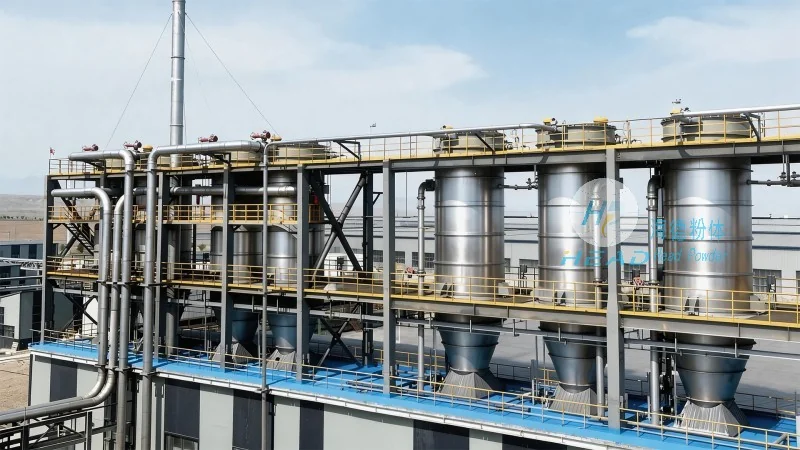
Implementing pneumatic conveying for barium carbonate offers several key advantages. Firstly, it provides a dust-free and clean transfer process, which is crucial for maintaining product purity and adhering to environmental regulations. Unlike mechanical conveying methods, which can generate dust and cause contamination, pneumatic systems keep the material enclosed within the pipeline, minimizing exposure to the environment. Secondly, pneumatic conveying allows for precise control over the flow rate and pressure, ensuring consistent material delivery to downstream processes. This precision is vital in industries where the quality of the final product is directly linked to the uniformity of the raw material. Thirdly, the system can be easily integrated with other processing equipment, such as mixers and reactors, creating a seamless production line. This integration enhances operational efficiency and reduces downtime.
Shandong HeadPowder Engineering Co., Ltd. specializes in designing and manufacturing customized pneumatic conveying solutions tailored to the specific needs of barium carbonate handling. By leveraging advanced technology and a deep understanding of material properties, our systems ensure efficient, reliable, and safe transport of barium carbonate. Whether for short or long-distance transport, our solutions are engineered to meet the highest standards of performance and durability. Contact us to learn more about how our pneumatic conveying systems can optimize your barium carbonate handling processes.

 Shandong Headpowder Engineering Co., Ltd.
 156-6277-7102(Manager Zhang)
  0531-83386006
  Zhangqiu District, Jinan City, Shandong Province, China
telephone
WeChatconsult
top