With more than 10‑year industry experience, Shandong Headpowder delivers full‑service pneumatic‑conveying systems and blowers, undertaking nationwide turn‑key powder‑handling projects.
HeadPowder, a prominent engineering firm headquartered in Shandong, China, focuses on delivering innovative material handling solutions, with a particular emphasis on pneumatic conveying systems designed for dye transportation. This piece examines the different types of pneumatic conveying systems and their real-world applications within the dye industry, outlining the technical benefits and operational efficiencies they provide.
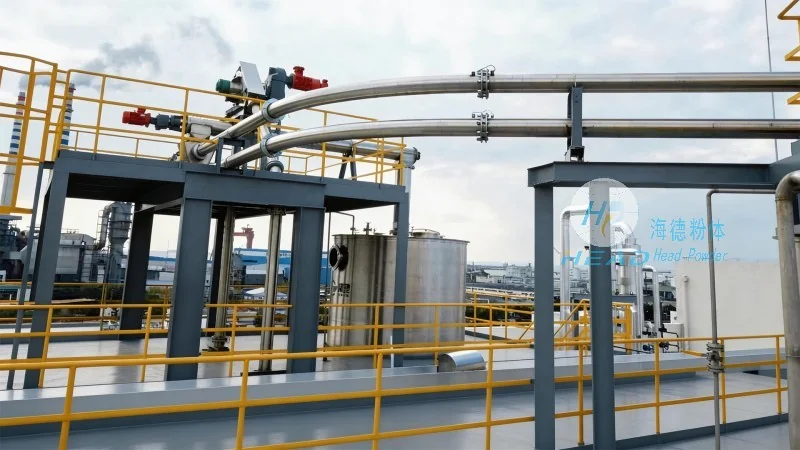
Pneumatic conveying systems are critical in the dye industry for safely and efficiently transporting powdered dyes from storage to processing units. These systems utilize air or gas to move materials through a pipeline, eliminating the need for mechanical components like belts or buckets that might introduce contamination or damage to the delicate dye particles. The choice of system type depends on factors such as the dye's physical properties, the required conveying distance, and the desired level of control over the material flow.
There are primarily two main categories of pneumatic conveying systems: positive pressure and negative pressure systems. Each type has distinct characteristics and is suited to different operational requirements in dye handling.
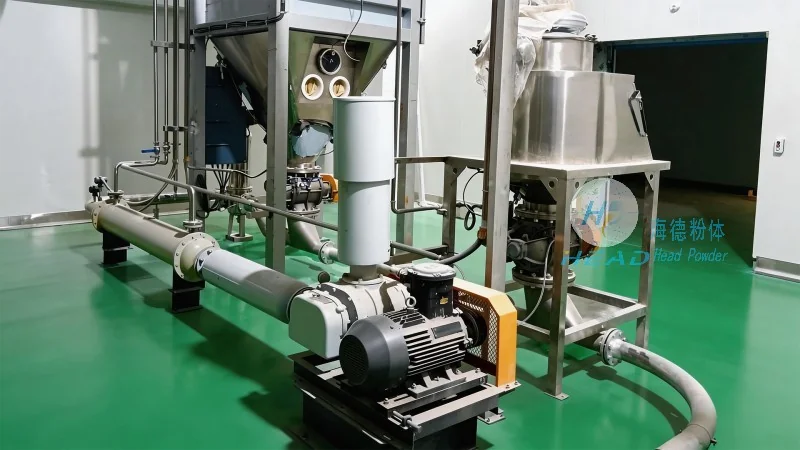
Positive pressure systems operate by blowing air or gas into the conveying line, creating a pressure higher than the ambient air pressure. This method is ideal for applications where the dye needs to be transported over long distances or through complex piping networks. The high pressure ensures consistent material flow and minimizes the risk of clogging, which is particularly important when handling fine or cohesive dye powders. Positive pressure systems are often equipped with filters and cyclones to separate the air from the material, ensuring that the dye remains clean and free from contaminants. HeadPowder offers customized positive pressure systems that can be tailored to handle various dye types, including high-purity pigments and specialty dyes, with features such as variable speed drives and advanced control systems to optimize performance.
Negative pressure systems, also known as vacuum systems, work by creating a vacuum in the conveying line, drawing the material into the system using the pressure differential. This approach is commonly used for short-distance conveying or when the dye needs to be transported from a single source to a processing unit. Negative pressure systems are generally more energy-efficient for short runs and can handle materials that are more sensitive to pressure changes. However, they may be less effective for long-distance or high-volume applications due to potential issues with material buildup and system maintenance. HeadPowder provides negative pressure systems that incorporate high-efficiency filters and robust vacuum pumps, ensuring reliable operation even with fine or abrasive dye powders.
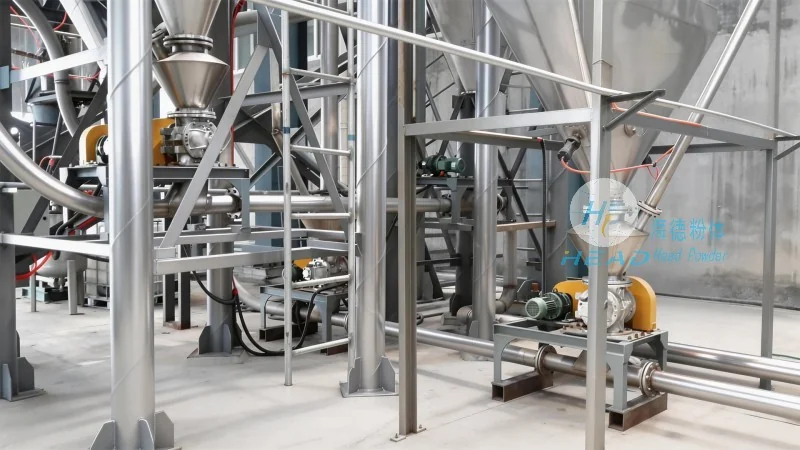
Hybrid systems combine elements of both positive and negative pressure systems, offering flexibility and adaptability for diverse dye handling scenarios. These systems can switch between positive and negative pressure modes depending on the operational needs, allowing for efficient transport of materials over varying distances. Hybrid systems are particularly useful in facilities where different dye batches require different conveying conditions, such as when moving bulk dyes from storage silos to mixing tanks versus transferring smaller quantities to color matching stations. HeadPowder's hybrid solutions are designed with modular components that can be easily reconfigured to meet changing production demands, enhancing operational flexibility and reducing downtime.
The practical applications of pneumatic conveying systems in dye manufacturing cover a wide range of processes, from raw material handling to final product packaging. One key application is the transfer of powdered dyes from bulk storage silos to mixing and blending equipment. This step is critical for ensuring consistent color intensity and quality in the final dye products. Pneumatic conveying systems allow for precise control over the material flow rate, which is essential for maintaining the desired color strength and preventing overmixing or undermixing. HeadPowder's systems are equipped with flow meters and level sensors that provide real-time monitoring of the dye transfer process, enabling operators to adjust the system parameters as needed to maintain product consistency.

 Shandong Headpowder Engineering Co., Ltd.
 156-6277-7102(Manager Zhang)
  0531-83386006
  Zhangqiu District, Jinan City, Shandong Province, China
telephone
WeChatconsult
top