With more than 10‑year industry experience, Shandong Headpowder delivers full‑service pneumatic‑conveying systems and blowers, undertaking nationwide turn‑key powder‑handling projects.
HeadPowder, a leading engineering firm based in Shandong, China, specializes in the design and implementation of advanced pneumatic conveying systems tailored for calcined sand materials. These systems represent a critical component in modern material handling, offering efficient, reliable, and cost-effective solutions for transporting bulk materials over short to medium distances. The following overview details the operational process and underlying principles of such systems, highlighting their technical sophistication and practical applications.
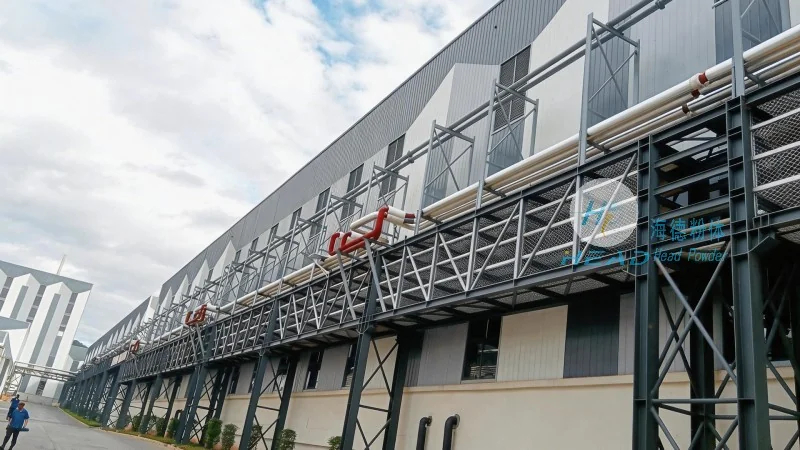
The pneumatic conveying system for calcined sand materials typically comprises several key components that work in concert to ensure smooth material transport. These include a material hopper or feeder, a conveying pipeline, a blower or air compressor, a control system, and a discharge outlet. The material hopper is responsible for storing and feeding the calcined sand into the system, while the conveying pipeline transports the material using pressurized air. The blower generates the necessary airflow, and the control system manages the entire process, ensuring optimal performance and safety. The discharge outlet then delivers the material to its final destination. Each component is carefully selected and integrated to meet the specific requirements of the calcined sand material, such as its density, particle size, and flow characteristics.
The operation of the pneumatic conveying system for calcined sand materials follows a systematic sequence of steps, each designed to maximize efficiency and minimize downtime. The process begins with the loading of calcined sand into the material hopper. Once the hopper is filled, the feeder mechanism initiates, gradually releasing the material into the conveying pipeline. Simultaneously, the blower starts, generating a high-pressure airflow that propels the sand particles through the pipeline. As the sand travels, it experiences a combination of drag and lift forces, which are carefully controlled to prevent particle degradation or blockages. The control system monitors the pressure, flow rate, and material level in real-time, adjusting the blower speed or feeder rate as needed to maintain a stable and continuous flow. Upon reaching the discharge point, the material is released into a receiving container or processing unit. The system then returns to its standby mode, ready for the next cycle. This cyclical operation ensures consistent and reliable material transport, making it ideal for continuous production processes.
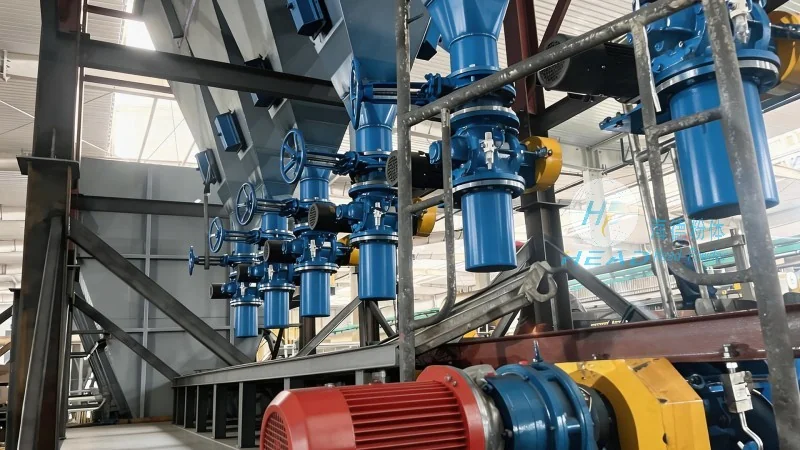
The working principle of the pneumatic conveying system relies on the fundamental physics of fluid dynamics and particle motion. When the blower injects pressurized air into the conveying pipeline, it creates a pressure differential between the inlet and outlet. This pressure difference generates a flow of air that carries the calcined sand particles along the pipeline. The key to efficient conveying lies in achieving the right air-to-material ratio, which balances the forces acting on the particles. If the air velocity is too low, the particles may settle and cause blockages; if it is too high, excessive energy consumption and potential particle damage may occur. The system’s design incorporates computational fluid dynamics (CFD) simulations and empirical data to optimize this ratio, ensuring that the air velocity remains within the optimal range for the specific calcined sand characteristics. Additionally, the system may employ different conveying modes, such as dilute-phase or dense-phase, depending on the material properties and application requirements. Dilute-phase conveying uses higher air velocities to transport particles in a dispersed state, while dense-phase conveying uses lower velocities to move particles in a more concentrated stream, often with the aid of a venturi or other pressure-reducing devices.
The pneumatic conveying system for calcined sand materials offers numerous advantages over traditional mechanical conveying methods, making it a preferred choice in various industrial settings. One of the primary benefits is its ability to handle materials with high moisture content or abrasive properties, which can damage traditional conveyor belts or belts. The enclosed pipeline design also prevents dust emissions, enhancing workplace safety and compliance with environmental regulations. Additionally, the system’s flexibility allows for easy integration with existing production lines, enabling seamless material transfer between processes. The compact design of the system reduces floor space requirements, making it suitable for both new installations and retrofit applications. HeadPowder’s systems have been successfully implemented in industries such as foundries, cement production, and chemical processing, where calcined sand is a critical raw material. For example, in a foundry, the system efficiently transports calcined sand from storage to the molding area, ensuring consistent material quality and reducing manual handling risks. In cement production, the system aids in the transport of calcined sand to the mixing and grinding stages, improving production throughput and energy efficiency.
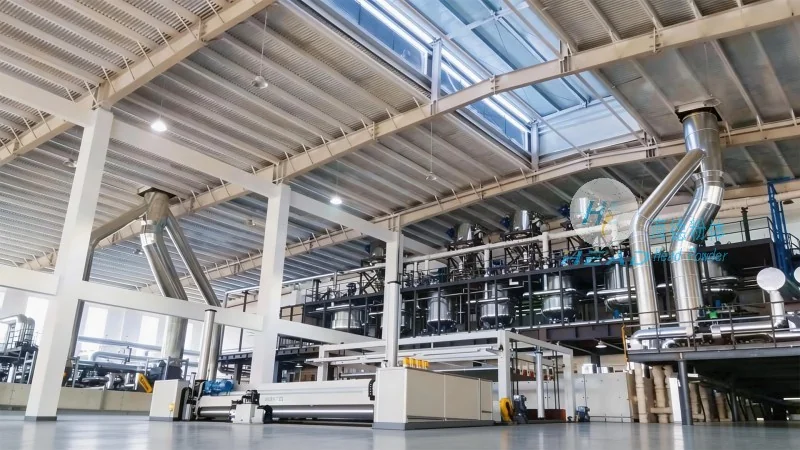
HeadPowder provides a range of technical specifications and customization options to meet the diverse needs of its clients. The system’s blower capacity can be tailored to handle different material volumes, with options ranging from low to high airflow rates. The conveying pipeline diameter and length are adjustable to accommodate various distances and material flow rates. The control system can be equipped with advanced features, such as automatic start/stop functions, pressure monitoring, and alarm systems, enhancing operational safety and efficiency. Additionally, the system can be integrated with other equipment, such as dust collectors or material classifiers, to further optimize the material handling process. HeadPowder’s engineering team works closely with clients to assess their specific requirements, conduct feasibility studies, and develop customized solutions that align with their production goals and budget constraints. This collaborative approach ensures that the final system meets all operational and regulatory standards, delivering long-term value and reliability.
As industries continue to seek more efficient and sustainable material handling solutions, pneumatic conveying systems for calcined sand materials remain a vital technology. HeadPowder’s expertise in designing and implementing these systems ensures that clients receive high-quality, reliable solutions that enhance productivity and reduce operational costs. By understanding the operational process and working principles of such systems, businesses can make informed decisions about integrating advanced material handling technologies into their operations. With its commitment to innovation and customer satisfaction, HeadPowder is positioned as a leader in the field, providing cutting-edge solutions that meet the evolving needs of modern industry. Whether for new installations or system upgrades, HeadPowder’s pneumatic conveying systems offer a proven path to improved material handling efficiency and operational excellence.

 Shandong Headpowder Engineering Co., Ltd.
 156-6277-7102(Manager Zhang)
  0531-83386006
  Zhangqiu District, Jinan City, Shandong Province, China
telephone
WeChatconsult
top