With more than 10‑year industry experience, Shandong Headpowder delivers full‑service pneumatic‑conveying systems and blowers, undertaking nationwide turn‑key powder‑handling projects.
Ammonium nitrate is a widely used industrial chemical, and its safe and efficient transportation is crucial for various industrial processes. The pneumatic conveying system designed for ammonium nitrate material offers a reliable solution that integrates advanced technology with practical application. This article will explore the fundamental principles of such systems and highlight the key characteristics of their working environments.
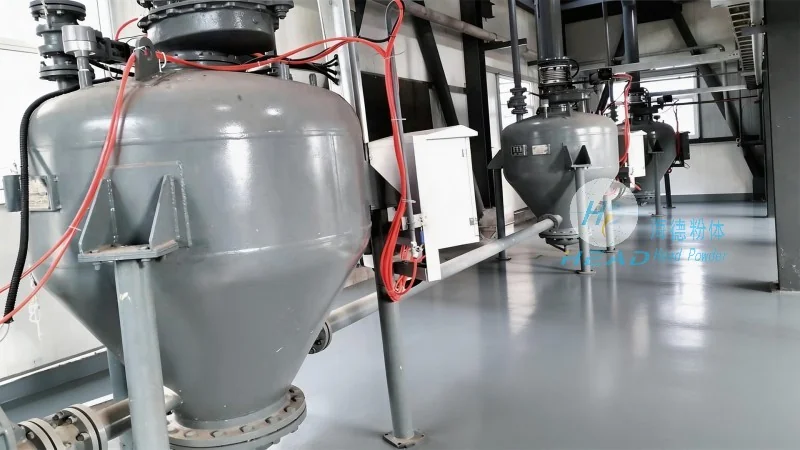
Ammonium nitrate, often abbreviated as AN, is a white crystalline solid commonly used as a fertilizer and in the production of explosives. Due to its granular nature and potential for dust explosion risks, conventional bulk material handling methods may pose safety challenges. Pneumatic conveying systems provide an enclosed, controlled environment that minimizes dust exposure and ensures safe transport of ammonium nitrate from storage to processing units. The system typically consists of a hopper, a rotary valve, a conveying pipe, a dust collector, and a receiver, all working in tandem to move the material through the system using air pressure.
The fundamental principle of pneumatic conveying is the use of air to transport solid particles. In the case of ammonium nitrate, the system generates a flow of air within the conveying pipe, which lifts and propels the material particles forward. There are two main types of pneumatic conveying: dilute-phase and dense-phase. Dilute-phase systems operate at higher air velocities, typically moving material in a suspended state, while dense-phase systems use lower air velocities to move material in a plug flow, reducing the risk of material degradation and ensuring more precise control over the conveying rate. For ammonium nitrate, which is sensitive to temperature and pressure changes, the dense-phase conveying method is often preferred as it offers better control over the material's condition during transport.
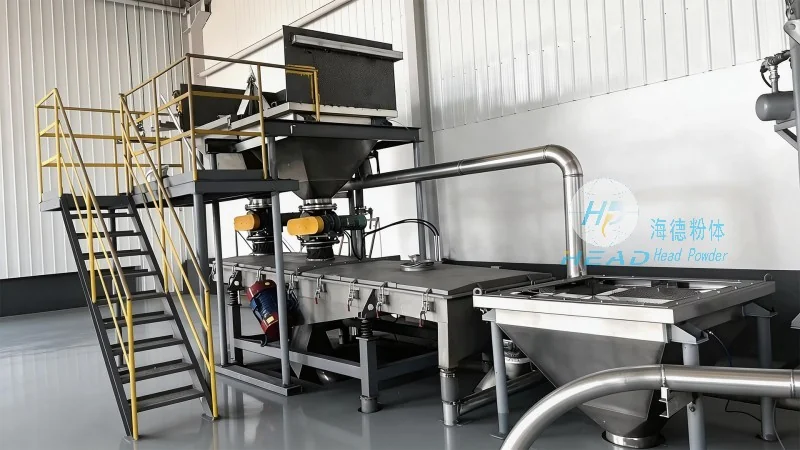
The working environment for ammonium nitrate pneumatic conveying systems is characterized by several key factors that influence system design and operation. First, the material's hygroscopic nature means that the system must be designed to prevent moisture absorption, which can affect the material's quality and handling properties. Second, the risk of dust explosion necessitates the use of explosion-proof components and proper ventilation systems. Third, the system must be capable of handling varying particle sizes and flow rates, as ammonium nitrate can be produced in different granule sizes depending on the application. Additionally, the system's integration with other industrial equipment, such as storage silos and processing lines, requires seamless coordination to ensure continuous operation without interruptions.
The application of ammonium nitrate pneumatic conveying systems spans multiple industries, including chemical manufacturing, fertilizer production, and food processing. In fertilizer plants, these systems are used to transport ammonium nitrate from storage silos to blending and packaging units, ensuring a consistent and efficient supply of raw material. In chemical manufacturing, the systems are employed to move ammonium nitrate to reactors and other processing equipment, where it is used as an ingredient in the production of other chemicals. The operational benefits of these systems include reduced labor costs, minimized material loss due to dust, improved safety through enclosed handling, and enhanced process control. Furthermore, the ability to transport material over long distances without the need for multiple transfer points makes the system highly versatile for various industrial settings.
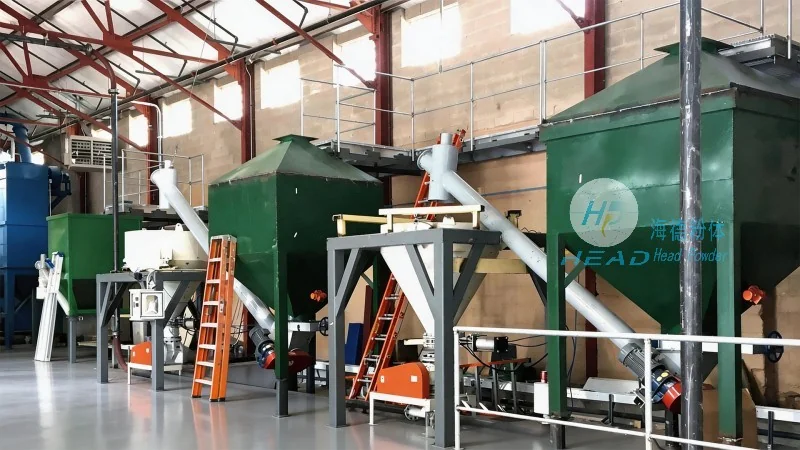
As a leading provider of industrial material handling solutions, Shandong HeadPowder Engineering Co., Ltd. specializes in designing and manufacturing pneumatic conveying systems tailored to the specific needs of clients. With years of experience in the industry, the company has developed a deep understanding of the challenges associated with handling ammonium nitrate and other sensitive materials. The company's team of engineers and technicians works closely with clients to assess their operational requirements and design customized systems that meet safety standards and performance expectations. HeadPowder's commitment to quality and innovation has made it a trusted partner for businesses seeking reliable and efficient material transport solutions.
Pneumatic conveying systems for ammonium nitrate material represent a sophisticated and effective solution for industrial material handling. By leveraging the principles of air pressure and controlled flow, these systems ensure the safe and efficient transport of ammonium nitrate while minimizing risks associated with dust and material degradation. The working scene characteristics, including the need for moisture control, explosion-proof components, and flexible operation, are addressed through advanced system design and engineering. As a result, businesses in the chemical and fertilizer industries can rely on such systems to enhance their operational efficiency and maintain compliance with safety regulations. With the expertise of companies like Shandong HeadPowder Engineering Co., Ltd., the implementation of these systems has become more accessible and effective, supporting the continuous growth and development of industrial processes.

 Shandong Headpowder Engineering Co., Ltd.
 156-6277-7102(Manager Zhang)
  0531-83386006
  Zhangqiu District, Jinan City, Shandong Province, China
telephone
WeChatconsult
top