With more than 10‑year industry experience, Shandong Headpowder delivers full‑service pneumatic‑conveying systems and blowers, undertaking nationwide turn‑key powder‑handling projects.
Shandong HeadPowder Engineering Co., Ltd., headquartered in Shandong, China, specializes in the design and manufacturing of advanced material handling systems. Among their product portfolio is the lithium hydroxide pneumatic conveying equipment, a critical solution for efficiently transporting lithium hydroxide, a key chemical in modern industries such as battery manufacturing and chemical processing.
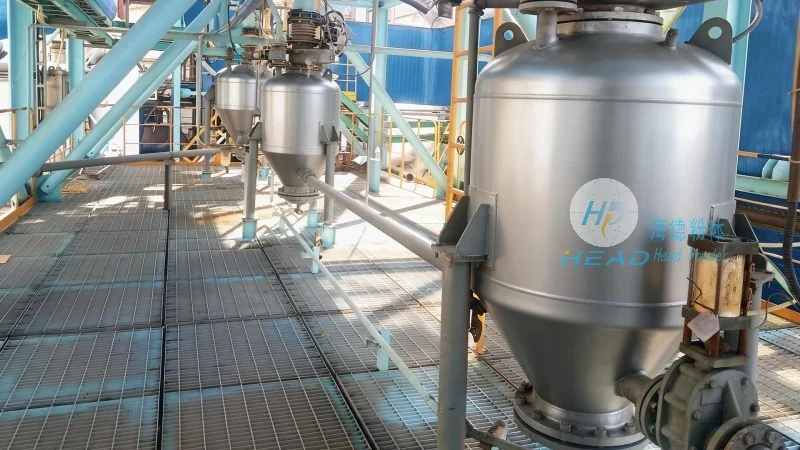
Lithium hydroxide is a white, hygroscopic solid widely used as an electrolyte in lithium-ion batteries and as a precursor in various chemical synthesis processes. Traditional methods of transporting this material, like manual handling or mechanical conveyors, often face challenges related to dust generation, material degradation, and operational inefficiencies. The lithium hydroxide pneumatic conveying equipment addresses these issues by utilizing a pneumatic system to move the material through a network of pipes using air or other gases as the conveying medium.
The core design principle of the lithium hydroxide pneumatic conveying equipment revolves around the fundamental concept of pneumatic transport, which involves the suspension and movement of solid particles in a gas stream. The system typically consists of several key components: a material feed hopper, a rotary airlock valve, a venturi or pressure-type conveying line, a separation or filtration system, and a discharge outlet. The material is first fed into the hopper, where it is then introduced into the conveying line through the rotary airlock valve, which controls the flow rate and prevents backflow. The conveying line, often made of corrosion-resistant materials like stainless steel or special plastics, is designed to handle the hygroscopic nature of lithium hydroxide and maintain material integrity.
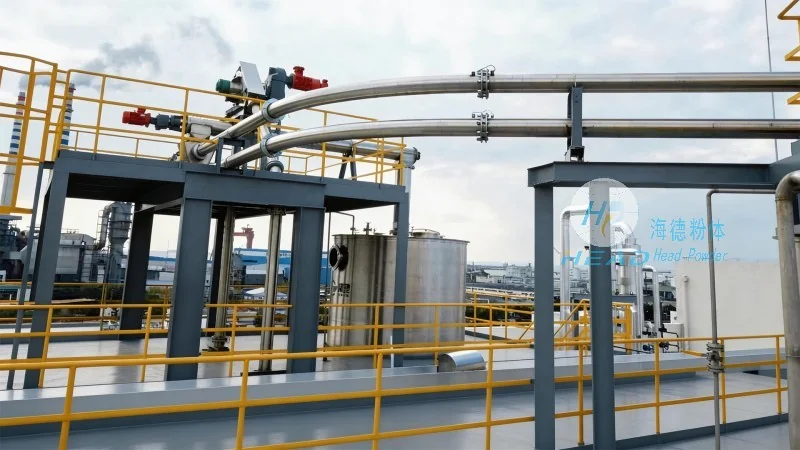
Each component of the lithium hydroxide pneumatic conveying equipment plays a crucial role in ensuring efficient and reliable operation. The material feed hopper is designed to store and feed the lithium hydroxide into the system at a controlled rate. The rotary airlock valve acts as a gate between the hopper and the conveying line, allowing material to pass into the line while preventing air from escaping back into the hopper. The venturi or pressure-type conveying line is the heart of the system, where the material is suspended and propelled by the high-velocity gas stream. The separation system, which may include cyclones or filters, is used to separate the material from the gas after it reaches the discharge point, ensuring that the material is collected in a clean and dry state. The discharge outlet is designed to safely release the material into the next processing stage or storage container.
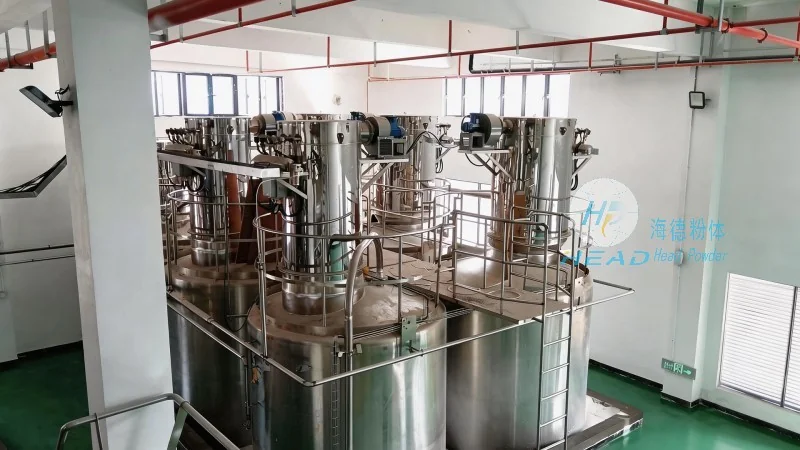
Compared to traditional conveying methods, the lithium hydroxide pneumatic conveying equipment offers several significant advantages. Firstly, it provides a dust-free and enclosed environment, which is essential for handling hygroscopic and potentially hazardous materials like lithium hydroxide. This reduces the risk of material contamination and improves workplace safety. Secondly, the system is highly efficient in terms of energy consumption and material throughput, allowing for faster and more reliable transportation of large quantities of lithium hydroxide. Thirdly, the equipment is flexible and can be easily integrated into existing production lines, with the ability to adjust the conveying rate and pressure to suit different operational needs. Additionally, the use of corrosion-resistant materials ensures the longevity and durability of the equipment, reducing maintenance costs over time.
Shandong HeadPowder Engineering Co., Ltd. understands that different industrial applications have unique requirements. Therefore, they offer customized solutions for their lithium hydroxide pneumatic conveying equipment, tailored to the specific needs of each client. Whether it's for a small-scale laboratory setup or a large-scale industrial production line, the company can design and manufacture a system that meets the exact specifications and operational conditions. The equipment can be adapted for various conveying distances, from short distances within a facility to long-distance transport across different locations. This flexibility makes the lithium hydroxide pneumatic conveying equipment a versatile solution for a wide range of applications in the chemical and battery industries.

 Shandong Headpowder Engineering Co., Ltd.
 156-6277-7102(Manager Zhang)
  0531-83386006
  Zhangqiu District, Jinan City, Shandong Province, China
telephone
WeChatconsult
top