With more than 10‑year industry experience, Shandong Headpowder delivers full‑service pneumatic‑conveying systems and blowers, undertaking nationwide turn‑key powder‑handling projects.
For industries dealing with limestone, the selection of an efficient and reliable material handling system is crucial. Pneumatic conveying systems offer a solution that minimizes dust, reduces labor costs, and enhances operational safety compared to traditional methods like belt conveyors or bucket elevators. This technical analysis, provided by Shandong HeadPowder Engineering Co., Ltd., a leading provider of material handling solutions, delves into the two primary modes of pneumatic conveying—positive pressure and negative pressure systems—focusing on their applications, advantages, and limitations when handling limestone. The comparison aims to help stakeholders make informed decisions based on specific operational requirements and material characteristics.
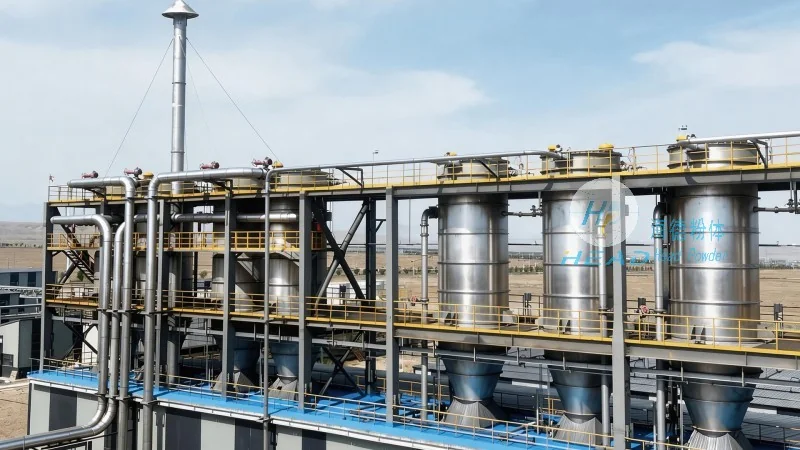
Positive pressure systems operate by blowing air or a carrier gas into the material stream, creating a pressure higher than the ambient environment. This method is particularly effective for transporting limestone over short to medium distances, typically up to several hundred meters. The system consists of a blower or fan that generates the necessary pressure, feeding the limestone into a pipeline. The air-limestone mixture is then directed to the discharge point, where the material is separated from the air using a cyclone or other separation equipment. A key advantage of positive pressure systems is their ability to handle abrasive materials like limestone without excessive wear on components, as the air flow helps to protect the pipeline and fittings. Additionally, these systems are generally more energy-efficient for shorter conveying distances, as they require less pressure to maintain the material flow. However, they may face challenges when dealing with long-distance or high-rise applications, as the pressure drop over long pipelines can become significant, potentially reducing the conveying capacity.
Negative pressure systems, also known as vacuum systems, work by creating a vacuum in the pipeline, drawing the limestone material into the system. This approach is ideal for applications requiring material to be transported from a higher elevation to a lower one, or for handling materials that are sensitive to pressure changes. The system includes a vacuum pump that pulls air and limestone from the source, through the pipeline, and into a collection hopper or silo. The separation of material from air typically occurs at the inlet or using a cyclone separator at the discharge end. One of the main benefits of negative pressure systems is their suitability for long-distance conveying, as the vacuum can be maintained over longer pipelines without a substantial increase in pressure drop. This makes them a preferred choice for transporting limestone from quarries to processing plants located at lower elevations. Another advantage is their ability to handle fine or dusty limestone particles, as the vacuum ensures that the material is drawn into the system without the need for high pressure. However, negative pressure systems may be less efficient for short-distance or high-volume applications, as the vacuum pump requires more energy to maintain the suction, and the system can be more prone to clogging if the material contains high moisture content or sticky components.
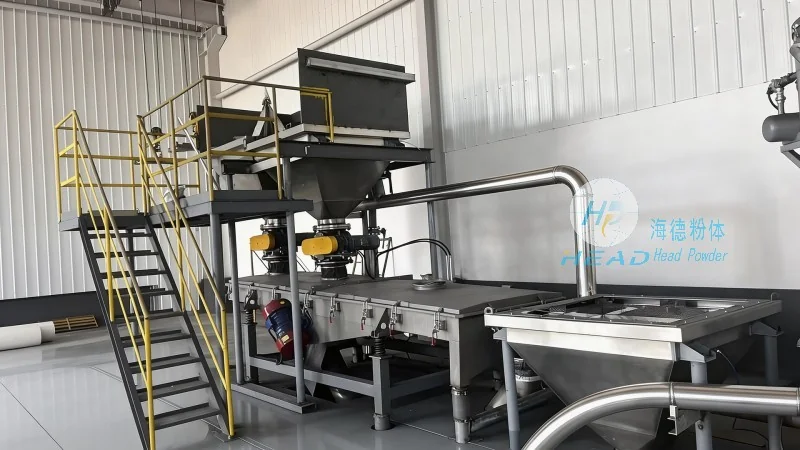
When evaluating the two pneumatic conveying modes for limestone handling, several factors come into play. The choice between positive and negative pressure systems depends on the distance of the conveying line, the elevation change between the source and destination, the material characteristics (such as particle size, moisture content, and abrasiveness), and the overall energy consumption requirements. For short to medium distances with minimal elevation changes, positive pressure systems are often more cost-effective and efficient, as they require less initial investment in equipment and lower operational energy costs. Conversely, for long-distance or high-rise applications, negative pressure systems may offer better performance, as they can maintain suction over longer distances without significant pressure losses. Material characteristics also influence the selection; for example, abrasive limestone with high particle size may benefit from the protective air flow in positive pressure systems, while fine, dusty limestone may be better suited to the gentle suction of negative pressure systems. Additionally, the system's capacity and the need for dust control can impact the choice. Positive pressure systems typically require more robust filtration to manage dust emissions, whereas negative pressure systems may need additional measures to prevent air leakage and maintain the vacuum. Ultimately, the decision between positive and negative pressure pneumatic conveying for limestone should be based on a thorough analysis of operational needs, cost considerations, and material properties to ensure optimal performance and efficiency.
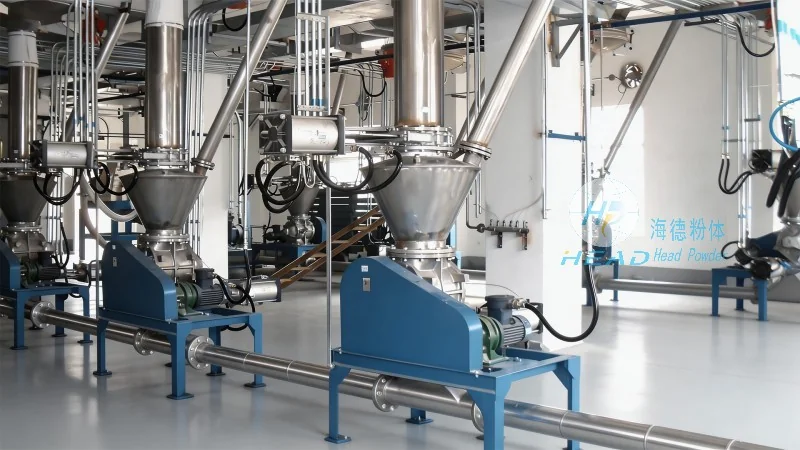
Both positive pressure and negative pressure pneumatic conveying systems provide viable solutions for handling limestone, each with its own set of advantages and limitations. Positive pressure systems excel in short to medium distance applications with minimal elevation changes, offering energy efficiency and robust handling of abrasive materials. Negative pressure systems, on the other hand, are better suited for long-distance or high-rise operations, particularly when dealing with fine or dusty limestone and requiring a gentle suction mechanism. The choice between the two depends on specific project requirements, including distance, elevation, material characteristics, and operational costs. By understanding the technical aspects of each system, stakeholders can select the most appropriate pneumatic conveying mode to enhance material handling efficiency, reduce operational costs, and improve overall safety in limestone processing operations.
Shandong HeadPowder Engineering Co., Ltd. is a professional manufacturer and supplier of pneumatic conveying systems based in Shandong, China. With years of experience in the industry, the company specializes in designing and manufacturing customized solutions for various material handling needs, including limestone processing. The company's headquarters is located in Shandong, China, where it serves clients globally with high-quality equipment and technical support.

 Shandong Headpowder Engineering Co., Ltd.
 156-6277-7102(Manager Zhang)
  0531-83386006
  Zhangqiu District, Jinan City, Shandong Province, China
telephone
WeChatconsult
top