With more than 10‑year industry experience, Shandong Headpowder delivers full‑service pneumatic‑conveying systems and blowers, undertaking nationwide turn‑key powder‑handling projects.
Lithium oxalate is a critical material in the battery industry, widely used as an active component in lithium-ion batteries. The efficient and reliable transportation of lithium oxalate powders is essential for industrial production processes. Pneumatic conveying systems have emerged as a key solution for handling such powders, offering advantages in terms of safety, speed, and automation. This article provides a technical analysis of lithium oxalate pneumatic conveying systems, focusing on the comparison between positive pressure and negative pressure conveying modes. The discussion will cover the fundamental principles, operational characteristics, and practical considerations for each mode, helping industry professionals make informed decisions when selecting the appropriate system for their applications.
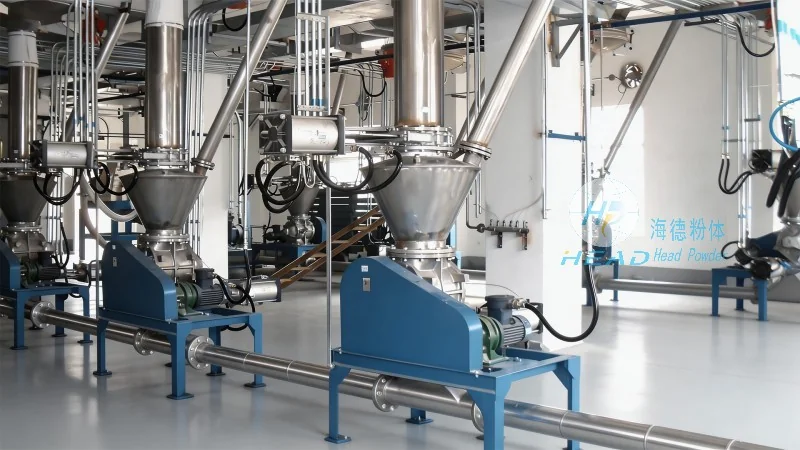
HeadPowder, a leading provider in the field of powder handling and conveying solutions, specializes in designing and manufacturing advanced pneumatic conveying systems. With a strong commitment to innovation and quality, the company has established itself as a trusted partner for industries dealing with various powders, including lithium oxalate. HeadPowder's expertise lies in tailoring customized solutions that meet the specific requirements of clients, ensuring optimal performance and reliability. The company's headquarters is located in Shandong, China, where it leverages local resources and industry knowledge to deliver cutting-edge technologies. By focusing on customer needs and technological advancements, HeadPowder continues to enhance its position in the global market for powder handling equipment.
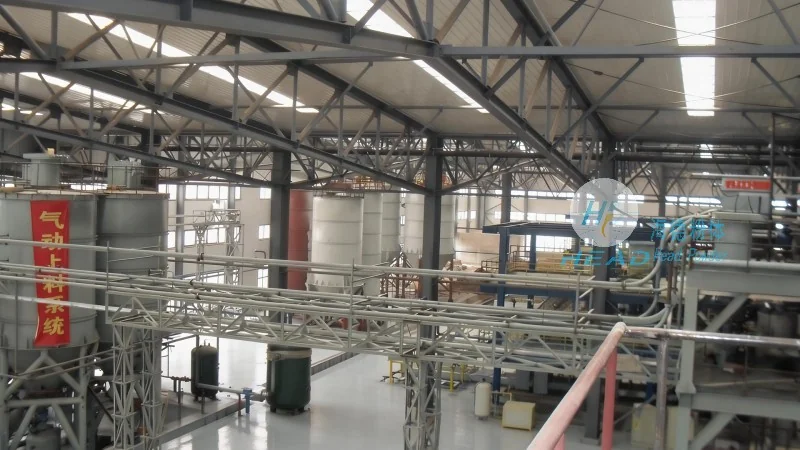
Pneumatic conveying systems utilize air or gas to transport bulk materials through a pipeline. The two primary modes are positive pressure and negative pressure, each with distinct operational principles and applications. Positive pressure systems operate by blowing air or gas into the conveying line, pushing the material forward. In contrast, negative pressure systems draw material into the line by creating a vacuum or reduced pressure at the receiving end. Understanding the differences between these modes is crucial for selecting the most suitable system for lithium oxalate handling, as each mode has its own advantages and limitations.
Positive pressure conveying, also known as pressure pneumatic conveying, involves the use of a blower or compressor to generate high-pressure air that propels the material through the pipeline. This mode is particularly effective for transporting materials over long distances and through complex system configurations. For lithium oxalate, positive pressure systems can handle high material loads and maintain consistent flow rates, making them suitable for large-scale production facilities. The primary advantages of positive pressure conveying include high conveying capacity, ability to handle abrasive materials, and reduced risk of material degradation due to minimal contact with system components. However, this mode may require more energy input and can be more complex to install and maintain compared to negative pressure systems. Additionally, positive pressure systems may generate higher noise levels and require proper ventilation to manage air emissions.
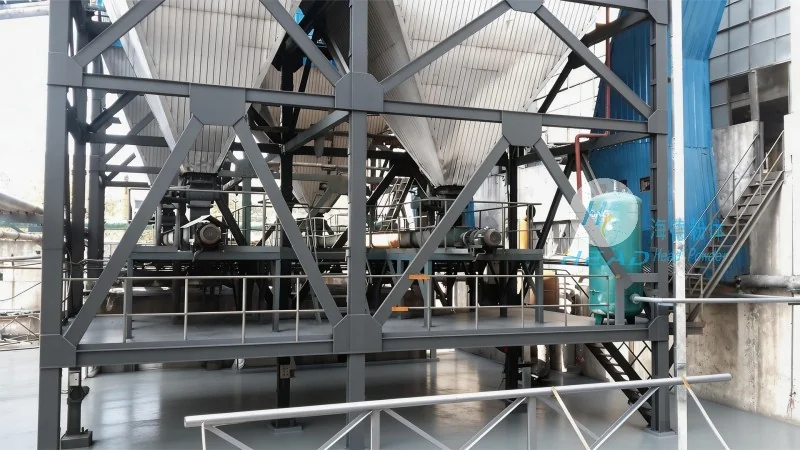
Negative pressure conveying, or vacuum pneumatic conveying, operates by creating a vacuum at the receiving end, which draws the material into the conveying line. This mode is often preferred for applications requiring gentle handling of delicate or sensitive materials, such as lithium oxalate, to prevent agglomeration or particle damage. Negative pressure systems are typically more compact and can handle materials over shorter distances, making them ideal for intra-facility transportation or when the receiving point is located at a lower elevation. The key advantages of negative pressure conveying include lower energy consumption, reduced noise levels, and the ability to handle materials with lower flow rates. However, this mode may have limitations in terms of conveying distance and material capacity, as the vacuum pressure is limited by the system's design. Moreover, negative pressure systems may require more careful maintenance to prevent air leaks, which could compromise the conveying efficiency.

 Shandong Headpowder Engineering Co., Ltd.
 156-6277-7102(Manager Zhang)
  0531-83386006
  Zhangqiu District, Jinan City, Shandong Province, China
telephone
WeChatconsult
top