With more than 10‑year industry experience, Shandong Headpowder delivers full‑service pneumatic‑conveying systems and blowers, undertaking nationwide turn‑key powder‑handling projects.
Wheat bran, a byproduct of wheat milling, is commonly used in animal feed, human nutrition, and various industrial applications. Efficient and reliable transport of wheat bran is crucial for maintaining product quality and operational efficiency in processing facilities. Pneumatic conveying systems offer a versatile solution for handling bulk materials like wheat bran, with two primary modes of operation: positive pressure and negative pressure. This article provides a technical analysis of these two modes, comparing their advantages, limitations, and suitability for wheat bran handling applications.
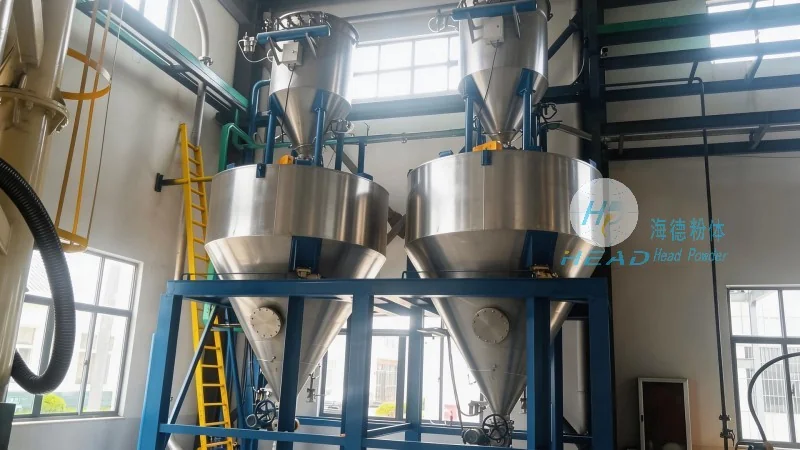
Pneumatic conveying uses compressed air or vacuum to move bulk materials through a pipeline. The two main categories are positive pressure (pressure conveying) and negative pressure (vacuum conveying). Both systems rely on the principle of air flow to transport material, but they differ in how air is introduced and managed within the system.
Positive pressure systems operate by blowing air into the conveying line, creating a pressure higher than the ambient air. The material is drawn into the pipeline by the moving air stream and is propelled forward. This mode is often preferred for long-distance or high-capacity conveying of wheat bran due to its ability to handle larger particles and maintain consistent flow rates.
Key advantages of positive pressure conveyors for wheat bran include high conveying capacity, suitability for abrasive materials, and the ability to handle long horizontal and vertical distances. The system can be designed with multiple inlets and outlets, allowing for flexible material distribution. However, positive pressure systems require robust air compressors and may generate higher noise levels and require more maintenance due to the higher air pressure involved.
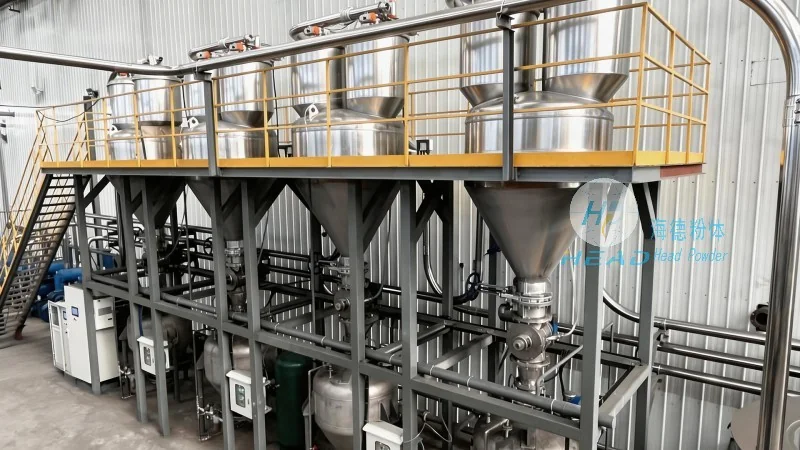
Negative pressure systems, also known as vacuum conveying, operate by creating a vacuum in the conveying line, drawing material into the pipeline from the source. Air and material are then drawn into the system and transported to the discharge point. This mode is typically used for shorter distances and for materials that are more sensitive to pressure changes or for handling fine powders.
Advantages of negative pressure conveyors include lower noise levels, reduced energy consumption compared to positive pressure systems, and suitability for handling delicate or fine wheat bran particles. The system is generally easier to install and maintain as it does not require high-pressure air compressors. However, negative pressure systems have limitations in conveying distance and capacity, making them less suitable for long-distance or high-volume wheat bran transport.
When selecting a pneumatic conveying system for wheat bran, several technical factors must be considered. These include the particle size distribution, moisture content, and flowability of the wheat bran, as well as the required conveying distance and capacity. The choice between positive and negative pressure depends on these factors and the specific operational requirements of the facility.
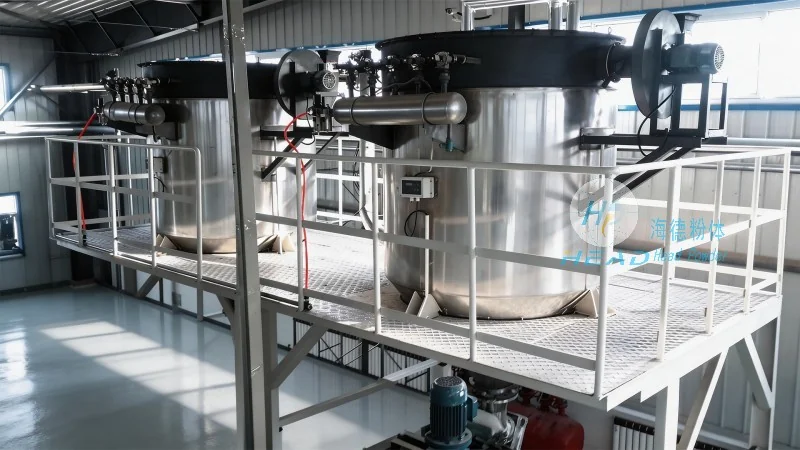
For example, if a processing plant needs to transport wheat bran over a distance of several hundred meters with a high capacity, a positive pressure system may be more appropriate due to its higher throughput and ability to handle larger particles. Conversely, if the plant is handling fine, low-density wheat bran over shorter distances and requires a quieter operation, a negative pressure system could be a better fit.
Shandong HeadPowder Engineering Co., Ltd., a leading provider of pneumatic conveying systems, specializes in designing and manufacturing customized solutions for wheat bran and other bulk material handling applications. With years of experience in the industry, HeadPowder understands the unique challenges of handling wheat bran and offers tailored systems that optimize efficiency and reliability.
HeadPowder's engineers work closely with clients to assess their specific needs, including material characteristics, conveying distances, and operational constraints. They provide comprehensive technical support, from system design and installation to ongoing maintenance and troubleshooting. The company's commitment to quality and innovation ensures that their pneumatic conveying systems meet the highest standards of performance and durability.

 Shandong Headpowder Engineering Co., Ltd.
 156-6277-7102(Manager Zhang)
  0531-83386006
  Zhangqiu District, Jinan City, Shandong Province, China
telephone
WeChatconsult
top