With more than 10‑year industry experience, Shandong Headpowder delivers full‑service pneumatic‑conveying systems and blowers, undertaking nationwide turn‑key powder‑handling projects.
For industries dealing with diatomaceous earth, an efficient and reliable material handling solution is crucial. Diatomaceous earth, a natural sedimentary rock composed of fossilized diatoms, is widely used in filtration, absorbent applications, and as a food additive. The transportation of this fine, powdery material requires specialized equipment to prevent clogging, loss, and contamination. Pneumatic conveying systems have emerged as a preferred method due to their ability to handle fine powders and minimize material degradation. This article provides a technical analysis of diatomaceous earth pneumatic conveying systems, focusing on the comparison between positive and negative pressure conveying modes.
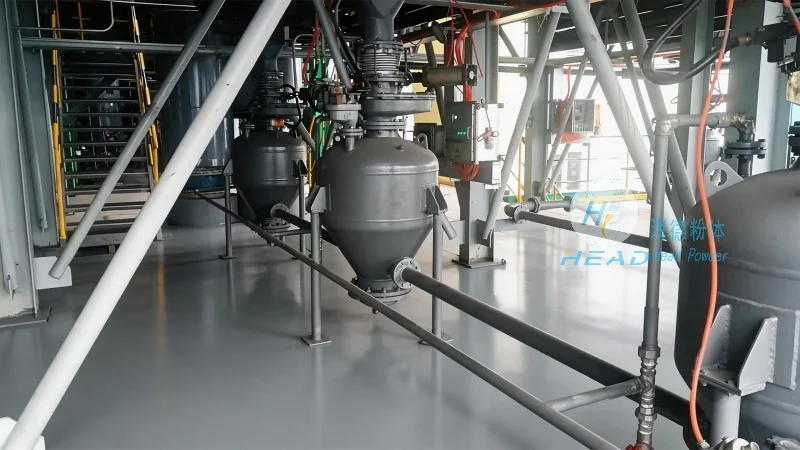
HeadPowder, a leading provider of material handling solutions, specializes in designing and manufacturing pneumatic conveying systems tailored to the needs of various industries. With a strong commitment to innovation and quality, the company has established itself as a trusted partner for businesses requiring efficient and reliable material transport. HeadPowder's expertise lies in understanding the unique challenges of handling fine powders like diatomaceous earth, ensuring that their systems are optimized for performance, durability, and safety. The company is headquartered in Shandong, China, where it leverages local manufacturing capabilities and industry knowledge to deliver high-quality solutions.
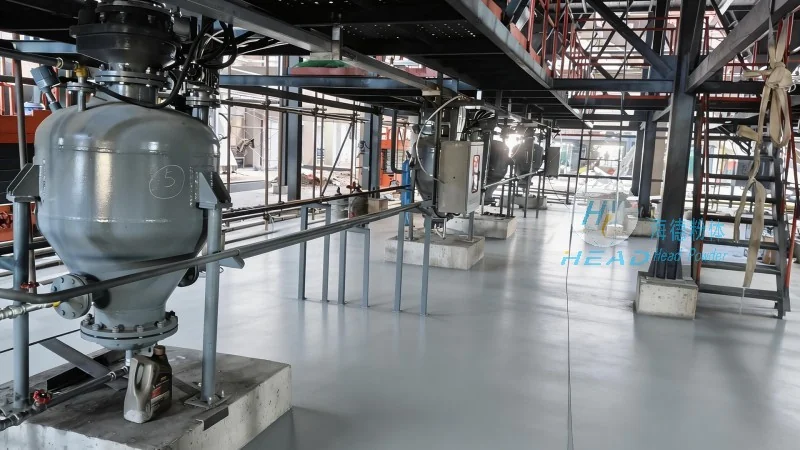
Positive pressure conveying systems operate by generating a high-pressure air stream that pushes the material through a pipeline. This mode is particularly effective for transporting diatomaceous earth over long distances and through complex system layouts. The system typically includes a blower or compressor that supplies compressed air to the conveying line, creating a positive pressure environment. The material is fed into the system using a hopper or feeder, and the air stream carries the powder through the pipeline to the destination point, such as a storage silo or processing unit. One of the key advantages of positive pressure conveying is its ability to handle high volumes of material efficiently, making it suitable for large-scale operations. Additionally, this mode is less prone to blockages compared to negative pressure systems, as the high air pressure helps to keep the material suspended and moving smoothly. HeadPowder's positive pressure systems are designed with robust components, including high-efficiency blowers and specialized hopper designs, to ensure optimal performance and minimal maintenance.
Negative pressure conveying systems, also known as vacuum conveying, operate by creating a low-pressure environment in the conveying line, which draws the material from the source into the system. This mode is ideal for applications where the material needs to be transported from a low-level source, such as a storage bin or hopper, to a higher elevation or processing area. The system uses a vacuum pump to create a vacuum in the pipeline, and the material is drawn into the line by the pressure differential. Negative pressure conveying is often preferred for handling fine powders that are prone to dust generation, as the sealed system minimizes environmental contamination. Another advantage is its ability to handle materials with high moisture content or those that are sensitive to air exposure. However, negative pressure systems may have limitations in terms of conveying distance and material capacity compared to positive pressure systems. HeadPowder's negative pressure conveying solutions are engineered to provide efficient and reliable transport, with features like adjustable vacuum control and dust collection systems to enhance performance and safety.
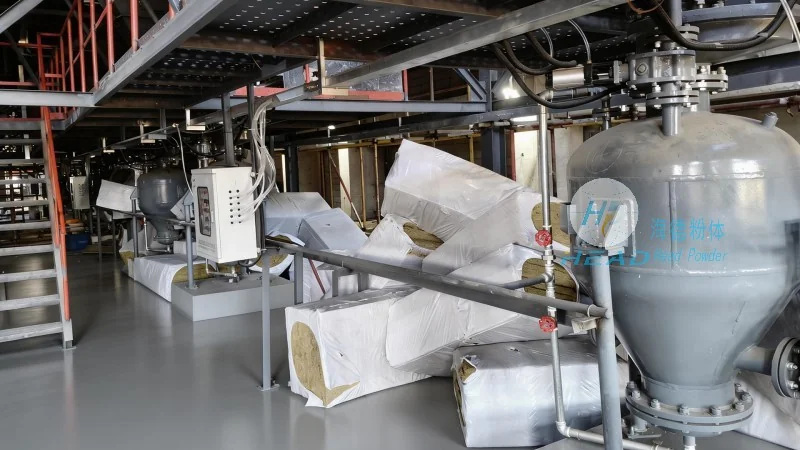
When selecting a pneumatic conveying system for diatomaceous earth, it is essential to evaluate the advantages and disadvantages of both positive and negative pressure modes. Positive pressure systems excel in long-distance transport and high-volume applications, with lower risk of blockages and higher material throughput. They are particularly suitable for industries that require continuous material flow and minimal downtime. On the other hand, negative pressure systems are better suited for short-distance transport, low-level material handling, and applications where dust control and material sensitivity are critical. The choice between the two modes depends on factors such as the distance between the source and destination, the volume of material to be transported, the material's physical properties (e.g., fineness, moisture content), and the environmental regulations in the operating area. HeadPowder offers customized solutions that can integrate both positive and negative pressure components, allowing for flexible system designs that meet specific operational requirements.

 Shandong Headpowder Engineering Co., Ltd.
 156-6277-7102(Manager Zhang)
  0531-83386006
  Zhangqiu District, Jinan City, Shandong Province, China
telephone
WeChatconsult
top