With more than 10‑year industry experience, Shandong Headpowder delivers full‑service pneumatic‑conveying systems and blowers, undertaking nationwide turn‑key powder‑handling projects.
At Shandong HeadPowder Engineering Co., Ltd., we specialize in the design, manufacturing, and implementation of advanced film-coated sand pneumatic conveying lines. These systems are crucial in various industrial applications, particularly in foundries and casting processes, where efficient material handling of film-coated sand is essential. The following content will delve into the operation process and working principle of such systems, providing a comprehensive understanding for professionals in the industry.
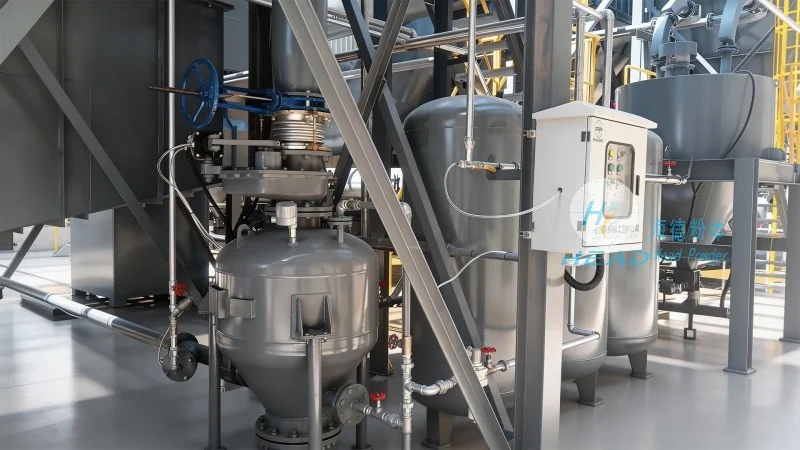
A typical film-coated sand pneumatic conveying line consists of several key components that work in tandem to ensure efficient material transport. These components include the hopper for material storage, the air compressor or blower to generate the necessary air pressure, the conveying line (often a pipeline), and the discharge unit where the material is released. Each component plays a vital role in the overall functionality of the system. The hopper is designed to hold the film-coated sand, ensuring a consistent feed rate. The air compressor provides the pressure differential required to move the material through the pipeline. The conveying line, usually made of durable materials like stainless steel or special alloys, is designed to withstand the abrasive nature of the sand and the pressure from the air flow. The discharge unit, which can be a rotary valve or a similar device, controls the release of the material at the destination point.
The operation process of a film-coated sand pneumatic conveying line involves several sequential steps. First, the film-coated sand is fed into the hopper from a storage silo or a bulk container. The hopper is equipped with a feeder mechanism, such as a screw feeder or a rotary valve, which regulates the flow of sand into the conveying line. Simultaneously, the air compressor starts operating, generating a high-pressure air stream. The air is introduced into the conveying line at the inlet of the hopper, creating a pressure differential between the hopper and the discharge end. As the air flows through the pipeline, it lifts and propels the film-coated sand particles, forming a dense or dilute phase flow depending on the system design. The conveying line transports the sand to the discharge point, where the air is separated from the material, often through a cyclone or a filter system. The separated air is then returned to the compressor for reuse, while the film-coated sand is collected in the discharge hopper or directly to the casting machine for further processing.

The working principle of film-coated sand pneumatic conveying lines is based on the fundamental concept of pneumatic transport, which utilizes air as the medium to move solid materials. The system operates on the principle of creating a pressure difference between the inlet and outlet of the conveying line. When the air compressor supplies compressed air into the hopper, it creates a high-pressure environment that forces the air and sand mixture through the pipeline. The film-coated sand particles are entrained by the air stream, and their movement is governed by the balance of forces, including the drag force from the air, the gravitational force, and the frictional forces within the pipeline. The system can operate in either positive pressure or negative pressure (suction) modes. In positive pressure systems, the air is blown into the conveying line, pushing the material forward. In negative pressure systems, the air is drawn from the discharge end, creating a vacuum that pulls the material. The choice between these modes depends on the specific application and the distance and elevation changes involved in the material transport. The efficiency of the system is influenced by factors such as the air velocity, the particle size and density of the sand, the conveying line diameter, and the system pressure. Proper design and maintenance of the components are crucial to ensure optimal performance and minimize energy consumption.
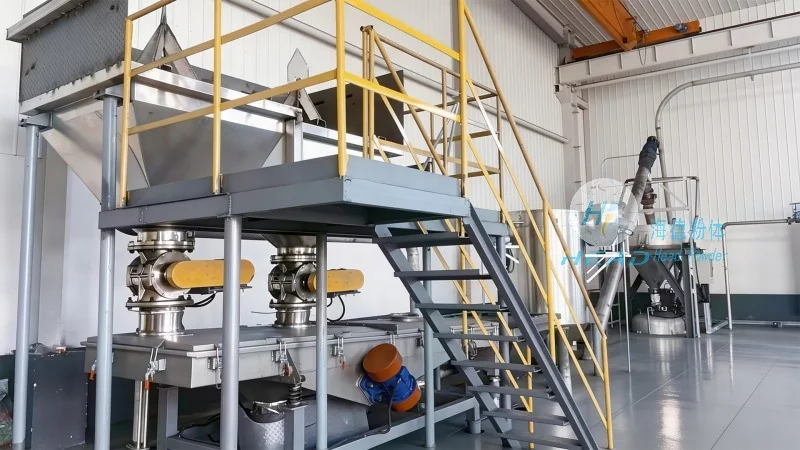
Film-coated sand pneumatic conveying lines offer several advantages over traditional mechanical conveying methods. One of the primary benefits is the ability to transport material over long distances and through vertical elevations without the need for multiple transfer points or elevators. This reduces the overall footprint of the system and simplifies the layout of the production facility. Additionally, pneumatic conveying systems are less prone to material degradation compared to mechanical systems, as there is no direct contact between the material and the conveying components. The film coating on the sand provides an additional layer of protection, preventing the sand from sticking to the pipeline or the equipment. Another advantage is the flexibility of the system, which allows for easy integration with existing production lines and the ability to adjust the conveying rate as per the production requirements. The system also offers better control over the material flow, reducing the risk of blockages or overloading. Furthermore, pneumatic conveying systems can handle a wide range of material types, including abrasive and fine particles, making them suitable for various industrial applications.
Film-coated sand pneumatic conveying lines are widely used in the foundry industry, particularly in the production of castings. They are employed in the transport of film-coated sand from storage silos to the molding machines, where the sand is used as a mold material. The systems are also used in other industries where fine or abrasive materials need to be transported, such as in the chemical and pharmaceutical sectors. The ability to handle abrasive materials without causing wear and tear on the equipment makes these systems ideal for such applications. In addition, the systems are used in the transport of materials in research and development laboratories, where precise control over the material flow is required. The versatility of the film-coated sand pneumatic conveying lines makes them a preferred choice in various industrial settings.

 Shandong Headpowder Engineering Co., Ltd.
 156-6277-7102(Manager Zhang)
  0531-83386006
  Zhangqiu District, Jinan City, Shandong Province, China
telephone
WeChatconsult
top