With more than 10‑year industry experience, Shandong Headpowder delivers full‑service pneumatic‑conveying systems and blowers, undertaking nationwide turn‑key powder‑handling projects.
Pneumatic conveying systems have become a cornerstone in the efficient handling and transportation of bulk materials, particularly in industries dealing with sand particles. These systems utilize air or gas as the conveying medium to transport solid particles through a pipeline network. The principle of sand particle pneumatic conveying involves the creation of a pressure differential that propels the particles forward, ensuring a continuous and often dust-free transfer process.
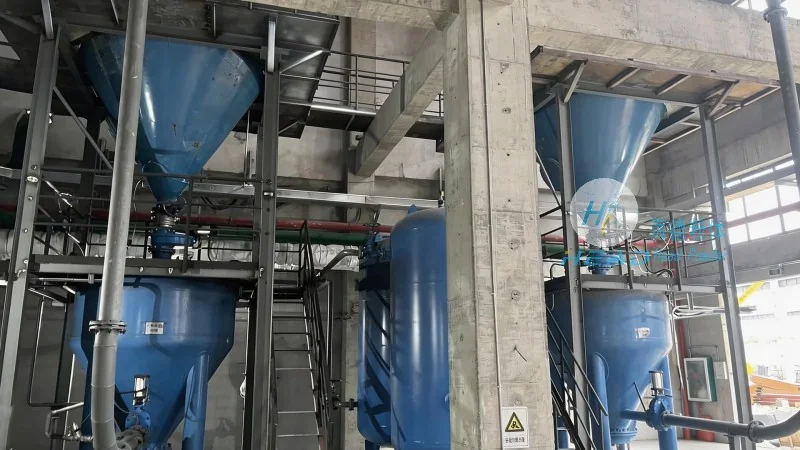
Pneumatic conveying systems have become a cornerstone in the efficient handling and transportation of bulk materials, particularly in industries dealing with sand particles. These systems utilize air or gas as the conveying medium to transport solid particles through a pipeline network. The principle of sand particle pneumatic conveying involves the creation of a pressure differential that propels the particles forward, ensuring a continuous and often dust-free transfer process.
The fundamental components of a sand particle pneumatic conveying system include the material feed hopper, the air compressor or blower, the conveying pipeline, and the discharge receiver. The working principle revolves around the introduction of air into the system, which creates a low-pressure zone at the material inlet. As the sand particles are introduced into this zone, they become entrained by the moving air stream. The air velocity is carefully controlled to ensure that the particles remain suspended and are transported to the discharge point without settling or clogging the pipeline.
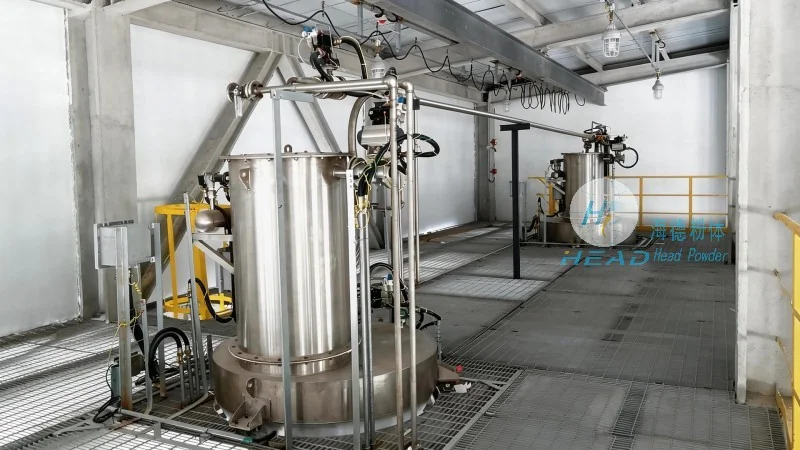
Compared to traditional mechanical conveying methods, pneumatic systems offer several advantages when handling sand particles. These include the ability to transport materials over long distances with minimal maintenance, the prevention of material degradation due to reduced friction and abrasion, and the elimination of dust contamination through enclosed systems. Additionally, pneumatic conveying allows for precise control over flow rates and can handle a wide range of particle sizes and moisture contents, making it versatile for various industrial applications.
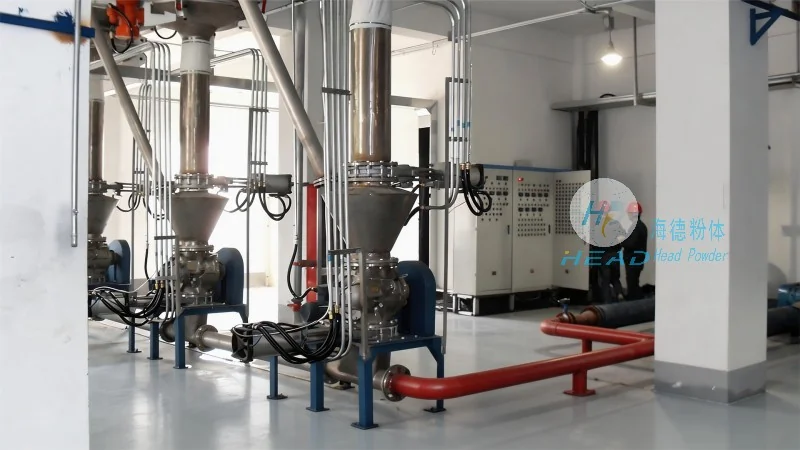
The application of sand particle pneumatic conveying systems is widespread across multiple sectors. In construction and mining, these systems are used to transport sand from storage silos to mixing plants or processing facilities. In the glass and ceramics industry, they facilitate the transfer of raw sand to furnaces and production lines. Furthermore, in the chemical and pharmaceutical sectors, where sand particles may be used as fillers or carriers, pneumatic conveying ensures a hygienic and efficient transfer process, minimizing contamination risks.
Shandong HeadPowder Engineering Co., Ltd., operating under the brand name headpowder, specializes in the design, manufacturing, and installation of advanced pneumatic conveying systems tailored for sand particle applications. With a focus on innovation and customer-specific solutions, HeadPowder leverages years of industry experience to deliver systems that meet the unique requirements of each project. The company’s engineering team works closely with clients to assess material characteristics, operational parameters, and site constraints, ensuring the final system is optimized for efficiency, reliability, and cost-effectiveness.

 Shandong Headpowder Engineering Co., Ltd.
 156-6277-7102(Manager Zhang)
  0531-83386006
  Zhangqiu District, Jinan City, Shandong Province, China
telephone
WeChatconsult
top