With more than 10‑year industry experience, Shandong Headpowder delivers full‑service pneumatic‑conveying systems and blowers, undertaking nationwide turn‑key powder‑handling projects.
When it comes to transporting glass fiber cellulose, selecting the right conveying method is crucial for efficiency, safety, and operational costs. Two primary approaches are widely used: positive pressure and negative pressure systems. Understanding the differences between these methods is essential for making an informed decision that aligns with your specific production needs.
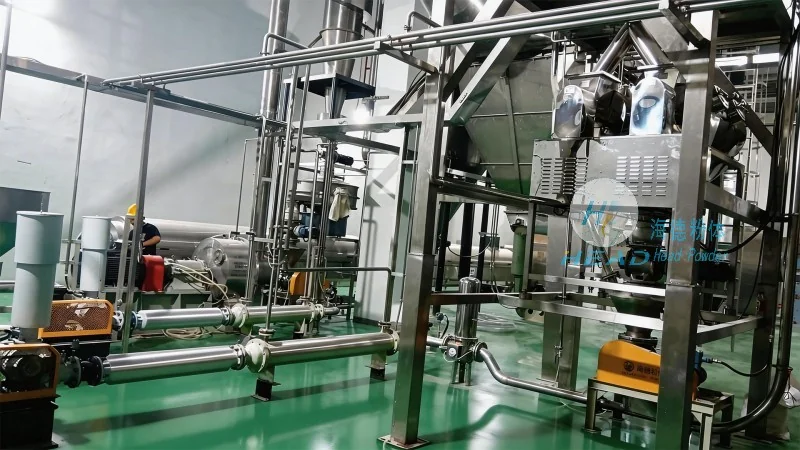
HeadPowder, or Shandong HeadPowder Engineering Co., Ltd., is a leading provider of advanced material handling solutions. With a focus on innovation and customer-centric design, the company specializes in developing efficient conveying systems tailored to the unique requirements of various industries, including those handling glass fiber cellulose. HeadPowder’s headquarters is located in Shandong, China, where the company leverages local expertise and resources to deliver high-quality products and services.
Positive pressure conveying systems operate by blowing air or a carrier gas into the material stream, creating a pressure differential that propels the material through the system. This method is particularly effective for handling fine or dusty materials like glass fiber cellulose, as it can maintain consistent flow rates and prevent material degradation. The primary advantage of positive pressure is its ability to handle high volumes of material with minimal pressure loss, making it suitable for long-distance conveying applications. Additionally, positive pressure systems are generally more straightforward to install and maintain, as they do not require complex vacuum setups.
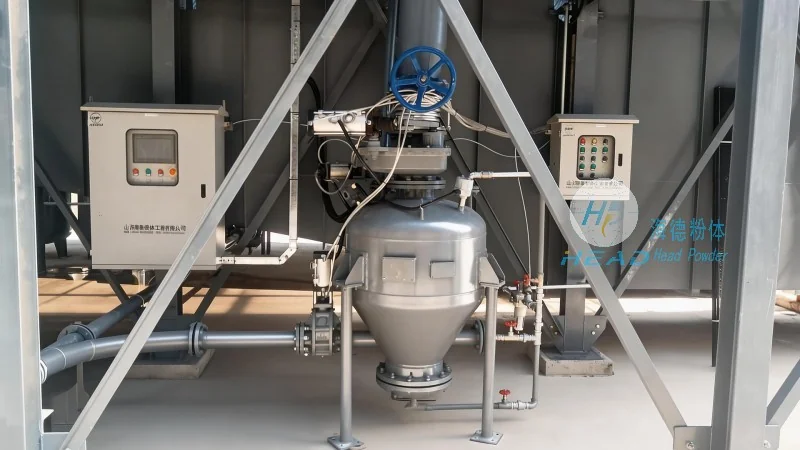
Negative pressure, or vacuum, conveying systems work by creating a vacuum in the material line, which draws the material from the source to the destination. This approach is often preferred for materials that are sensitive to pressure changes or for applications where the material needs to be transported from a higher elevation to a lower one. Negative pressure systems are particularly effective for handling lighter materials or those that are prone to clogging, as the vacuum helps to maintain a consistent flow. However, these systems may require more energy to operate and can be more complex to maintain, especially in environments with high dust levels.
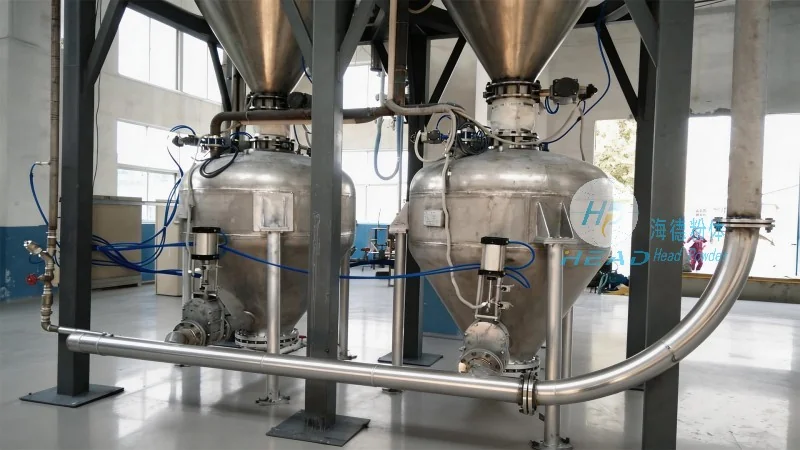
Choosing between positive and negative pressure conveying for glass fiber cellulose depends on several key factors, including the material’s properties, the distance to be conveyed, and the desired flow rate. For instance, if the material is fine and dusty, positive pressure is often the better choice due to its ability to maintain consistent flow and prevent material degradation. Conversely, if the material is lightweight or prone to clogging, negative pressure may be more suitable. The distance between the source and destination is another critical factor; positive pressure is generally preferred for longer distances, as it can maintain higher pressure levels over longer lengths, while negative pressure may be more effective for shorter distances or when the material needs to be transported to a lower elevation.
HeadPowder Engineering offers comprehensive solutions for glass fiber cellulose conveying, combining expertise in both positive and negative pressure systems. The company’s engineers work closely with clients to assess their specific needs, providing tailored recommendations that optimize performance and reduce operational costs. Whether you require a positive pressure system for high-volume conveying or a negative pressure system for sensitive materials, HeadPowder’s team ensures that the chosen solution meets all safety and efficiency standards. With a commitment to quality and customer satisfaction, HeadPowder has become a trusted partner for businesses in the glass fiber cellulose industry, helping them achieve reliable and efficient material handling processes.

 Shandong Headpowder Engineering Co., Ltd.
 156-6277-7102(Manager Zhang)
  0531-83386006
  Zhangqiu District, Jinan City, Shandong Province, China
telephone
WeChatconsult
top