With more than 10‑year industry experience, Shandong Headpowder delivers full‑service pneumatic‑conveying systems and blowers, undertaking nationwide turn‑key powder‑handling projects.
For manufacturers in the battery industry, the efficient and reliable transport of ternary materials is critical to production efficiency and product quality. Ternary materials, commonly used in lithium-ion batteries, often present unique challenges during material handling due to their physical properties. These materials can be prone to agglomeration, high viscosity, and variable particle size distribution, all of which increase the risk of pipeline blockages in pneumatic conveying systems. To address these challenges, a systematic approach to system design is essential, focusing on key parameters that directly impact system performance and blockage prevention.
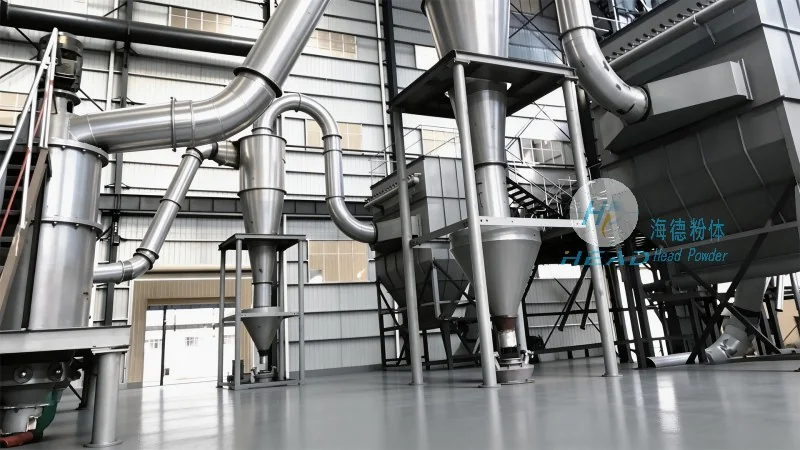
Shandong HeadPowder Engineering Co., Ltd., a leading provider of material handling solutions, specializes in optimizing pneumatic conveying systems for sensitive materials like ternary compounds. With operations based in Shandong, China, the company leverages extensive industry experience to develop customized solutions that mitigate the risks of blockages while ensuring smooth material flow. This article explores the critical design parameters that contribute to effective blockage prevention in pneumatic conveying systems for ternary material transport.
Ternary materials, typically composed of nickel, cobalt, and manganese (or other elements), exhibit properties that make traditional bulk material handling difficult. These materials often have a tendency to form clumps or agglomerates, which can significantly reduce the free-flowing nature of the powder. Additionally, their particle size distribution may vary, leading to inconsistent air-particle interaction within the conveying system. The high density and specific gravity of ternary materials also affect the required air velocity and pressure to maintain proper flow. Recognizing these characteristics is the first step in designing a pneumatic conveying system that can handle such materials without blockages.
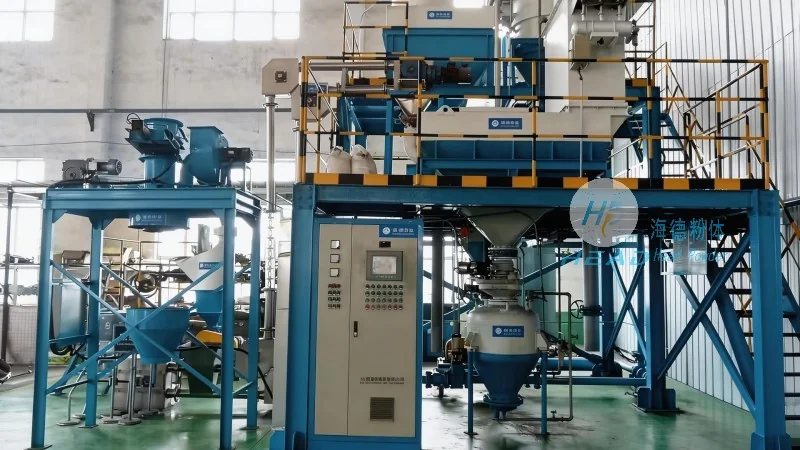
Several key design parameters must be carefully considered when designing a pneumatic conveying system for ternary materials. These parameters directly influence the system's ability to prevent blockages and ensure consistent material transport. The primary parameters include:
The air velocity within the conveying pipeline is a critical factor in preventing blockages. Insufficient air velocity can lead to material settling and agglomeration, while excessive velocity may cause excessive wear on system components and increase energy consumption. For ternary materials, the optimal air velocity is typically determined by the material's bulk density, particle size, and flowability. Shandong HeadPowder Engineering Co., Ltd. recommends maintaining an air velocity that is at least 1.5 to 2 times the minimum fluidization velocity of the material to ensure proper suspension and prevent settling. The system pressure must also be carefully controlled to maintain this velocity without causing excessive stress on the pipeline or equipment.
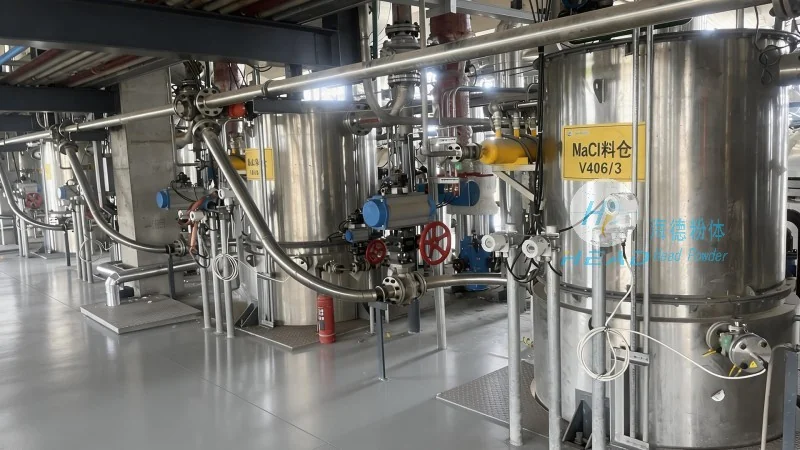
The diameter of the conveying pipeline is another critical parameter. Smaller diameters increase the risk of blockages due to higher material concentration and reduced air flow, while larger diameters may require higher air pressure and energy consumption. The optimal diameter is determined by the material's flow characteristics and the required conveying capacity. For ternary materials, a pipeline diameter of 50-100 mm is commonly used for short to medium conveying distances, while larger diameters may be necessary for longer distances or higher throughput. The length of the pipeline also affects the system's performance; longer pipelines require higher air pressure and may need additional boosters or pressure recovery systems to maintain adequate velocity and prevent blockages.
The concentration of material in the air stream, often referred to as the "loading ratio," is a key factor in preventing blockages. Excessive material concentration can lead to insufficient air-particle separation, causing material to settle and form blockages. The feed rate must be controlled to maintain a consistent loading ratio throughout the conveying process. Shandong HeadPowder Engineering Co., Ltd. advises maintaining a loading ratio of 0.1 to 0.2 (material volume to air volume) for most ternary materials to ensure proper suspension and prevent agglomeration. The feed rate should be adjusted based on the system's capacity and the material's flowability to avoid overloading the pipeline.

 Shandong Headpowder Engineering Co., Ltd.
 156-6277-7102(Manager Zhang)
  0531-83386006
  Zhangqiu District, Jinan City, Shandong Province, China
telephone
WeChatconsult
top