With more than 10‑year industry experience, Shandong Headpowder delivers full‑service pneumatic‑conveying systems and blowers, undertaking nationwide turn‑key powder‑handling projects.
At Shandong HeadPowder Engineering Co., Ltd., we specialize in the efficient and reliable handling of potassium hydroxide through pneumatic conveying systems. This article explores the fundamental working principle and key characteristics of such systems, providing insights into their operational efficiency and practical applications.
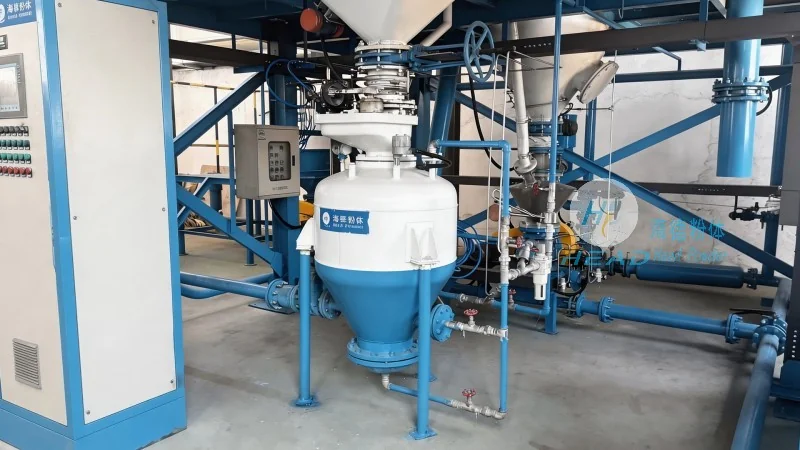
Potassium hydroxide (KOH), a strong base commonly used in various industrial processes, requires specialized handling methods to ensure safety and efficiency. Pneumatic conveying is a widely adopted technique for transporting solid materials like KOH, leveraging the power of air to move the material through a pipeline. The core working principle involves creating a pressure differential between the material source and the destination, using compressed air to propel the material forward.
During the conveying process, the potassium hydroxide is first fed into a hopper or feeder. From there, it is introduced into a pipeline where compressed air is introduced at a controlled rate. The air flow generates a stream that lifts and transports the material particles through the system. The velocity and pressure of the air are critical parameters that determine the efficiency of the conveying. Properly designed systems ensure that the material is transported without excessive wear on equipment and minimal product degradation.
The working principle can be broken down into several key steps. First, the material is metered and fed into the conveying line. Next, the compressed air is introduced, creating a flow that entrains the material particles. The air and material mixture travels through the pipeline to the destination, where the material is separated from the air. This separation is typically achieved through a cyclone or filter system, allowing the potassium hydroxide to be collected while the air is recycled or vented.
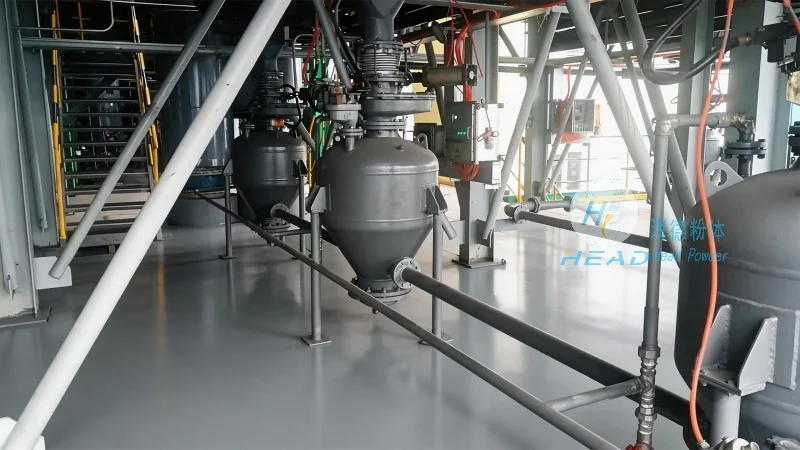
One of the primary advantages of pneumatic conveying for potassium hydroxide is its ability to handle the material in a closed system. This containment reduces exposure to the environment and minimizes the risk of dust contamination or product loss. The system also allows for precise control over the flow rate and pressure, ensuring consistent delivery to downstream processes. Additionally, pneumatic conveying can be integrated with other equipment, such as reactors or storage tanks, to form a seamless production line.
Now, let's examine the key characteristics that make pneumatic conveying systems suitable for potassium hydroxide applications. First, the system is highly flexible, allowing for changes in material flow rates and destination points without major modifications. This adaptability is crucial in dynamic industrial environments where production needs may vary. Second, the equipment is relatively compact compared to other bulk material handling methods, saving space in facilities. Third, the system can handle a wide range of particle sizes and moisture contents, making it versatile for different KOH formulations.
Another important characteristic is the system's ability to maintain product integrity. The enclosed nature of the conveying process prevents contamination from external sources and reduces the risk of caking or agglomeration of the potassium hydroxide particles. This is particularly important for applications where the material's purity is critical, such as in chemical manufacturing or pharmaceutical production. The system also minimizes product degradation due to friction or exposure to air, ensuring that the final product meets quality standards.
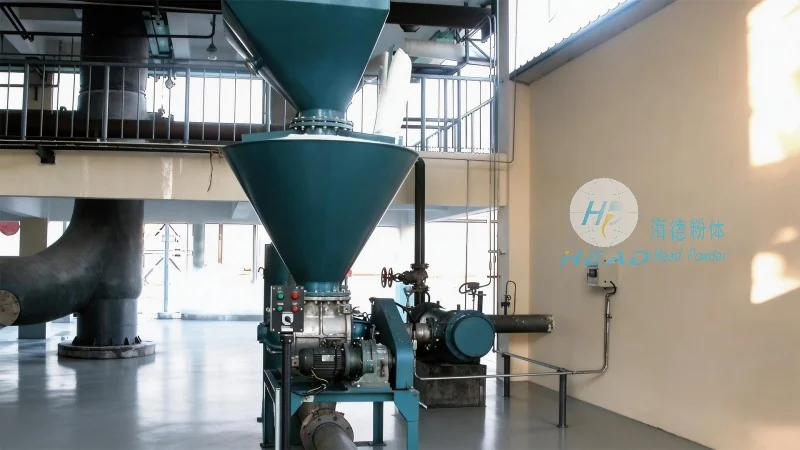
Operational efficiency is a significant characteristic of pneumatic conveying systems for potassium hydroxide. The use of compressed air allows for rapid and continuous material transport, reducing downtime and increasing overall productivity. The system can handle high volumes of material, making it suitable for large-scale industrial operations. Additionally, the energy consumption is relatively low compared to other methods, contributing to cost-effectiveness and sustainability.
From an engineering perspective, the design of a pneumatic conveying system for potassium hydroxide must consider several factors. The material's properties, such as particle size distribution, density, and moisture content, influence the system's design. The pipeline layout and the number of bends or fittings also impact the conveying efficiency. Proper maintenance of the system, including regular cleaning and inspection of components, is essential to prevent blockages and ensure long-term reliability.
In conclusion, the working principle and characteristics of pneumatic conveying for potassium hydroxide highlight its effectiveness as a bulk material handling solution. The system's ability to transport the material safely, efficiently, and with minimal degradation makes it a preferred choice for many industrial applications. At Shandong HeadPowder Engineering Co., Ltd., we leverage our expertise to design and implement customized pneumatic conveying systems that meet the specific needs of our clients, ensuring optimal performance and reliability in the handling of potassium hydroxide.

 Shandong Headpowder Engineering Co., Ltd.
 156-6277-7102(Manager Zhang)
  0531-83386006
  Zhangqiu District, Jinan City, Shandong Province, China
telephone
WeChatconsult
top