With more than 10‑year industry experience, Shandong Headpowder delivers full‑service pneumatic‑conveying systems and blowers, undertaking nationwide turn‑key powder‑handling projects.
Expanded clay sand pneumatic conveying machines are specialized industrial equipment designed to transport bulk materials, particularly expanded clay sand, through a pipeline system using air or gas as the conveying medium. This technology offers a dust-free, efficient, and flexible method for material handling in various industrial applications, including construction, agriculture, and manufacturing. The core function of such machines is to move loose, granular materials from one location to another without the need for mechanical components like belts or buckets, which can be prone to wear and maintenance issues.
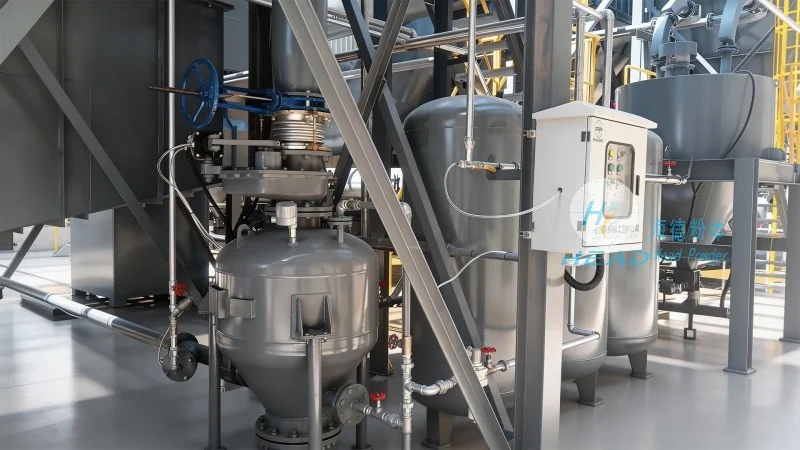
The design principles of expanded clay sand pneumatic conveying machines revolve around the fundamental physics of fluidized transport and pressure differentials. At its essence, the system operates by creating a pressure differential between the inlet and outlet of the conveying line. Air is introduced into the material stream, causing the expanded clay sand particles to become fluidized—i.e., they behave like a liquid. This fluidization allows the material to be propelled through the pipeline by the moving air, overcoming gravitational and frictional forces. The key components of the system include a hopper for material storage, a blower or compressor to generate the conveying air, a pipeline network to transport the material, and a receiver or discharge unit to collect the material at the destination.
When the material is introduced into the hopper, it falls into the conveying line under the influence of gravity. Simultaneously, the blower supplies high-pressure air into the line, creating a flow that lifts and carries the material particles. The air velocity must be sufficient to overcome the material's weight and any resistance from the pipeline. This process is often referred to as "pneumatic transport" or "air conveying," and it eliminates the need for physical contact between the material and the conveying equipment, reducing wear and contamination.
The design of these machines must consider several critical factors to ensure optimal performance and efficiency. First, the material's properties, such as particle size, density, and moisture content, directly impact the conveying velocity and air requirements. Expanded clay sand, being lightweight and porous, typically requires lower air pressure compared to denser materials like cement or coal. For example, a typical conveying system for expanded clay sand might operate at an air pressure of 0.5 to 1.0 bar, while systems for cement may require 1.5 to 2.5 bar.
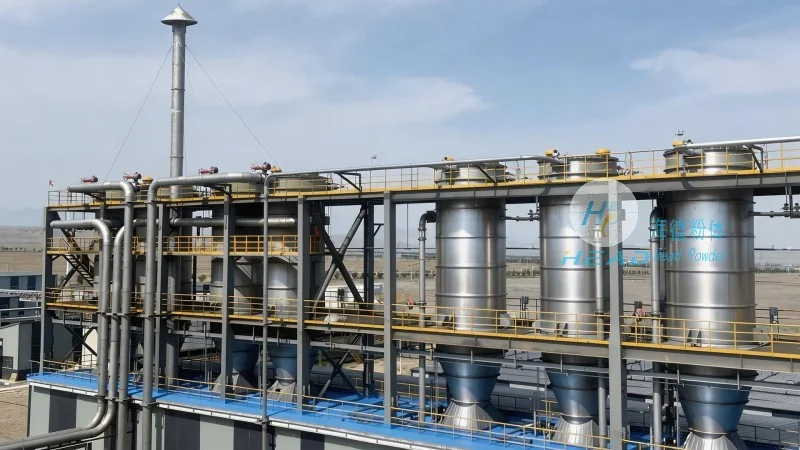
Second, the system's capacity is determined by the blower's airflow rate and pressure, which must be matched to the material's flow characteristics. Engineers often use empirical formulas or computational fluid dynamics (CFD) simulations to calculate the necessary air volume and pressure for a given material and pipeline configuration. These calculations take into account factors like the material's bulk density, particle size distribution, and the pipeline's length and diameter.
Another crucial design aspect is the pipeline layout and fittings. The use of bends, elbows, and valves can affect the pressure drop and material flow. To minimize energy loss and maintain consistent flow, designers may incorporate straight sections, smooth transitions, and appropriate diameter pipes. For instance, a 90-degree elbow can cause a significant pressure drop, so engineers may use larger diameter elbows or add air cushions to mitigate this effect. Additionally, the system may include filters and cyclones to separate the conveying air from the material particles, ensuring the air is clean and can be recirculated or vented safely.
HeadPowder, a leading manufacturer of material handling equipment, specializes in developing and supplying high-quality expanded clay sand pneumatic conveying machines tailored to the needs of various industries. With a focus on innovation and customer satisfaction, HeadPowder's products are engineered to meet stringent performance standards while offering durability and low maintenance costs. The company's expertise lies in customizing systems to handle specific material characteristics and operational requirements, ensuring reliable and efficient material transport solutions for clients worldwide.
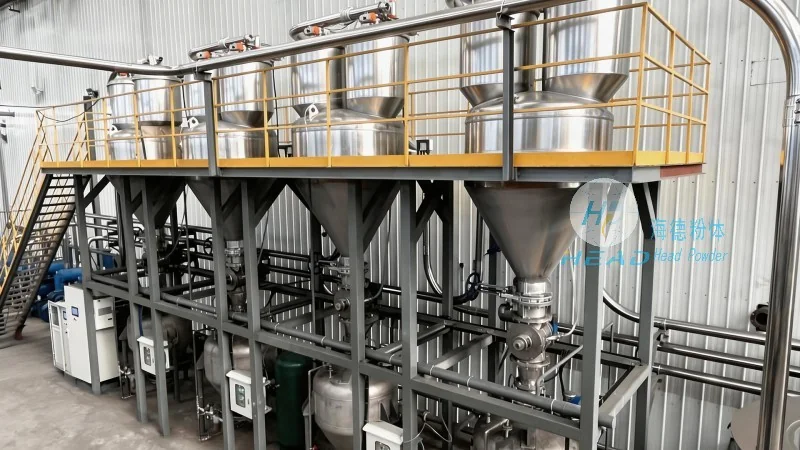
HeadPowder's design team leverages advanced engineering principles to create systems that optimize air usage and minimize energy consumption. By using high-efficiency blowers and optimizing pipeline designs, the company's machines can achieve significant cost savings in operational expenses. Additionally, the use of corrosion-resistant materials and robust construction ensures long service life, reducing the need for frequent repairs or replacements.
Implementing an expanded clay sand pneumatic conveying system offers several advantages over traditional material handling methods. First, it provides a dust-free environment, which is critical for maintaining air quality and worker safety in industrial settings. Unlike belt conveyors or bucket elevators, pneumatic systems do not generate dust clouds, reducing the risk of respiratory issues and improving overall workplace conditions.
Second, the system offers flexibility in layout, as the pipeline can be installed in various configurations, including overhead, underground, or vertical runs. This adaptability allows for efficient use of space in facilities with limited room for traditional equipment. Additionally, the system can handle materials with varying properties, making it suitable for a wide range of applications.
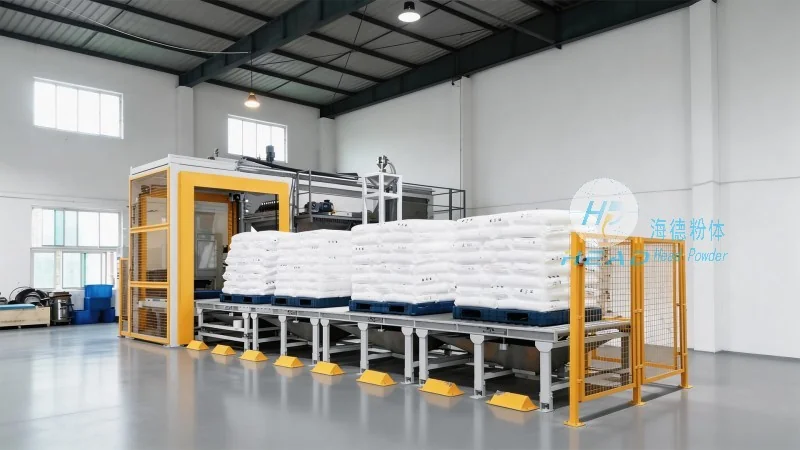
Third, the operation of pneumatic conveying systems is generally more automated and less labor-intensive compared to manual or mechanical methods. Once the system is set up, it can run continuously with minimal human intervention, improving productivity and reducing labor costs. The control systems used in modern pneumatic conveying machines allow for precise regulation of air pressure and flow, ensuring consistent material delivery.
Expanded clay sand pneumatic conveying machines are a testament to the application of fundamental design principles in industrial engineering. By understanding the physics of fluidized transport and pressure differentials, engineers can develop systems that efficiently move bulk materials while minimizing energy consumption and operational costs. The success of such systems depends on careful consideration of material properties, system capacity, and pipeline design, all of which are addressed by manufacturers like HeadPowder.
As industries continue to seek more efficient and sustainable material handling solutions, the role of pneumatic conveying technology will likely grow. The ability to transport materials in a dust-free, flexible manner makes these systems an attractive option for various applications. With continued innovation and engineering advancements, expanded clay sand pneumatic conveying machines will remain a vital component of modern industrial operations, providing reliable and efficient material transport solutions for years to come.

 Shandong Headpowder Engineering Co., Ltd.
 156-6277-7102(Manager Zhang)
  0531-83386006
  Zhangqiu District, Jinan City, Shandong Province, China
telephone
WeChatconsult
top