With more than 10‑year industry experience, Shandong Headpowder delivers full‑service pneumatic‑conveying systems and blowers, undertaking nationwide turn‑key powder‑handling projects.
HeadPowder, a leading manufacturer based in Shandong, China, specializes in the design and production of advanced powder handling equipment. Among their product line, the tungsten carbide pneumatic conveying system stands out for its efficiency and durability in transporting high-value materials like tungsten carbide powders. This article provides a detailed overview of the structure and working principle of such equipment, highlighting its key components and operational mechanisms.
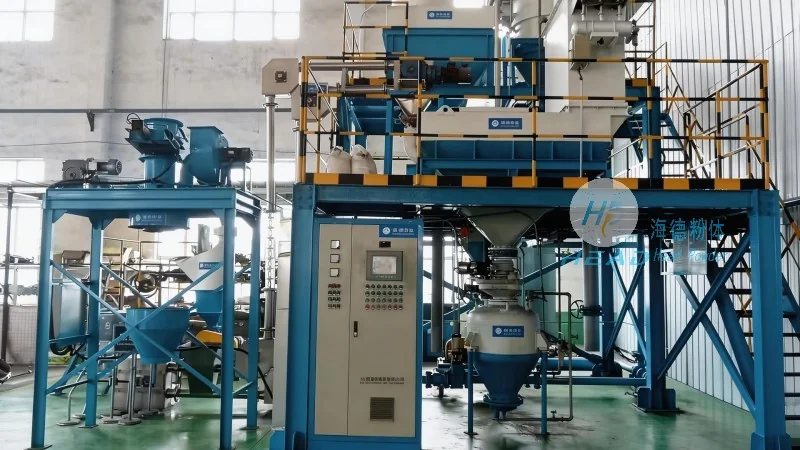
Tungsten carbide, a hard and wear-resistant material, is widely used in industrial applications including cutting tools, wear parts, and aerospace components. The pneumatic conveying system is an essential tool for handling these powders safely and effectively. The equipment is engineered to transport fine powders through a pipeline using compressed air or other gas, eliminating the need for mechanical components that might cause contamination or wear. HeadPowder's systems are tailored to meet the specific requirements of tungsten carbide processing, ensuring optimal performance and reliability.
The tungsten carbide pneumatic conveying equipment typically consists of several critical components that work in concert to achieve efficient material transport. The main parts include:
1. Feeding System: This component is responsible for introducing the tungsten carbide powder into the conveying line. It may feature a hopper with a rotary valve or a vacuum feeder to control the flow rate and prevent blockages. The design ensures that the powder is fed smoothly and consistently, maintaining the desired air-to-solid ratio for stable conveying.
2. Compressed Air System: A high-pressure air compressor supplies the necessary air to generate the conveying velocity. The system includes filters, regulators, and moisture separators to ensure that the air is clean and dry, which is crucial for preventing material degradation and equipment corrosion. The air pressure is typically adjusted based on the particle size and density of the tungsten carbide powder.
3. Conveying Pipeline: The pipeline is constructed from materials resistant to wear and corrosion, such as stainless steel or special alloys, to withstand the abrasive nature of tungsten carbide particles. The pipeline layout is designed to minimize pressure losses and ensure uniform flow. Elbows, bends, and straight sections are strategically placed to guide the material through the system without causing excessive turbulence or deposition.
4. Separation and Collection Unit: At the receiving end, the system uses a cyclone separator or a baghouse to separate the powder from the air stream. The separated powder is collected in a hopper or storage bin, while the cleaned air is either vented to the atmosphere or recirculated back to the compressor. This unit is critical for maintaining material purity and compliance with environmental regulations.
5. Control System: An automated control panel monitors and regulates the operation of the entire system. Sensors detect pressure, flow rate, and material levels, allowing for real-time adjustments to maintain optimal performance. The control system ensures safety by preventing overpressure or blockages and provides data for maintenance and process optimization.
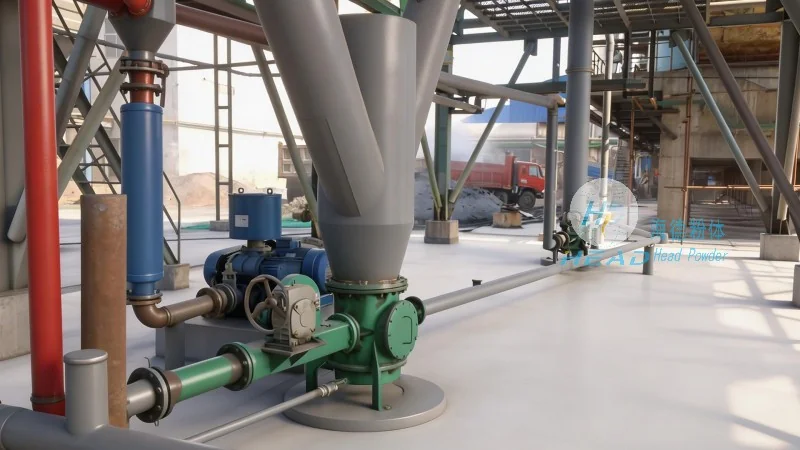
The operation of the tungsten carbide pneumatic conveying system follows a straightforward yet efficient process. Initially, the compressed air is introduced into the pipeline at a high velocity, creating a flow that pulls the tungsten carbide powder particles along with it. The air-solid mixture travels through the pipeline, with the air providing the necessary kinetic energy to move the particles. The separation unit at the end of the line uses centrifugal force to separate the heavier powder from the lighter air, collecting the powder in a designated container.
The key to successful conveying lies in maintaining the correct air-to-solid ratio. If the air velocity is too low, the powder may settle and cause blockages; if it is too high, the system may experience excessive pressure drops and energy consumption. HeadPowder's systems are equipped with advanced control algorithms that dynamically adjust the air flow and feed rate to achieve the optimal ratio for each specific application.
Compared to traditional mechanical conveying methods, the pneumatic system offers several advantages for handling tungsten carbide powders:
- Non-Contact Transport: The absence of mechanical parts reduces the risk of contamination and wear, preserving the purity and quality of the tungsten carbide material.
- Flexibility in Layout: The pipeline can be installed in various configurations, allowing for complex and space-efficient layouts that adapt to different production environments.
- Low Maintenance: With fewer moving parts, the system requires less frequent maintenance, reducing downtime and operational costs.
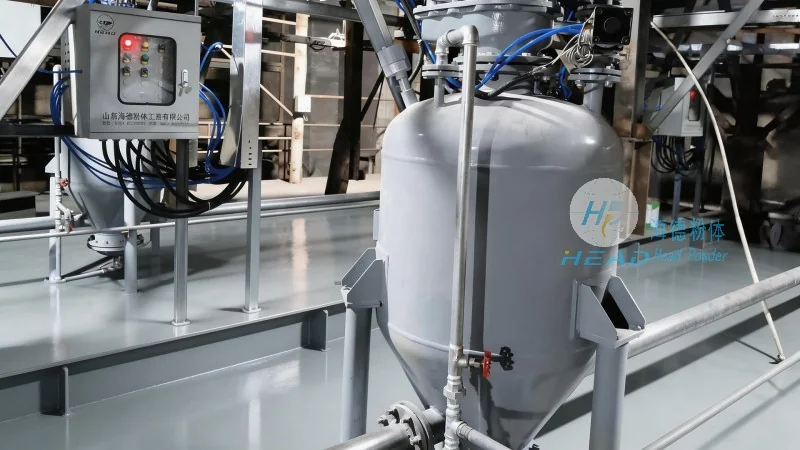
- Energy Efficiency: Modern systems are designed to minimize energy consumption while maintaining high conveying rates, making them cost-effective for long-term operation.
Tungsten carbide pneumatic conveying equipment is widely used in industries that rely on high-performance cutting tools and wear-resistant components. Applications include:
- Metalworking and Tool Manufacturing: Transporting tungsten carbide powders for the production of cutting inserts and tool bits.
- Aerospace and Automotive: Handling powders used in the manufacturing of aerospace components and automotive wear parts.
- Electronics and Semiconductor: Conveying tungsten carbide powders for use in electronic components and semiconductor devices.
- Industrial Manufacturing: General material handling in factories that produce wear-resistant parts and tools.
HeadPowder's tungsten carbide pneumatic conveying equipment represents a reliable and efficient solution for the transportation of high-value powder materials. By understanding the structural components and working principles, users can appreciate how this technology ensures safe, clean, and cost-effective material handling. Based in Shandong, China, HeadPowder continues to innovate in powder handling systems, providing tailored solutions that meet the evolving needs of modern industrial applications.

 Shandong Headpowder Engineering Co., Ltd.
 156-6277-7102(Manager Zhang)
  0531-83386006
  Zhangqiu District, Jinan City, Shandong Province, China
telephone
WeChatconsult
top