With more than 10‑year industry experience, Shandong Headpowder delivers full‑service pneumatic‑conveying systems and blowers, undertaking nationwide turn‑key powder‑handling projects.
Ferrous sulfate, a widely used chemical in various industrial processes, often requires efficient and reliable transportation methods to move it from storage to processing units. Pneumatic conveying systems have emerged as a preferred solution for handling ferrous sulfate due to their ability to transport bulk materials in a controlled, dust-free environment. This article explores the fundamental principles behind ferrous sulfate pneumatic conveying lines and highlights the key characteristics of their operational scenarios.
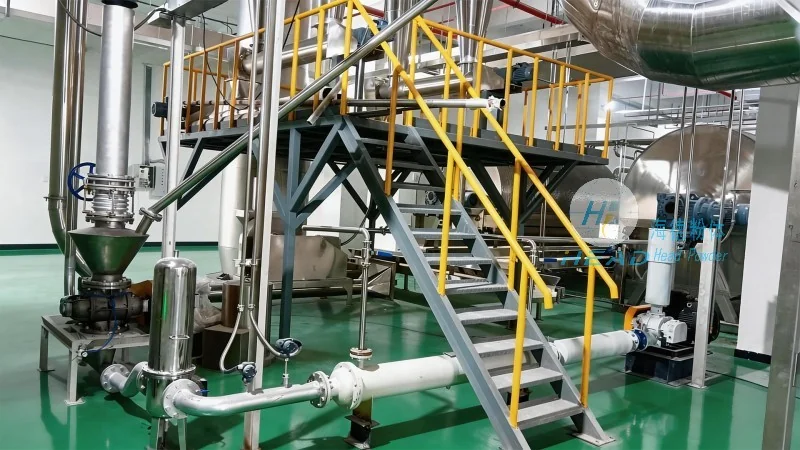
As a leading engineering and manufacturing company in China, Shandong HeadPowder Engineering Co., Ltd. specializes in the design, installation, and maintenance of advanced material handling systems. With a strong focus on innovation and customer satisfaction, HeadPowder has established itself as a trusted partner for industries requiring efficient and safe material transport solutions. The company’s headquarters is located in Shandong, China, where it leverages local expertise and resources to deliver high-quality engineering services.
Pneumatic conveying operates on the principle of using compressed air to move bulk materials through a pipeline. In the case of ferrous sulfate, the system typically involves a hopper or storage bin that feeds the material into a conveying line. As compressed air is introduced into the line, it creates a flow that lifts and transports the ferrous sulfate particles. The system can be either positive pressure (where air is blown into the line) or negative pressure (where air is drawn out), depending on the specific application and material characteristics.
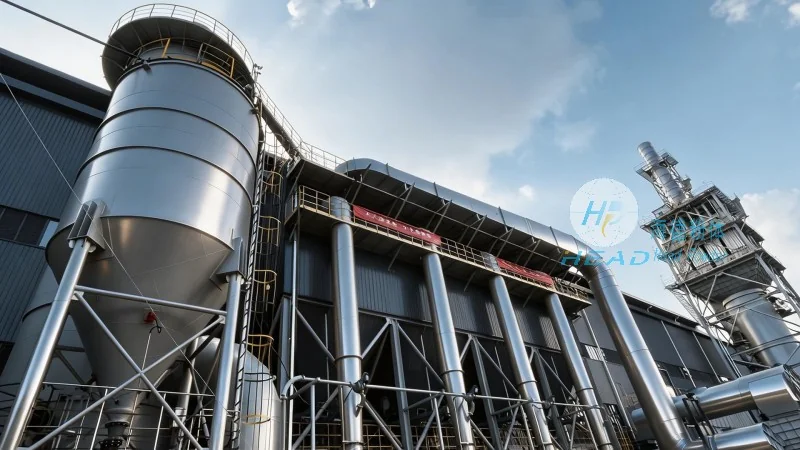
The operational characteristics of ferrous sulfate pneumatic conveying lines are tailored to meet the demands of diverse industrial environments. These systems are commonly used in chemical manufacturing plants, water treatment facilities, and agricultural applications where ferrous sulfate is utilized as a coagulant or fertilizer. The key characteristics include:
Implementing a ferrous sulfate pneumatic conveying line offers several technical advantages that make it an attractive choice for industrial applications. The system’s ability to handle fine powders without clogging is particularly beneficial for ferrous sulfate, which can be prone to agglomeration. Additionally, the controlled air flow ensures consistent material flow rates, preventing overloading or underflow in processing units.
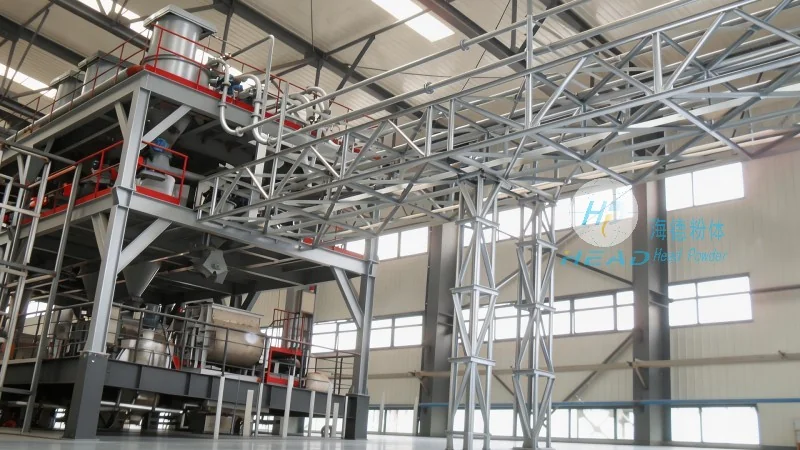
When designing a pneumatic conveying system for ferrous sulfate, engineers consider factors such as particle size, moisture content, and the required transport distance. The system’s components, including air compressors, filters, and control valves, are selected based on these parameters to ensure optimal performance. Regular maintenance, including filter cleaning and air pressure monitoring, is essential to maintain the system’s efficiency and longevity.
In summary, ferrous sulfate pneumatic conveying lines provide a reliable and efficient method for transporting this critical chemical. By leveraging the principles of pneumatic transport and incorporating advanced engineering solutions, these systems enhance operational safety, improve productivity, and reduce long-term costs for industrial users.

 Shandong Headpowder Engineering Co., Ltd.
 156-6277-7102(Manager Zhang)
  0531-83386006
  Zhangqiu District, Jinan City, Shandong Province, China
telephone
WeChatconsult
top