With more than 10‑year industry experience, Shandong Headpowder delivers full‑service pneumatic‑conveying systems and blowers, undertaking nationwide turn‑key powder‑handling projects.
Shandong HeadPowder Engineering Co., Ltd., commonly known as headpowder, is a professional manufacturer specializing in the design, development, and production of advanced powder conveying systems. HeadPowder is headquartered in Shandong, China, and has established a strong reputation in the industry for its reliable and efficient solutions for handling phosphate iron powders and other fine powders.
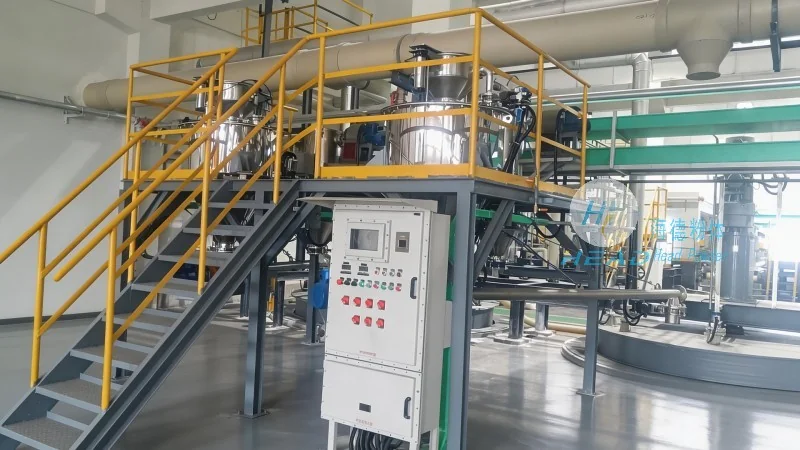
The phosphate iron powder conveying system is a sophisticated piece of industrial equipment engineered to transport phosphate iron powder from storage silos or raw material containers to processing units such as mixers, extruders, or pelletizers. This system is designed to ensure consistent flow rates, minimize material degradation, and maintain a clean and controlled environment throughout the conveying process. The system typically integrates components like hoppers, feeders, conveyors (e.g., pneumatic or mechanical), and control panels to achieve seamless operation.
The operation of the phosphate iron powder conveying system follows a systematic sequence of steps to ensure efficient and safe material handling. The process begins with the loading of phosphate iron powder into the system's hopper. The hopper is equipped with a level sensor to monitor the powder quantity and trigger the next stage when the material reaches a predetermined level. Once the hopper is filled, the powder is fed into the conveying system via a feeder, which can be a rotary valve or a screw feeder, depending on the system design. The feeder regulates the flow rate of the powder, ensuring a steady and controlled discharge into the conveyor.
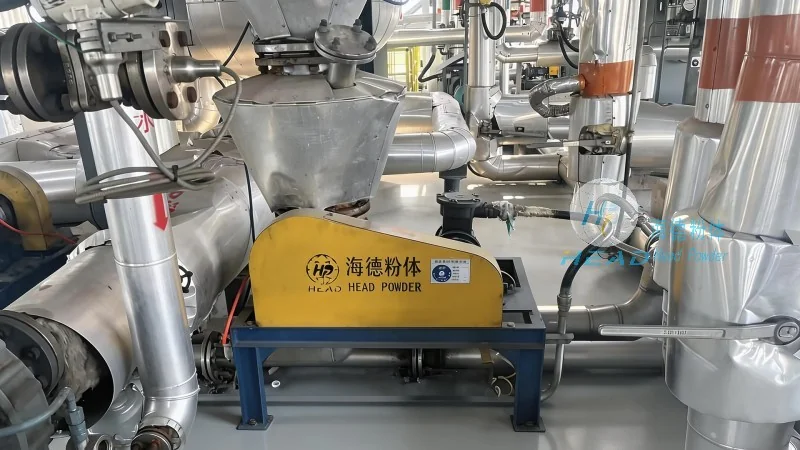
The conveyor then transports the phosphate iron powder to the destination point. In many systems, this involves a pneumatic conveying line where compressed air is used to create a flow of powder through pipes. The air-powder mixture travels through the pipeline, reaching the receiving hopper or processing equipment. The system may include a filter or cyclone separator to remove any fine particles or dust from the air before it is released back into the environment. After the powder is delivered to the processing unit, the system may undergo a cleaning cycle to remove any residual powder from the hopper, feeder, and conveyor components, preventing contamination and ensuring the system remains in optimal condition.
The core working principle of the phosphate iron powder conveying system revolves around the transfer of material using either mechanical or pneumatic forces. Mechanical conveying systems utilize components like screw conveyors or belt conveyors, which rely on the physical movement of the conveyor mechanism to push the powder forward. These systems are suitable for handling bulk materials with moderate flow rates and are often used in applications where the powder is not too fine or abrasive.
Pneumatic conveying systems, on the other hand, employ compressed air to create a flow of powder through a pipeline. The air is introduced into the system at a specific pressure, and the powder is entrained in the air stream, moving through the pipes. The system may use positive pressure (where air is blown into the line) or negative pressure (where air is sucked out of the line) to transport the powder. The choice between positive and negative pressure depends on factors such as the distance to be covered, the material's properties, and the system's design. The pneumatic system typically includes a series of components like a blower, filter, and control valves to regulate the air flow and ensure efficient powder transport.
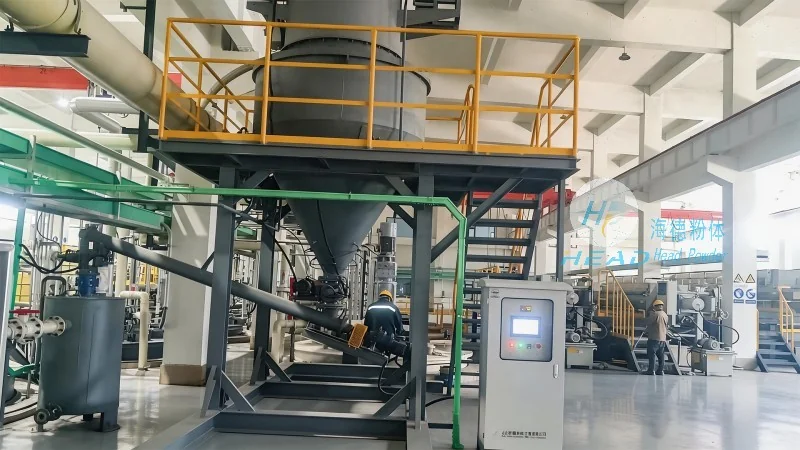
The phosphate iron powder conveying system consists of several critical components, each playing a vital role in the overall operation. The hopper serves as the storage container for the powder, providing a stable and controlled environment for material accumulation. The feeder, which can be a rotary valve or a screw feeder, regulates the flow rate of the powder from the hopper to the conveyor, ensuring a consistent and controlled discharge. The conveyor itself is the primary component responsible for transporting the powder from the feeder to the destination point. In pneumatic systems, the conveyor is a pipeline system where the powder is carried by the air stream. The control panel is an essential part of the system, housing the sensors, valves, and controls that monitor and regulate the operation of the conveying process. The control panel allows operators to adjust parameters such as flow rate, pressure, and temperature to optimize the system's performance and ensure safe operation.
The phosphate iron powder conveying system offers several advantages over traditional material handling methods. By using a closed system, it minimizes dust emissions and improves workplace safety. The system also ensures consistent flow rates, which is crucial for maintaining the quality of the final product. Additionally, the system is designed to handle fine powders without causing degradation or agglomeration, which is critical for applications where the powder's properties must be preserved. The system is widely used in industries such as battery manufacturing, where phosphate iron powder is a key raw material for lithium-ion batteries. It is also used in other sectors like pharmaceuticals, food processing, and chemical manufacturing, where fine powders need to be transported efficiently and safely.

 Shandong Headpowder Engineering Co., Ltd.
 156-6277-7102(Manager Zhang)
  0531-83386006
  Zhangqiu District, Jinan City, Shandong Province, China
telephone
WeChatconsult
top