With more than 10‑year industry experience, Shandong Headpowder delivers full‑service pneumatic‑conveying systems and blowers, undertaking nationwide turn‑key powder‑handling projects.
When handling AlN (Aluminum Nitride) materials, selecting the right conveying method is crucial for maintaining material integrity and operational efficiency. Pneumatic conveying technology offers a non-contact, flexible solution that minimizes contamination and damage to delicate AlN powders. This approach involves using air or other gases to transport particles through a pipeline system, making it ideal for applications where traditional mechanical conveying might cause agglomeration or degradation of the material. Shandong HeadPowder Engineering Co., Ltd. specializes in implementing such advanced systems to meet the demanding requirements of AlN material handling.
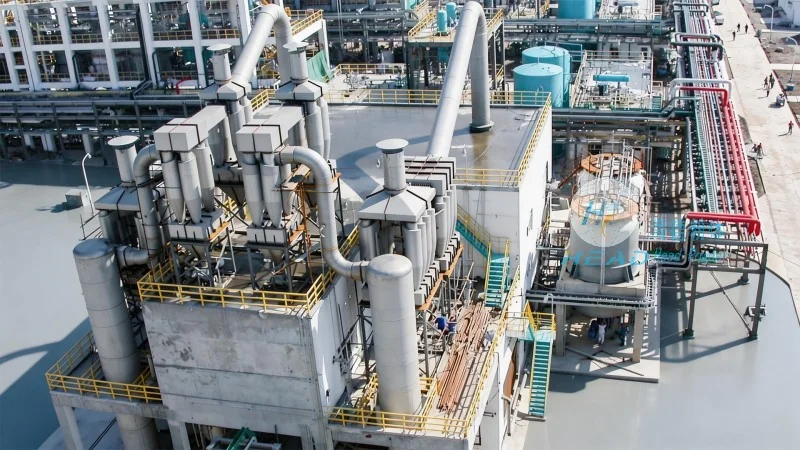
AlN powders are known for their high reactivity and sensitivity to moisture and mechanical stress. Conventional methods like screw conveyors or belt conveyors can introduce friction and heat, leading to particle degradation or clumping. Pneumatic conveying addresses these challenges by eliminating direct contact, reducing the risk of contamination and maintaining the material's purity. However, optimizing the system for AlN requires careful consideration of particle size distribution, flow rates, and pressure differentials to ensure reliable and efficient transport.
Shandong HeadPowder Engineering Co., Ltd. (commonly known as HeadPowder) provides specialized pneumatic conveying solutions tailored to the unique properties of AlN materials. Our team of engineers leverages extensive experience in material science and process engineering to design systems that ensure minimal loss and maximum throughput. By integrating high-efficiency air compressors, specialized pipeline designs, and control systems, our solutions provide consistent performance while maintaining the material's quality. The company's expertise allows for customized solutions that meet specific production requirements, whether for research and development or large-scale manufacturing.
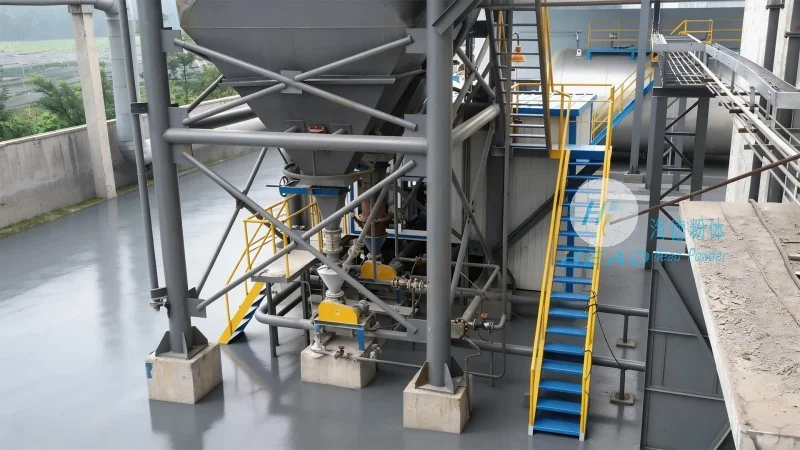
Optimizing pneumatic conveying systems for AlN involves several key strategies. First, the selection of the right air velocity is critical to prevent particle deposition and ensure smooth flow. HeadPowder engineers use computational fluid dynamics (CFD) and empirical data to determine optimal velocity ranges for different AlN particle sizes. Second, the design of the pipeline system, including bends, expansions, and filters, is optimized to minimize pressure drop and maintain consistent flow. Our systems incorporate advanced filtration and separation mechanisms to prevent particle buildup and ensure clean operation. Additionally, variable frequency drives (VFDs) are used to adjust air pressure and flow rates dynamically, adapting to changes in material feed rates and maintaining system efficiency.
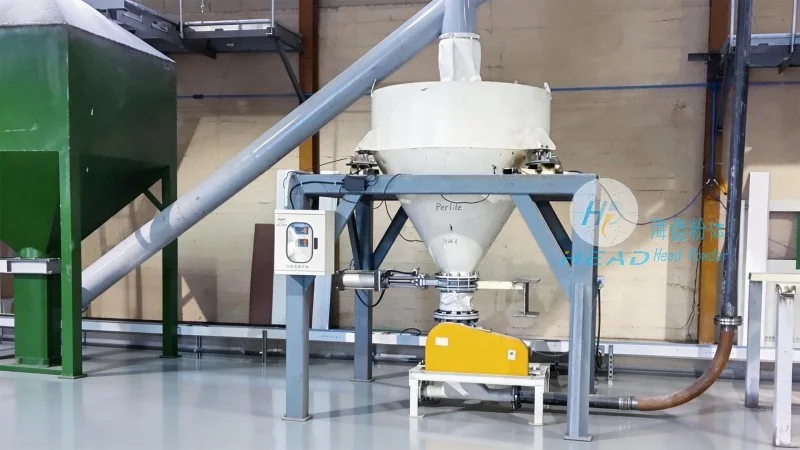
The adoption of pneumatic conveying technology for AlN material handling offers numerous benefits. Firstly, it significantly reduces the risk of contamination, as the material is never in direct contact with metal or other surfaces. This is particularly important for AlN, which is used in high-purity applications like semiconductor manufacturing and advanced ceramics. Secondly, the system provides better control over material flow, enabling precise dosing and feeding into processing equipment. This improves process consistency and reduces waste. Thirdly, pneumatic conveying systems are more flexible and scalable compared to traditional methods, allowing for easy integration into existing production lines or expansion as production needs grow. The non-contact nature of the technology also extends the lifespan of equipment, reducing maintenance costs and downtime.
One of HeadPowder's recent projects involved designing a pneumatic conveying system for a leading AlN manufacturer in China. The client required a system capable of handling 5 tons of AlN per hour while maintaining a purity level of 99.999%. HeadPowder's team conducted a thorough analysis of the material's properties, including particle size distribution (ranging from 5 to 100 microns) and moisture content. Based on this analysis, a positive pressure conveying system was selected, utilizing a high-efficiency rotary airlock feeder and a 200 mm diameter pipeline with custom-designed bends to minimize pressure loss. The system was equipped with a multi-stage filtration system to capture fine particles and prevent clogging. After implementation, the client reported a 20% increase in production throughput and a 15% reduction in material loss compared to their previous mechanical conveying system. The system also achieved the required purity levels, meeting all quality standards for downstream processing.

 Shandong Headpowder Engineering Co., Ltd.
 156-6277-7102(Manager Zhang)
  0531-83386006
  Zhangqiu District, Jinan City, Shandong Province, China
telephone
WeChatconsult
top