With more than 10‑year industry experience, Shandong Headpowder delivers full‑service pneumatic‑conveying systems and blowers, undertaking nationwide turn‑key powder‑handling projects.
Desulfurization gypsum, a byproduct of flue gas desulfurization in power plants, presents unique challenges in transportation due to its fine particle size, moisture content, and handling characteristics. Traditional methods such as belt conveyors or truck transport often face issues like dust generation, material clogging, and operational inefficiencies. To address these challenges, advanced pneumatic conveying technology has emerged as a reliable solution, offering efficient, dust-free, and flexible transport capabilities. This article explores the application and optimization of pneumatic conveying systems specifically tailored for desulfurization gypsum, highlighting key design considerations, operational benefits, and the role of specialized engineering solutions from Shandong HeadPowder Engineering Co., Ltd.
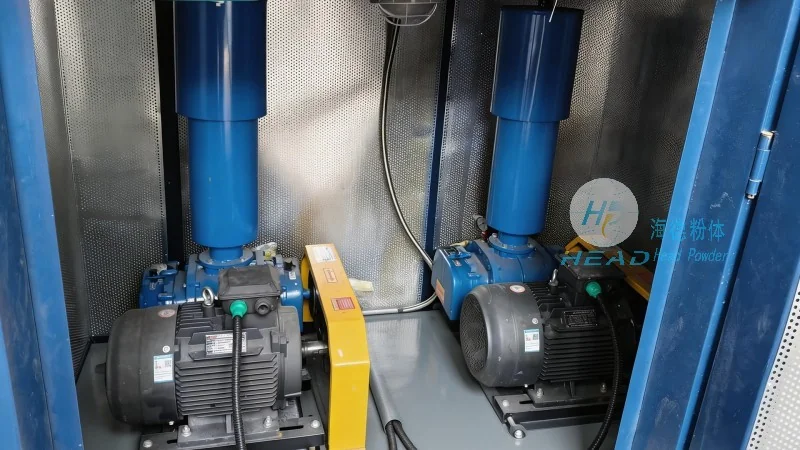
Pneumatic conveying utilizes air flow to transport bulk materials through a pipeline system. Unlike mechanical conveyors, it eliminates the need for moving parts in the material path, reducing maintenance requirements and minimizing the risk of material contamination. For desulfurization gypsum, which is typically a fine, powdery substance, pneumatic systems excel in maintaining material integrity and preventing clogging. The technology operates on either positive or negative pressure, with positive pressure (pressure conveying) being more common for long-distance and high-capacity applications. Key advantages include: 1) Efficient Material Handling: Ability to transport gypsum over significant distances (up to several kilometers) with minimal energy consumption compared to other methods. 2) Dust Control: Enclosed pipeline systems prevent dust emissions, ensuring compliance with environmental regulations and improving workplace safety. 3) Flexibility: Systems can be easily reconfigured or expanded to accommodate varying production rates or site layouts. 4) Reduced Maintenance: Fewer mechanical components mean lower downtime and operational costs over the system's lifespan.
Designing an effective pneumatic conveying system for desulfurization gypsum requires careful consideration of several factors to ensure optimal performance and longevity. First, material properties analysis is critical. Desulfurization gypsum has a specific gravity of approximately 2.3-2.5, a particle size distribution typically ranging from 10 to 200 microns, and a moisture content that can vary based on the flue gas treatment process. These characteristics influence the selection of air velocity, pipeline diameter, and system pressure. Engineers from Shandong HeadPowder Engineering Co., Ltd. conduct thorough material testing to determine the optimal conveying velocity, which is crucial for preventing particle deposition and ensuring smooth flow. Second, system configuration plays a vital role. The choice between dilute-phase and dense-phase conveying depends on the required capacity and distance. Dilute-phase systems use higher air velocities and lower material concentrations, suitable for short to medium distances, while dense-phase systems employ lower velocities and higher material concentrations, ideal for long-distance transport where energy efficiency is paramount. Third, pipeline design must account for the risk of clogging and material buildup. This includes incorporating features such as pulse-jet cleaning systems, airlocks, and surge hoppers to maintain consistent flow and prevent blockages. Fourth, environmental and safety considerations are integral to the design. Enclosed systems with proper filtration and ventilation reduce dust emissions, while explosion-proof components are incorporated to mitigate risks associated with potential dust explosions in industrial settings.
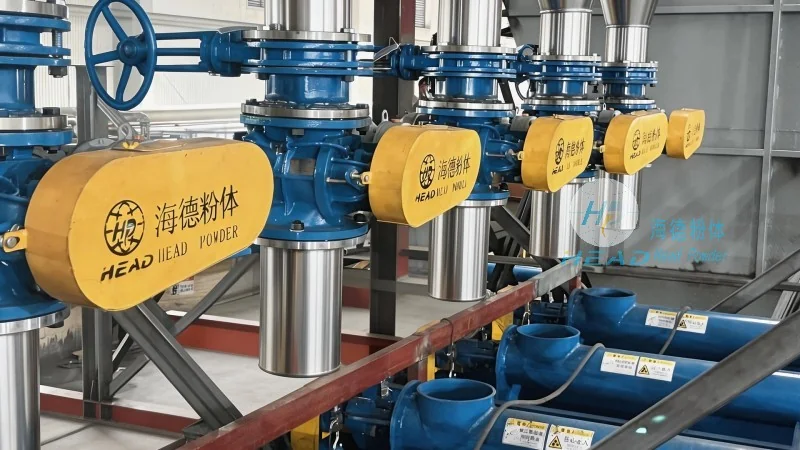
Optimizing pneumatic conveying systems for desulfurization gypsum involves continuous refinement of operational parameters and system components to enhance efficiency and reliability. One key strategy is variable air flow control. By adjusting the air velocity in real-time based on material feed rates and pipeline conditions, operators can maintain optimal conveying performance, reducing energy waste and preventing material degradation. This is often achieved through advanced control systems that monitor pressure, flow, and material level in the hopper, automatically adjusting air supply to match demand. Another optimization approach is system integration. Integrating the pneumatic conveying system with upstream and downstream processes, such as gypsum storage silos or processing equipment, allows for seamless material flow and minimizes bottlenecks. For example, linking the conveying system to a gypsum storage facility enables automated loading and unloading, improving overall plant productivity. Additionally, regular maintenance and monitoring are essential for long-term system performance. Shandong HeadPowder Engineering Co., Ltd. recommends scheduled inspections of pipeline components, air filtration systems, and control mechanisms to identify and address potential issues before they escalate. This proactive approach extends the system's operational life and ensures consistent performance over time. Furthermore, energy efficiency improvements can be achieved through the use of high-efficiency air compressors and optimized pipeline layouts. By reducing air pressure requirements and minimizing pressure losses in the system, energy consumption can be significantly lowered, contributing to cost savings and environmental sustainability.
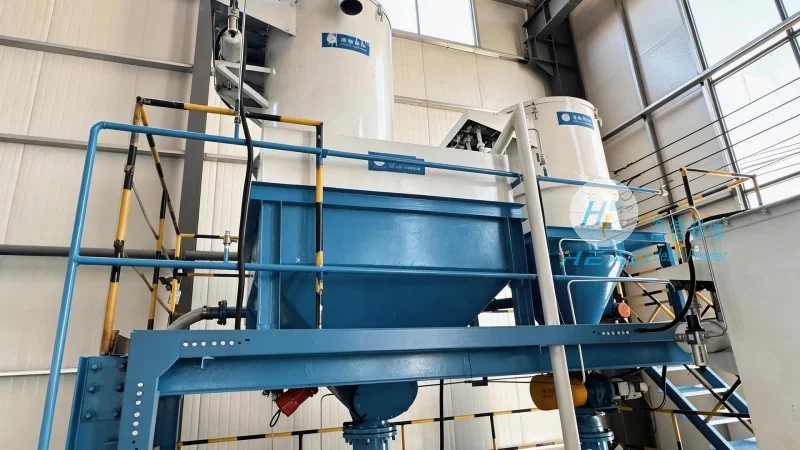
Shandong HeadPowder Engineering Co., Ltd., a leading provider of bulk material handling solutions, has successfully implemented pneumatic conveying systems for desulfurization gypsum in multiple power plant projects across China. One notable case involved a 500 MW thermal power plant in Shandong Province, where the company designed and installed a 3-kilometer long positive pressure conveying system to transport gypsum from the desulfurization unit to a nearby storage facility. The system was engineered to handle a capacity of 200 tons per hour, with a particle size distribution of 80% passing 75 microns. Key design features included a 200 mm diameter pipeline, a pulse-jet cleaning system for the hopper, and an advanced control panel for real-time monitoring. The implementation resulted in a 30% reduction in dust emissions compared to traditional methods, a 20% decrease in operational energy consumption, and a 15% increase in overall plant productivity. The success of this project was attributed to the company's expertise in material characterization, system optimization, and adherence to strict environmental and safety standards. Another project in Henan Province involved a long-distance dense-phase conveying system for a 1000 MW power plant, where the company utilized a combination of positive and negative pressure zones to transport gypsum over 8 kilometers. The system was tailored to handle varying moisture content in the gypsum, with integrated moisture sensors and automatic adjustments to air flow. The result was a reliable, low-maintenance solution that met the plant's strict operational requirements and contributed to the plant's compliance with national environmental regulations.
As the demand for clean energy and stricter environmental regulations continues to grow, the importance of efficient and sustainable desulfurization gypsum transport cannot be overstated. Pneumatic conveying technology, with its inherent advantages in material handling, dust control, and flexibility, remains a cornerstone of modern bulk material transport solutions. By leveraging advanced engineering and optimization strategies, companies like Shandong HeadPowder Engineering Co., Ltd. are enabling power plants to manage their gypsum byproducts effectively, reduce operational costs, and meet environmental compliance standards. The successful implementation of pneumatic conveying systems for desulfurization gypsum not only addresses the challenges associated with traditional transport methods but also contributes to the overall sustainability of power generation processes. As technology advances and system designs evolve, the future of desulfurization gypsum transport will likely see further integration of automation, smart monitoring, and energy-efficient solutions, ensuring that bulk material handling remains a key enabler of clean energy production.

 Shandong Headpowder Engineering Co., Ltd.
 156-6277-7102(Manager Zhang)
  0531-83386006
  Zhangqiu District, Jinan City, Shandong Province, China
telephone
WeChatconsult
top