With more than 10‑year industry experience, Shandong Headpowder delivers full‑service pneumatic‑conveying systems and blowers, undertaking nationwide turn‑key powder‑handling projects.
HeadPowder, a leading engineering firm based in Shandong, China, specializes in the design, manufacturing, and implementation of advanced pneumatic conveying systems tailored for fine sand applications. This article delves into the fundamental principles of fine sand pneumatic conveying lines and highlights the key characteristics of their operational environments.
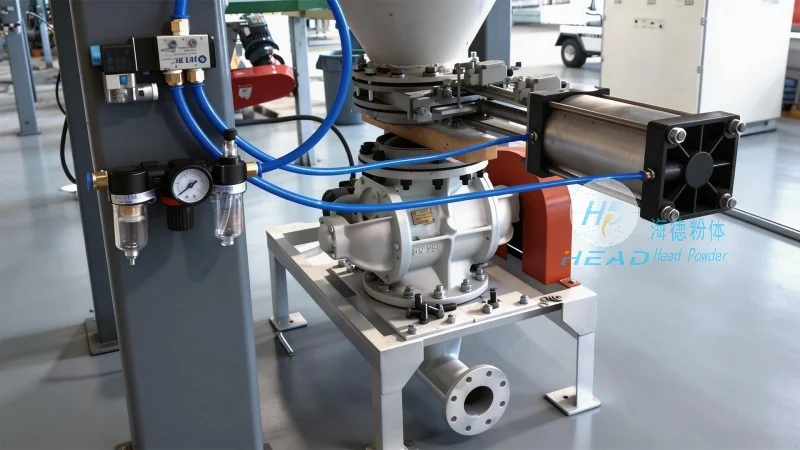
Fine sand, characterized by its small particle size and high density, presents unique challenges in material handling. Traditional methods such as belt conveyors or bucket elevators often struggle with issues like dust generation, material degradation, and inefficient transport due to the fine particles' tendency to adhere to surfaces or cause blockages. Pneumatic conveying offers a solution by utilizing air as the transport medium, enabling the efficient and dust-free movement of fine sand from source to destination.
The core principle of pneumatic conveying for fine sand involves the creation of a low-pressure or high-pressure air stream that propels the sand particles through a pipeline. This process can be categorized into two main types: dilute-phase and dense-phase conveying. Dilute-phase systems rely on high-velocity air to suspend the sand particles, while dense-phase systems use lower velocities and higher air volumes to transport the material in a more compact form. The choice between these methods depends on factors such as the distance of transport, the required flow rate, and the sensitivity of the sand to air flow conditions.

Key components of a fine sand pneumatic conveying line include the air compressor, feeders, conveying pipelines, and discharge equipment. The air compressor generates the necessary air pressure to move the sand particles. Feeders, such as rotary valves or screw feeders, control the flow rate of the sand into the pipeline, ensuring consistent and controlled material delivery. The conveying pipelines are typically made of materials like stainless steel or PVC to prevent corrosion and particle buildup. Discharge equipment, such as rotary valves or cyclone separators, separates the sand from the air stream at the destination, allowing for clean and efficient material collection.
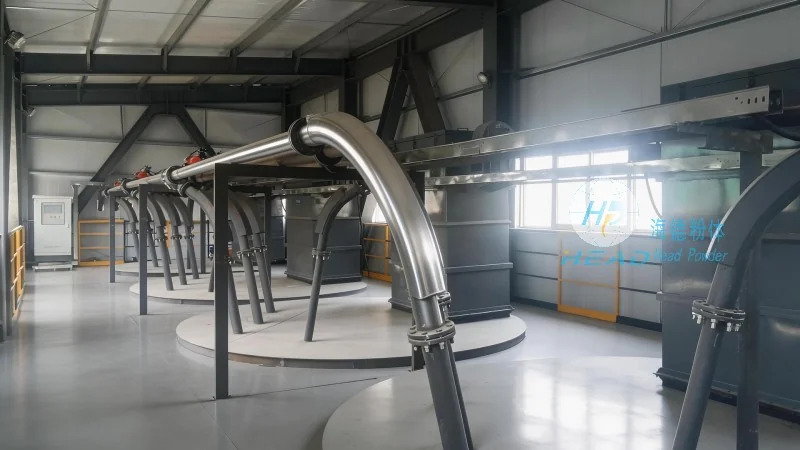
Working scene characteristics of fine sand pneumatic conveying systems are influenced by several factors. The operational environment often requires strict control of dust and air quality to comply with industrial safety and environmental regulations. This necessitates the use of sealed systems and efficient filtration to prevent dust emissions. Additionally, the system must be designed to handle the specific properties of fine sand, including its tendency to create static electricity, which can lead to material buildup or sparks. Proper grounding and anti-static measures are therefore essential in the design and operation of these systems.
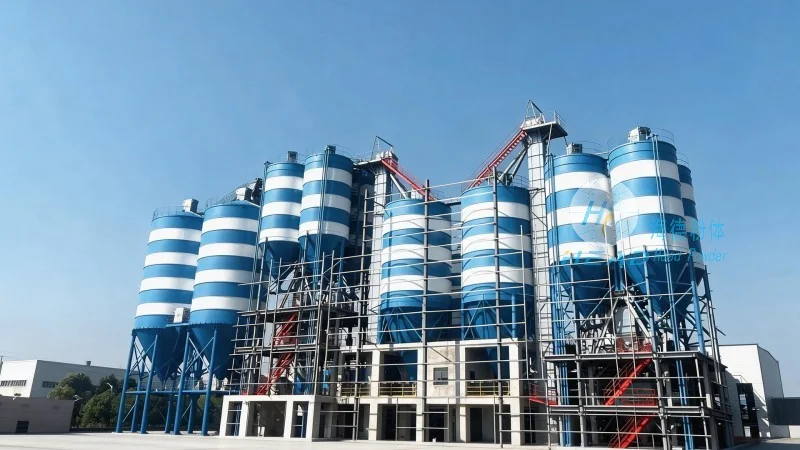
Another critical aspect is the impact of the conveying distance and elevation changes on the system's performance. Longer distances or significant vertical lifts may require additional air pressure or energy to maintain the desired flow rate. The system's design must account for these variables to ensure reliable and efficient operation. Furthermore, the system's scalability allows it to be adapted to various production scales, from small-scale laboratory applications to large industrial production lines, making it a versatile solution for different operational needs.
In conclusion, fine sand pneumatic conveying lines represent an advanced and efficient solution for handling fine sand materials. By leveraging the principles of pneumatic transport, these systems offer advantages such as dust-free operation, high material handling capacity, and flexibility in application. As a company specializing in this technology, Shandong HeadPowder Engineering Co., Ltd. provides comprehensive solutions tailored to the unique requirements of fine sand applications, ensuring optimal performance and reliability in diverse working environments.

 Shandong Headpowder Engineering Co., Ltd.
 156-6277-7102(Manager Zhang)
  0531-83386006
  Zhangqiu District, Jinan City, Shandong Province, China
telephone
WeChatconsult
top