With more than 10‑year industry experience, Shandong Headpowder delivers full‑service pneumatic‑conveying systems and blowers, undertaking nationwide turn‑key powder‑handling projects.
HeadPowder, a leading engineering firm based in Shandong, China, specializes in the design and implementation of advanced pneumatic conveying systems tailored for calcium oxide and similar bulk materials. This article explores the fundamental principles behind these systems and highlights the key characteristics of their operational environments.
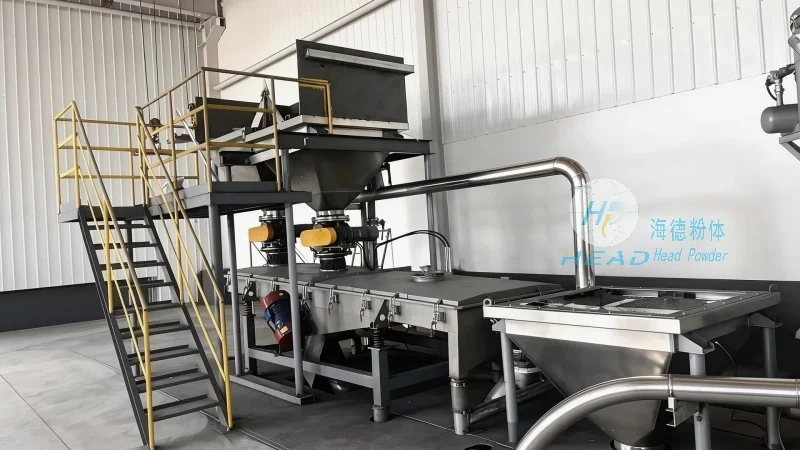
Pneumatic conveying systems utilize air or gas as the medium to transport bulk materials like calcium oxide. The fundamental principle involves creating a pressure differential between the conveying line and the ambient environment. In positive pressure systems, compressed air is introduced at the material feed point, generating a pressure higher than atmospheric pressure. This pressure drives the material through the pipeline, ensuring continuous and efficient flow. Conversely, negative pressure systems operate by creating a vacuum at the discharge end, drawing material from the source into the conveying line. For calcium oxide, which is often a fine or powdery substance, positive pressure systems are commonly preferred due to their ability to handle high material loads and maintain consistent flow rates without clogging the pipeline.
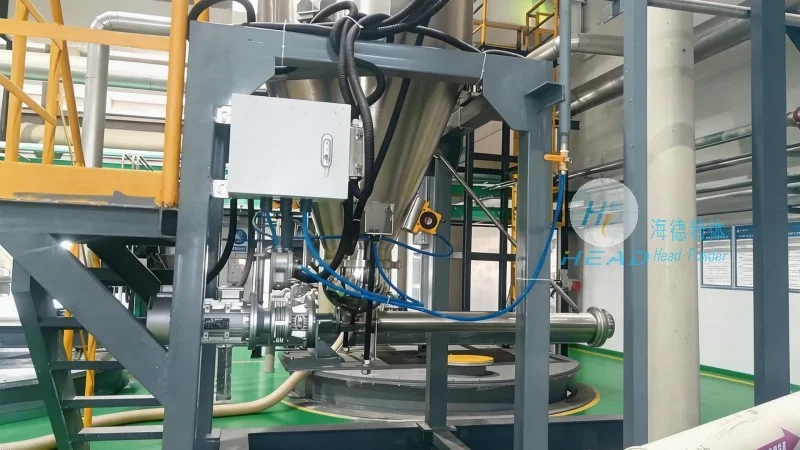
The operational characteristics of pneumatic conveying systems for calcium oxide are shaped by several critical factors that define their performance and suitability for various industrial applications. Firstly, the material's physical properties, such as particle size, density, and moisture content, directly influence the system's design. Calcium oxide, being a reactive and often hygroscopic material, requires systems that can minimize exposure to air and moisture to prevent degradation or clumping. This leads to the use of sealed, airtight conveying lines and proper moisture control mechanisms within the system. Secondly, the system's scalability and flexibility are crucial. Industrial settings often demand systems that can handle varying material volumes and flow rates, which is achieved through adjustable air pressure controls and modular components. For example, in a cement or chemical plant, the system may need to transport calcium oxide from storage silos to processing units, requiring a system that can integrate with existing infrastructure while maintaining high efficiency.
HeadPowder's expertise lies in tailoring pneumatic conveying systems to meet the unique demands of different work environments. In a typical industrial scenario, a calcium oxide pneumatic conveying system might consist of a hopper for material storage, a rotary valve for controlled discharge, a positive pressure blower, and a pipeline network that connects the source to the destination. The system's design considers factors like the distance between the source and destination, the height of the vertical lift, and the required flow rate. For instance, in a large-scale production facility, the system may need to transport calcium oxide over several hundred meters, necessitating high-pressure blower units and reinforced pipelines to maintain material velocity and prevent deposition. Additionally, the system incorporates safety features such as pressure relief valves and material flow indicators to ensure operational safety and prevent system failures.
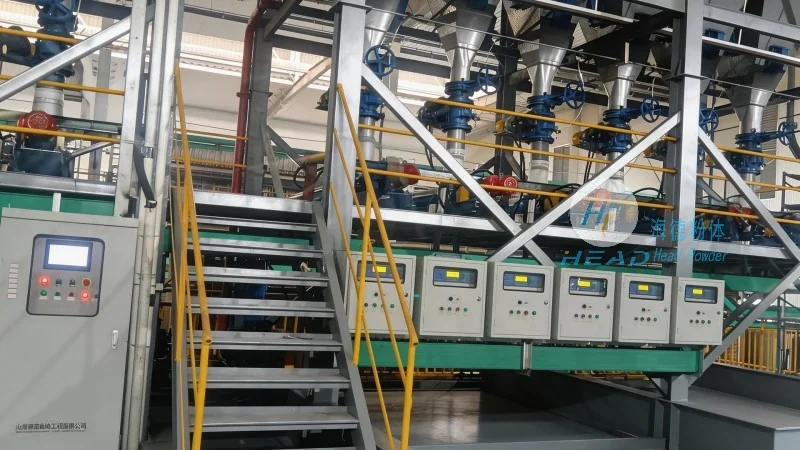
Implementing a pneumatic conveying system for calcium oxide offers several advantages over traditional methods like belt conveyors or manual handling. The primary benefit is the reduction in material handling time and labor costs, as the system automates the entire transport process. This also minimizes the risk of material contamination and exposure to personnel, which is critical for calcium oxide due to its potential reactivity. Furthermore, pneumatic systems provide better control over material flow, allowing for precise dosing and integration with downstream processes, such as mixing or packaging. The efficiency of these systems is also reflected in their lower energy consumption compared to mechanical conveyors, especially when transporting fine powders over moderate distances. In summary, the combination of reliability, safety, and operational efficiency makes pneumatic conveying an ideal solution for calcium oxide material handling in various industrial settings.

 Shandong Headpowder Engineering Co., Ltd.
 156-6277-7102(Manager Zhang)
  0531-83386006
  Zhangqiu District, Jinan City, Shandong Province, China
telephone
WeChatconsult
top