With more than 10‑year industry experience, Shandong Headpowder delivers full‑service pneumatic‑conveying systems and blowers, undertaking nationwide turn‑key powder‑handling projects.
Large-scale powder pneumatic conveying is a crucial technology in modern industrial processes, enabling the efficient and safe transportation of bulk solid materials through the use of air or gas as the conveying medium. This method has become increasingly vital across various sectors, including chemical, pharmaceutical, food, and construction, due to its ability to handle a wide range of powder characteristics and operational demands.
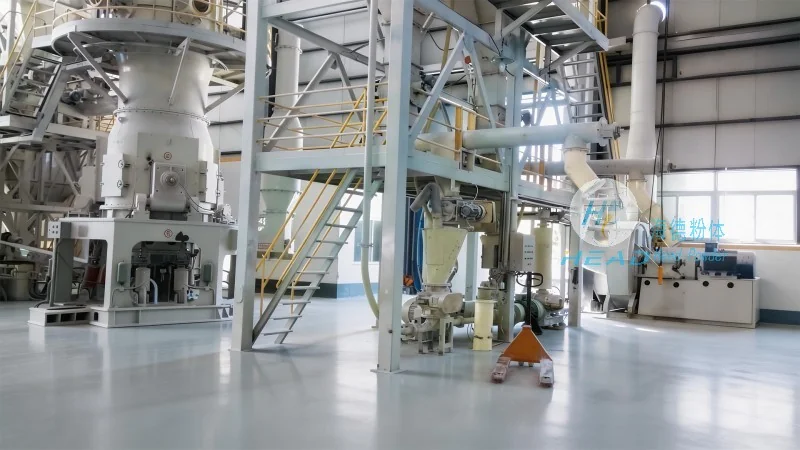
The core principle of large-scale powder pneumatic conveying involves the creation of a solid-gas two-phase flow system. In this system, powder particles are suspended and transported by the force of air or gas moving through a pipeline. The process typically operates under either positive pressure (pressure conveying) or negative pressure (suction conveying), each with distinct advantages depending on the application requirements. Positive pressure systems use blowers or compressors to generate pressure, pushing the material through the pipeline, while suction systems employ vacuum pumps to draw the material from the source. The selection of the conveying method depends on factors such as the distance, material properties, and the need for containment or environmental control.
Large-scale pneumatic conveying systems consist of several critical components that work in tandem to ensure efficient operation. These include the material feed hopper, which stores and feeds the powder into the system; the conveying line, which is typically made of stainless steel or other corrosion-resistant materials to handle various powder types; the air or gas source, such as a blower or vacuum pump, which provides the necessary pressure or suction; and the control system, which regulates the flow rate and pressure to maintain optimal performance. The material feed hopper often incorporates a rotary valve or a feeder to ensure a consistent and controlled flow of powder into the pipeline. The conveying line may include bends, elbows, and expansion joints to accommodate changes in direction and prevent material buildup or blockages. The air source is designed to deliver the required airflow and pressure, with the control system monitoring parameters like pressure, flow rate, and temperature to prevent overloading or system failure.
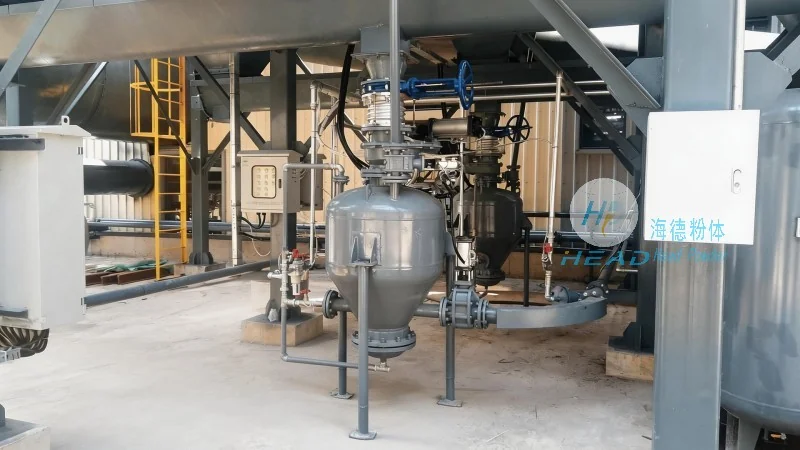
Large-scale powder pneumatic conveying is widely applied in diverse industrial settings, each with unique operational challenges and requirements. In the chemical industry, for example, it is used to transport raw materials such as powders of chemicals, pigments, and additives to production lines. The ability to handle abrasive or corrosive materials without causing wear or contamination makes this method ideal for such applications. In the pharmaceutical sector, the technology is employed to convey active pharmaceutical ingredients (APIs) and excipients with high precision and minimal risk of cross-contamination. The closed system design ensures that the materials remain sterile and free from external contaminants, which is critical for maintaining product quality and regulatory compliance. The food industry also utilizes large-scale pneumatic conveying for transporting ingredients like flour, sugar, and spices, where hygiene and product integrity are paramount. The system's ability to maintain a clean environment and prevent dust exposure enhances both safety and product quality. In the construction industry, large-scale pneumatic conveying is used to transport cement, sand, and other building materials to construction sites, improving efficiency and reducing manual labor. The technology's capacity to handle high volumes and long distances makes it suitable for large-scale projects, such as infrastructure development or industrial plant construction.
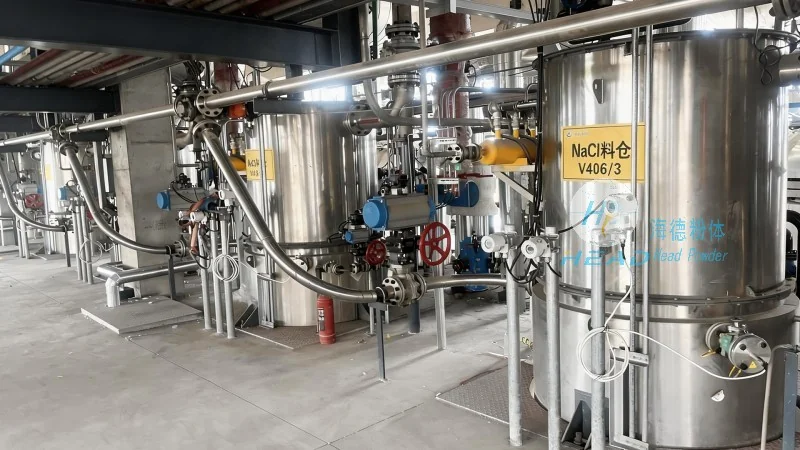
Large-scale powder pneumatic conveying offers several advantages that make it a preferred choice for many industries. One of the primary benefits is the ability to handle high material throughput, allowing for continuous and uninterrupted production. The system's compact design and minimal space requirements make it suitable for both new installations and retrofitting existing facilities. Additionally, the closed pipeline system reduces dust emissions and improves workplace safety, which is essential in environments where powder handling is common. The technology also provides flexibility in terms of material handling, as it can be adapted to transport different types of powders with varying particle sizes, densities, and flow properties. However, large-scale operations also present challenges that need to be addressed to ensure optimal performance. One of the main challenges is the potential for material blockages or plugging in the pipeline, which can occur due to the agglomeration of particles or the presence of moisture. To mitigate this, systems often include features such as in-line mixers, vibrators, or heated lines to prevent blockages. Another challenge is the maintenance of the equipment, as the components, especially the conveying line and air source, require regular inspection and replacement to avoid wear and tear. The cost of the system, including the initial investment and ongoing maintenance, can also be a factor, though the long-term benefits in terms of efficiency and safety often outweigh the initial costs.
Large-scale powder pneumatic conveying remains a critical technology in modern industrial processes, offering efficient, safe, and flexible solutions for the transportation of bulk solid materials. As industries continue to evolve and demand higher performance from material handling systems, advancements in technology are expected to further enhance the capabilities of these systems. For example, the integration of automation and control systems is becoming more common, allowing for real-time monitoring and adjustment of the conveying process. This not only improves efficiency but also reduces the risk of human error. Additionally, the development of more durable and corrosion-resistant materials for the conveying line is improving the longevity of the systems. Companies like Shandong HeadPowder Engineering Co., Ltd., based in China, are at the forefront of developing and implementing these advanced systems, providing customized solutions tailored to the specific needs of their clients. With their expertise in large-scale pneumatic conveying, they help industries optimize their material handling processes, reduce costs, and enhance overall operational efficiency.

 Shandong Headpowder Engineering Co., Ltd.
 156-6277-7102(Manager Zhang)
  0531-83386006
  Zhangqiu District, Jinan City, Shandong Province, China
telephone
WeChatconsult
top