With more than 10‑year industry experience, Shandong Headpowder delivers full‑service pneumatic‑conveying systems and blowers, undertaking nationwide turn‑key powder‑handling projects.
Understanding rubber granule material handling is crucial for industries that rely on efficient and reliable transportation of these materials. This process involves the movement of rubber granules from one location to another, often within manufacturing facilities or processing plants. The design principles behind such systems are tailored to the unique characteristics of rubber granules, ensuring optimal performance and minimal operational issues.
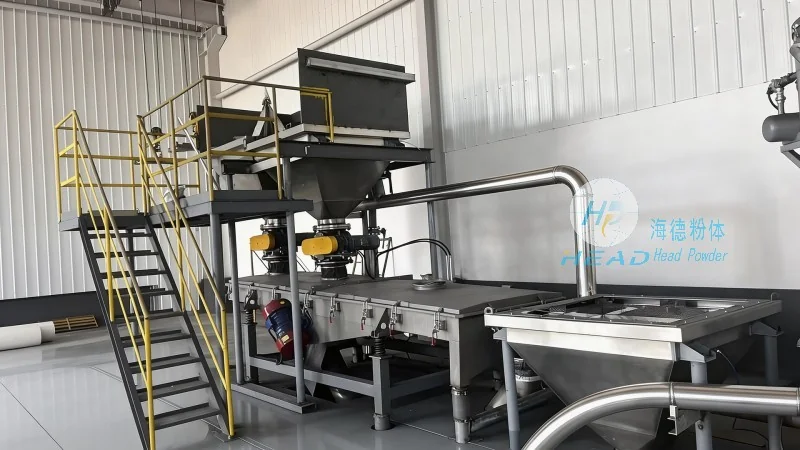
Rubber granules, typically produced from recycled rubber or synthetic rubber, exhibit specific physical properties that influence how they are handled. These properties include particle size distribution, density, shape, and moisture content. For instance, smaller granules may require different equipment settings compared to larger ones, as they can affect flow characteristics and friction within the conveying system. Additionally, the density of rubber granules, often ranging from 1.1 to 1.3 g/cm³, impacts the power requirements for the conveying equipment, as higher density materials demand more energy to move. The shape of the granules, whether spherical or irregular, also plays a role in how they interact with the conveyor surfaces, influencing factors like slip and wear on the equipment components.
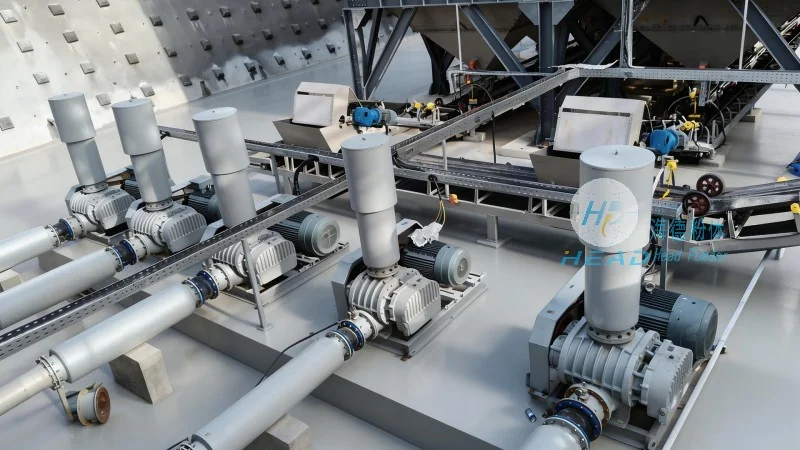
Several material handling systems are commonly used for rubber granules, each with its own advantages and suitability for different applications. The most prevalent is the belt conveyor system, which is ideal for long-distance horizontal or slightly inclined transport. Belt conveyors are capable of handling large volumes of rubber granules and can be customized with different belt materials (such as rubber or PVC) to prevent slippage and wear. Another common system is the screw conveyor, which uses a rotating helical screw to move granules vertically or at a slight angle. Screw conveyors are particularly effective for short to medium distances and are suitable for materials with moderate to high bulk density. For applications requiring high-temperature or abrasive handling, pneumatic conveying systems may be employed. These systems use air pressure to transport rubber granules through pipes, offering flexibility in layout and the ability to handle materials with high moisture content or dust.
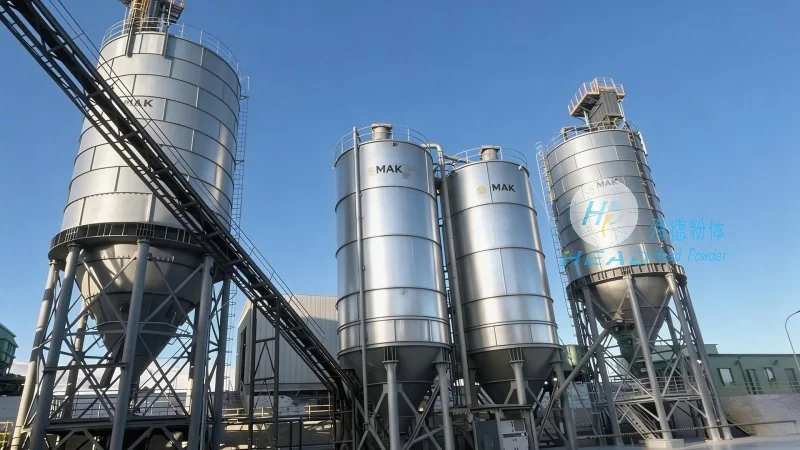
The design of rubber granule material handling systems involves several critical principles to ensure efficiency and durability. First, the system must be designed to handle the specific flow characteristics of rubber granules. This includes considering the angle of repose, which is the steepest angle at which granules will remain stable without sliding. The angle of repose for rubber granules is typically around 30-40 degrees, and the conveyor slope must be adjusted accordingly to prevent material buildup or spillage. Second, the power requirements must be accurately calculated based on the weight and volume of the material being transported. This involves determining the required conveyor speed and the motor power needed to overcome friction and gravitational forces. For belt conveyors, the tension on the belt and the type of idlers used are critical factors, as they affect the system's ability to maintain material on the belt and prevent belt slip. Third, equipment selection must consider the durability of components against wear from rubber granules. Rubber and synthetic materials can be abrasive, so conveyor belts, idlers, and hangers are often made from reinforced materials or coated with protective layers to extend their lifespan. Additionally, the system's layout should be optimized for minimal space usage and ease of maintenance, with access points for cleaning and component replacement.
Rubber granule material handling is a vital step in the overall rubber processing workflow. Efficient handling ensures that raw materials are moved to processing equipment such as mixers, extruders, or molding machines without delays or quality degradation. Proper conveying systems help maintain the integrity of the rubber granules, preventing contamination from dust or other materials and preserving their physical properties. This is particularly important in applications where the rubber granules are used for tire manufacturing, flooring, or other products where consistency is critical. By implementing well-designed material handling systems, manufacturers can improve production throughput, reduce downtime, and enhance overall operational efficiency.
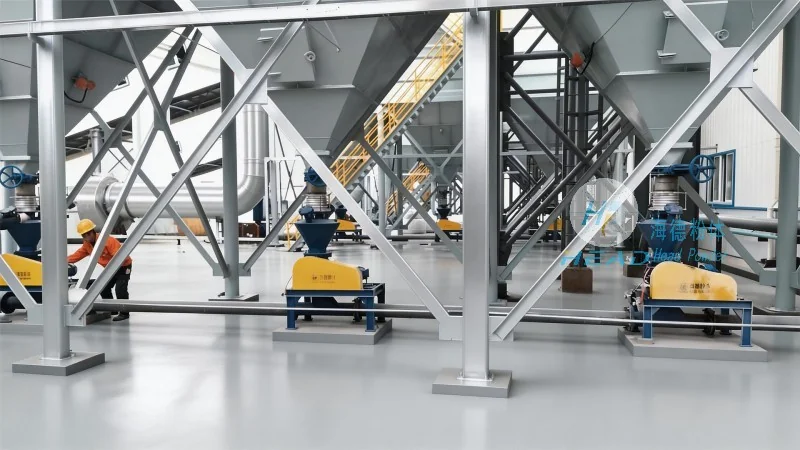
Shandong HeadPowder Engineering Co., Ltd., commonly known as HeadPowder, is a company based in Shandong, China, specializing in engineering solutions for material handling and processing. The company focuses on providing customized equipment and systems tailored to the unique needs of industries dealing with various materials, including rubber granules. With a strong background in mechanical engineering and material science, HeadPowder offers expertise in designing and manufacturing conveyor systems, storage solutions, and processing equipment. The company's facilities are located in Shandong, China, where it operates its research and development, manufacturing, and customer service operations. HeadPowder aims to deliver reliable and efficient material handling solutions that meet the demands of modern industrial applications.

 Shandong Headpowder Engineering Co., Ltd.
 156-6277-7102(Manager Zhang)
  0531-83386006
  Zhangqiu District, Jinan City, Shandong Province, China
telephone
WeChatconsult
top