

Principle and Classification Application of White Mud Pneumatic Conveying
White mud, a byproduct commonly generated in the papermaking industry, poses significant challenges in handling and transportation due to its high moisture content and fine particle characteristics. Pneumatic conveying technology offers an efficient solution for the transport of white mud, enabling industries to manage this material with minimal environmental impact and operational efficiency. This article provides an overview of the working principles of white mud pneumatic conveying systems and their classification based on application scenarios.
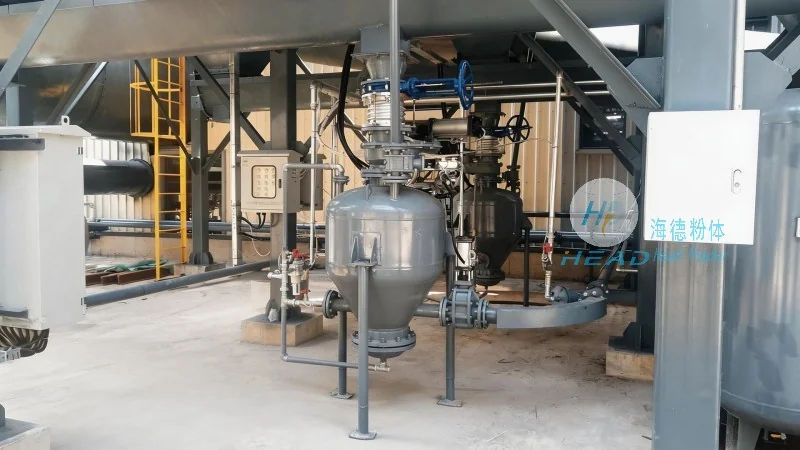
Working Principle of Pneumatic Conveying for White Mud
The core principle of pneumatic conveying involves the use of compressed air to transport bulk materials through a pipeline system. In the case of white mud, the process typically starts with the material being fed into a hopper or feeder, where it is then introduced into a pipeline. Compressed air is introduced at one end of the pipeline, creating a flow that propels the white mud particles forward. The air velocity within the pipeline must be sufficient to overcome the gravitational forces and frictional resistance of the material, ensuring stable and continuous transport. The system can operate in either positive pressure or negative pressure modes, with positive pressure being more common for white mud applications due to its ability to handle high moisture content and fine particles effectively.
Classification of Pneumatic Conveying Systems for White Mud
Pneumatic conveying systems for white mud are classified based on several key factors, including the type of air flow, material handling capacity, and operational environment. The primary classifications include:
1. Positive Pressure Systems: These systems use compressed air to push the material through the pipeline. They are ideal for white mud with high moisture content as they can maintain consistent air flow and prevent material clogging. Positive pressure systems are commonly used in industrial settings where the material needs to be transported over long distances or to multiple destinations.
2. Negative Pressure (Vacuum) Systems: In this configuration, a vacuum is created at the receiving end to draw the material into the pipeline. While effective for short-distance transport and handling of lighter materials, negative pressure systems may struggle with white mud due to its high moisture and fine particle nature, which can lead to increased energy consumption and potential blockages.
3. Closed Loop Systems: These systems recycle the air used in the conveying process, reducing energy consumption and environmental impact. For white mud, closed loop systems are particularly beneficial as they minimize dust emissions and maintain a controlled environment, which is crucial for industrial applications where air quality is a concern.
4. Hybrid Systems: Combining elements of both positive and negative pressure systems, hybrid pneumatic conveyors offer flexibility in material handling. They can be adjusted to suit varying conditions, such as changes in white mud moisture levels or particle size, making them suitable for diverse industrial applications.
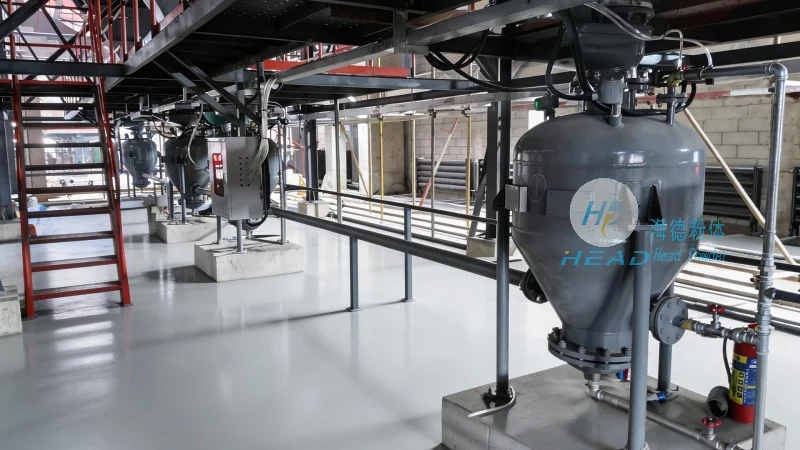
Application Scenarios in the Paper Industry
The application of pneumatic conveying for white mud is predominantly in the papermaking industry, where it is used to transport the material from the paper machine to disposal or recycling facilities. The systems are designed to handle the high volume of white mud produced during the paper production process, ensuring efficient and continuous operation. For example, in a typical paper mill, white mud is generated from the stock preparation and papermaking stages, and pneumatic conveying systems transport it to a dewatering or treatment plant. This process not only improves operational efficiency but also reduces the environmental footprint by minimizing the need for manual handling and transportation.
Advantages of Pneumatic Conveying for White Mud
Implementing pneumatic conveying systems for white mud offers several advantages over traditional methods such as truck or belt conveyors. These include:
1. Reduced Environmental Impact: Pneumatic systems minimize dust emissions and prevent material spillage, contributing to a cleaner working environment and compliance with environmental regulations.
2. Increased Efficiency: The continuous operation of pneumatic conveyors allows for higher material throughput compared to intermittent methods, leading to improved productivity in paper mills.
3. Lower Maintenance Costs: With fewer moving parts compared to mechanical conveyors, pneumatic systems require less maintenance, reducing operational costs over time.
4. Flexibility in Layout: Pneumatic conveying systems can be easily integrated into existing industrial layouts, allowing for adjustments in the material transport path without major structural changes.
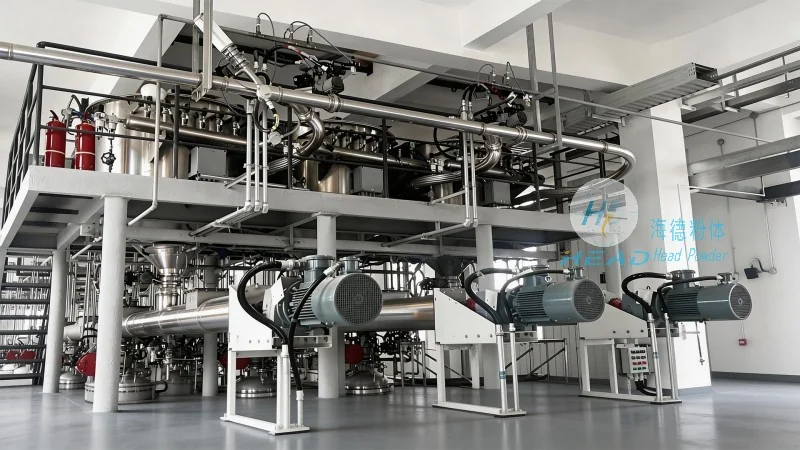
Key Considerations for System Design
When designing a pneumatic conveying system for white mud, several factors must be considered to ensure optimal performance and longevity. These include:
1. Material Properties: The moisture content, particle size distribution, and density of white mud are critical factors that influence the system design. Higher moisture content may require higher air velocities and more robust pipeline materials to prevent clogging.
2. System Pressure and Flow: The pressure and flow rate of the compressed air must be carefully calculated to ensure the material is transported efficiently without causing excessive wear on the system components.
3. Pipeline Design: The diameter and length of the pipeline, as well as the number of bends and fittings, affect the system's performance. Proper design minimizes pressure drop and prevents material accumulation.
4. Equipment Selection: The choice of feeders, hoppers, and air movers (blowers or vacuum pumps) is essential. For white mud, high-capacity feeders and durable air movers are recommended to handle the material's characteristics.
Conclusion
Pneumatic conveying technology provides an effective and efficient solution for the transport of white mud in the paper industry. By understanding the working principles and classification of these systems, industries can select the most appropriate configuration to meet their operational needs. The advantages of reduced environmental impact, increased efficiency, and lower maintenance costs make pneumatic conveying a preferred choice for handling white mud. As a leading provider in this field, Shandong HeadPowder Engineering Co., Ltd. specializes in designing and manufacturing customized pneumatic conveying systems tailored to the specific requirements of white mud applications, ensuring optimal performance and reliability for its clients.