With more than 10‑year industry experience, Shandong Headpowder delivers full‑service pneumatic‑conveying systems and blowers, undertaking nationwide turn‑key powder‑handling projects.
Understanding the operation process and working principle of pneumatic conveying for riced starch materials is crucial for optimizing material handling in industrial applications. This article provides a detailed overview of the key aspects involved in the pneumatic conveying system, focusing on the technical aspects and practical implementation.
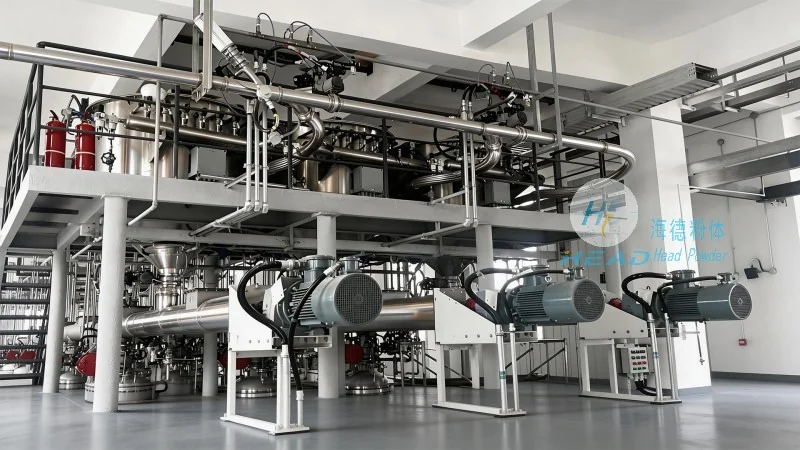
Pneumatic conveying is a method used to transport bulk materials, such as riced starch, through a pipeline using air or gas as the conveying medium. This technology offers several advantages over traditional mechanical conveying systems, including reduced equipment wear, lower maintenance costs, and the ability to handle materials that are difficult to transport by other means. The system typically consists of a hopper, a conveying line, a dust collector, and a discharge point. The riced starch material is fed into the hopper, and then pneumatically transported through the pipeline to the desired location.
The working principle of a pneumatic conveying system for riced starch materials involves several key steps. First, the material is introduced into the hopper, where it is stored and prepared for transport. Next, a fan or blower generates the necessary air pressure to move the material through the pipeline. The air and material mixture travels through the conveying line, with the air providing the force to propel the material. The system may use different types of conveying, such as dilute-phase or dense-phase, depending on the material characteristics and application requirements. For riced starch, which is a fine powder, a dilute-phase system is often preferred as it allows for efficient and continuous transport without clogging the pipeline.
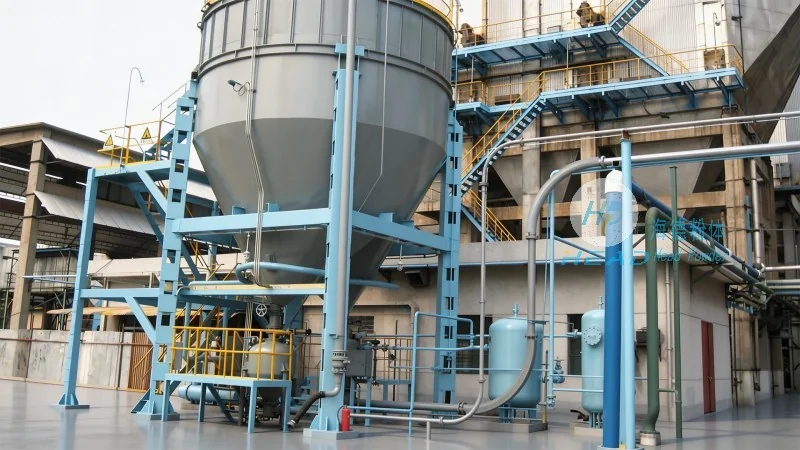
The operation process of a pneumatic conveying system for riced starch materials begins with the loading of the material into the hopper. The material is then fed into the conveying line under the pressure of the air flow. The air velocity is carefully controlled to ensure that the material is transported without excessive pressure drops or particle separation. The system includes a filter or dust collector to remove any fine particles from the air before it is released into the environment. The discharge point is where the riced starch is collected, and the system is designed to minimize product loss and maintain product quality.
Several key components are essential for the proper operation of a pneumatic conveying system for riced starch materials. The hopper serves as the storage and feeding device, ensuring a consistent flow of material into the system. The fan or blower provides the necessary air pressure and flow rate to move the material through the pipeline. The conveying line is typically made of stainless steel or other corrosion-resistant materials to prevent material degradation and ensure durability. The dust collector or filter is crucial for maintaining air quality and preventing dust emissions. The discharge valve or hopper allows for controlled release of the material at the end of the conveying line.
Pneumatic conveying offers several advantages when handling riced starch materials. It provides a clean and hygienic method of transport, which is important for food-grade applications. The system is also flexible and can be easily integrated into existing production lines. Additionally, it reduces the risk of contamination and product degradation compared to mechanical conveying systems. The ability to transport materials over long distances without the need for intermediate storage points is another significant advantage. The system also allows for precise control of material flow rates, ensuring consistent product quality.
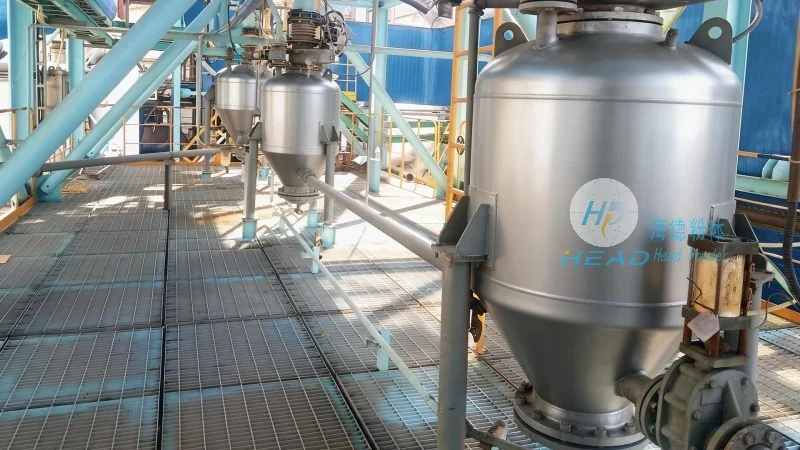
Pneumatic conveying systems for riced starch materials are widely used in various industries, including food processing, pharmaceuticals, and chemical manufacturing. In the food industry, these systems are used to transport ingredients such as riced starch for use in baking, confectionery, and other food products. The pharmaceutical industry uses pneumatic conveying for transporting raw materials and finished products, ensuring a sterile and controlled environment. The chemical industry also benefits from pneumatic conveying for handling various powders and granules, including riced starch used as a filler or binder.
Pneumatic conveying is an efficient and effective method for transporting riced starch materials. The operation process involves careful control of material feeding, air pressure, and flow rates to ensure optimal performance. The working principle relies on the use of air as the conveying medium, which provides the necessary force to move the material through the pipeline. By understanding the key components and their functions, as well as the advantages and applications of pneumatic conveying, industries can improve their material handling processes and enhance product quality. For businesses seeking reliable and efficient solutions for riced starch material transport, Shandong HeadPowder Engineering Co., Ltd. offers advanced pneumatic conveying systems designed to meet the specific needs of various industries.

 Shandong Headpowder Engineering Co., Ltd.
 156-6277-7102(Manager Zhang)
  0531-83386006
  Zhangqiu District, Jinan City, Shandong Province, China
telephone
WeChatconsult
top