With more than 10‑year industry experience, Shandong Headpowder delivers full‑service pneumatic‑conveying systems and blowers, undertaking nationwide turn‑key powder‑handling projects.
HeadPowder, a leading enterprise in the field of dry-mixed mortar production and technology, specializes in advanced solutions for material handling. This article delves into the fundamental principles of pneumatic conveying for dry-mixed mortar and explores the key characteristics of its working scenes, providing a comprehensive overview for industry professionals and potential clients.
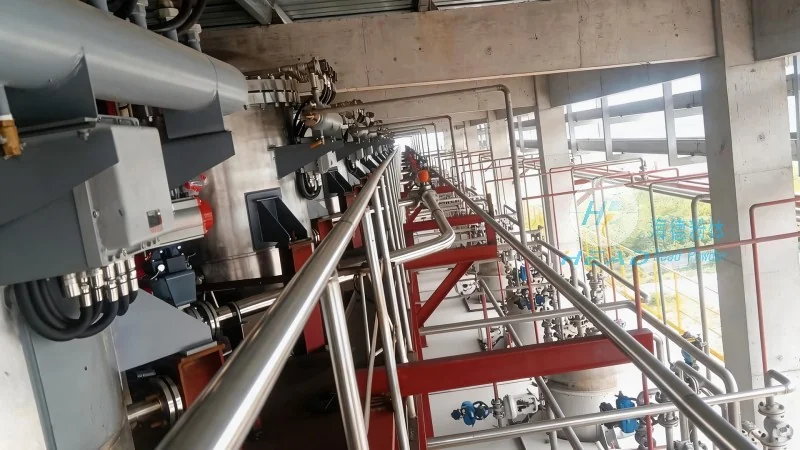
Pneumatic conveying is a critical technology in the dry-mixed mortar industry, enabling efficient and reliable transportation of bulk materials from production lines to storage or application sites. The process involves the use of air to move dry-mixed mortar components, such as cement, sand, and additives, through a pipeline system. This method offers significant advantages over traditional mechanical conveying, including reduced equipment wear, lower energy consumption, and enhanced safety in handling powders.
The fundamental principle of pneumatic conveying is the creation of a pressure differential between the conveying line and the ambient environment. By generating a vacuum or positive pressure within the pipeline, dry-mixed mortar particles are entrained and transported by the moving air stream. There are two primary types of pneumatic conveying systems: dilute-phase and dense-phase. Dilute-phase systems use low air velocities to transport materials, while dense-phase systems employ higher air velocities and lower air-to-material ratios, resulting in more efficient and controlled material movement.
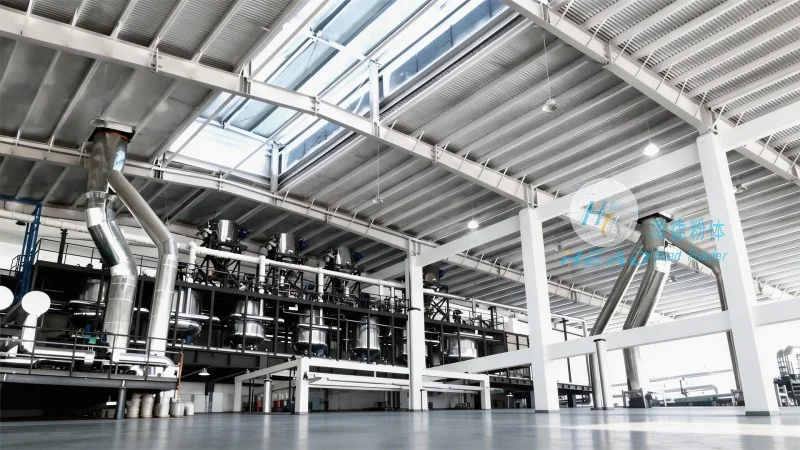
The working scenes where pneumatic conveying is applied in dry-mixed mortar production typically include production plants, storage facilities, and construction sites. In production plants, the system is used to transport raw materials from silos to mixing units and to move finished products from the mixing area to storage silos. The characteristics of these scenes include high material throughput, consistent flow rates, and the need for minimal downtime. Storage facilities benefit from the ability to transfer large volumes of dry-mixed mortar between silos, ensuring optimal inventory management and preventing material segregation. On construction sites, pneumatic conveying allows for the efficient delivery of mortar to mixing equipment or directly to application areas, reducing labor costs and improving work efficiency.
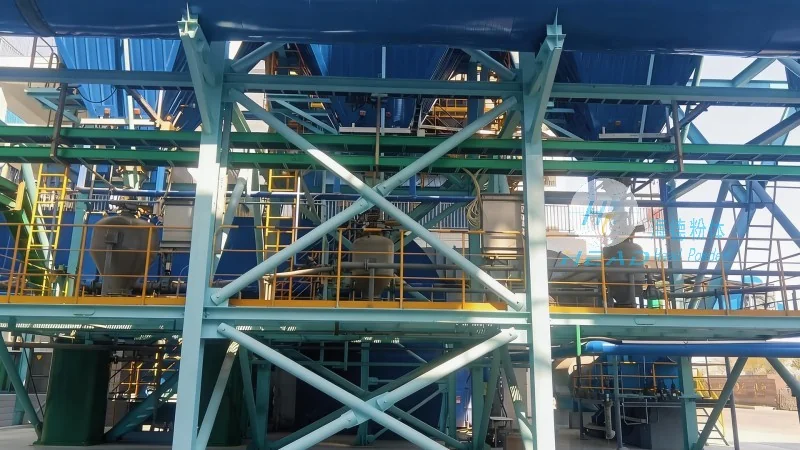
Several key advantages define the working scenes of pneumatic conveying for dry-mixed mortar. Firstly, the system provides a dust-free environment, which is crucial for maintaining air quality and worker safety in industrial settings. Secondly, it offers flexibility in pipeline layout, allowing for complex routing around obstacles and multiple delivery points. Thirdly, the technology is highly scalable, capable of handling small to large volumes of material, making it suitable for various production scales. However, considerations such as air pressure requirements, material properties (e.g., particle size, moisture content), and system maintenance are essential to ensure optimal performance. Proper design and regular maintenance are critical to prevent blockages, reduce energy consumption, and extend the lifespan of the conveying equipment.
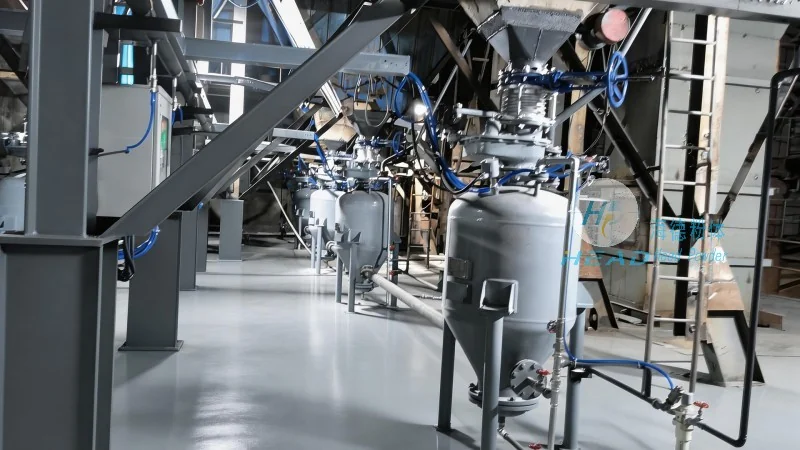
Pneumatic conveying is integrated into various stages of dry-mixed mortar production, each with distinct characteristics that impact the system's operation. In the raw material input stage, the system efficiently transports bulk materials from external suppliers to the production plant, ensuring a steady supply of ingredients. During the mixing stage, the conveying system delivers materials to the mixer, maintaining consistent ratios and preventing material segregation. In the storage and distribution stage, the system transfers finished products from the mixing area to storage silos or directly to distribution centers, facilitating smooth logistics and inventory management. Each stage requires tailored system configurations to meet specific flow rates, material characteristics, and operational requirements, highlighting the adaptability of pneumatic conveying technology.
Shandong HeadPowder Engineering Co., Ltd., headquartered in Shandong, China, has successfully implemented pneumatic conveying systems in its production facilities. The company's experience in the region demonstrates the effectiveness of this technology in addressing local production challenges, such as material handling efficiency and operational costs. By leveraging advanced pneumatic conveying solutions, HeadPowder has optimized its production processes, reduced material losses, and enhanced overall productivity. The working scenes in Shandong, characterized by high production volumes and diverse material types, have benefited significantly from the reliability and efficiency of the pneumatic conveying systems, aligning with the company's commitment to providing high-quality dry-mixed mortar products and advanced engineering solutions.

 Shandong Headpowder Engineering Co., Ltd.
 156-6277-7102(Manager Zhang)
  0531-83386006
  Zhangqiu District, Jinan City, Shandong Province, China
telephone
WeChatconsult
top