With more than 10‑year industry experience, Shandong Headpowder delivers full‑service pneumatic‑conveying systems and blowers, undertaking nationwide turn‑key powder‑handling projects.
Lightweight aggregate powder pneumatic conveying lines are critical components in material handling and processing industries, particularly for transporting lightweight aggregate powders such as expanded clay, perlite, or vermiculite. These systems utilize air as the primary medium to move powders through a network of pipes, ensuring efficient and dust-free material transport. The operation of such lines is based on the principles of pneumatic conveying, which involves creating a pressure differential to move the material from the source to the destination. Developed by Shandong HeadPowder Engineering Co., Ltd. (headpowder), these systems are designed to meet the specific needs of industries that rely on lightweight aggregates for construction and manufacturing applications.
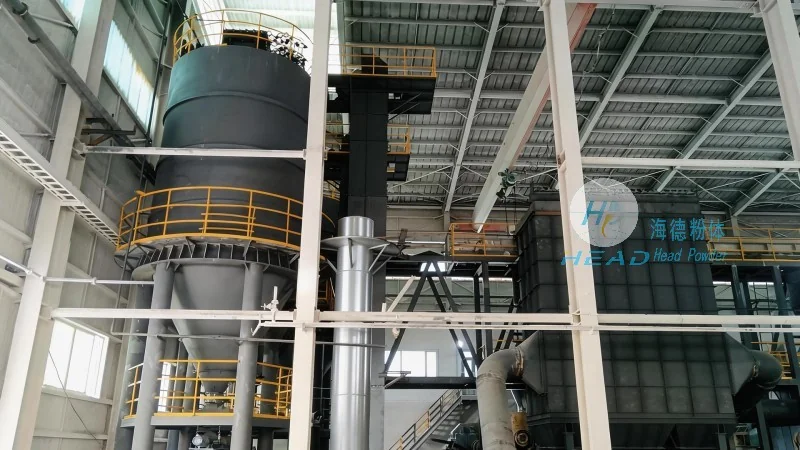
At the core of a lightweight aggregate powder pneumatic conveying system are several key components that work in tandem to ensure smooth operation. These include the material hopper, which stores the lightweight aggregate powder; the air compressor or blower, which generates the necessary air pressure; the conveying line itself, typically made of stainless steel or other corrosion-resistant materials to handle the abrasive nature of the powders; and the receiver or discharge hopper, where the material is deposited. Additionally, components like rotary valves, filters, and pressure regulators are often integrated to control the flow rate and maintain system efficiency.
The working principle of a lightweight aggregate powder pneumatic conveying line revolves around the creation of a pressure differential. The air compressor draws in ambient air and compresses it to a specific pressure, typically ranging from low to high pressure depending on the system design. This compressed air is then introduced into the conveying line, where it flows through the material hopper and into the pipe system. As the air moves, it entrains the lightweight aggregate powder particles, forming a slurry-like mixture known as a "pneumatic stream." The velocity of the air is crucial here; it must be sufficient to lift and transport the powder particles without causing excessive wear on the system components. The air and powder mixture travels through the pipeline to the receiver, where the air is separated from the material, often using a cyclone separator or a filter, and the powder is collected in the discharge hopper.
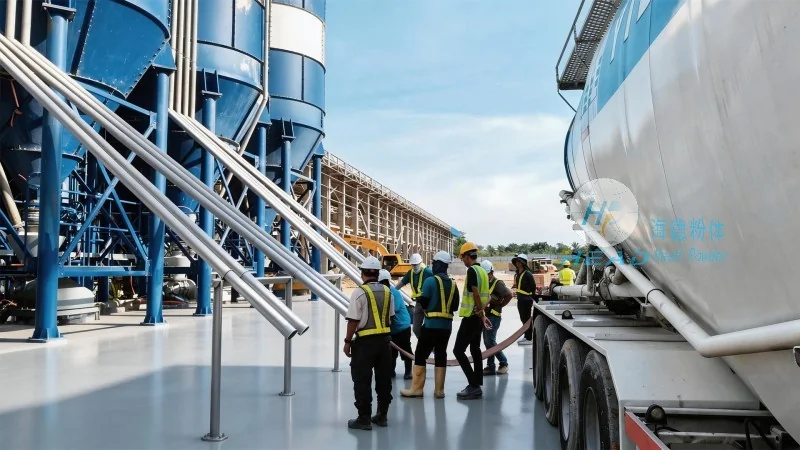
The operation process of a lightweight aggregate powder pneumatic conveying line begins with the loading of the material into the hopper. The rotary valve at the hopper outlet controls the flow rate of the powder into the conveying line, ensuring a consistent feed. The air compressor then starts, and compressed air is introduced into the system. The air pressure creates a pressure differential between the hopper and the receiver, which drives the material along the pipeline. As the powder is conveyed, the system monitors parameters such as pressure, flow rate, and temperature to maintain optimal performance. The receiving hopper collects the material, and the air is typically vented to the atmosphere or recirculated, depending on the system design. The entire process is automated, with control systems that can adjust the air pressure and material feed rate in real-time to respond to changes in demand or material characteristics.
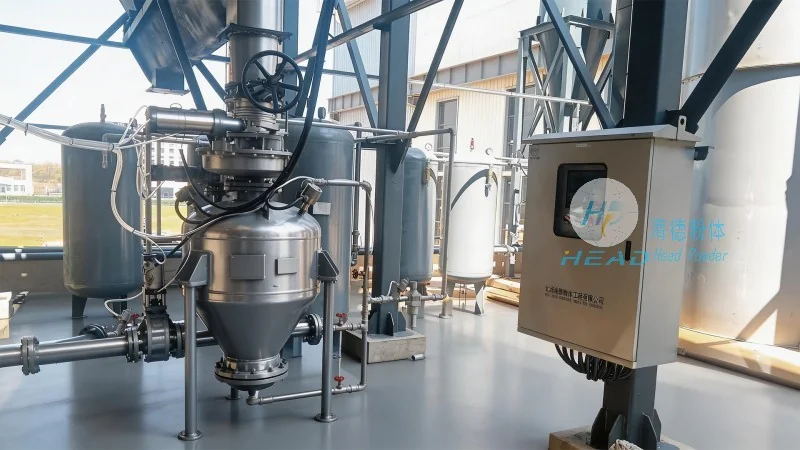
Using pneumatic conveying for lightweight aggregate powders offers several advantages over traditional mechanical conveying methods. First, it provides a dust-free environment, which is essential for maintaining air quality and worker safety in industrial settings. Second, the system is flexible and can be easily reconfigured to change the material flow path or destination. Third, it reduces the risk of material degradation due to friction or impact, which is common in mechanical conveyors. Additionally, pneumatic conveying systems can handle a wide range of powder characteristics, including varying particle sizes and moisture content, making them suitable for diverse applications in the construction and manufacturing industries.
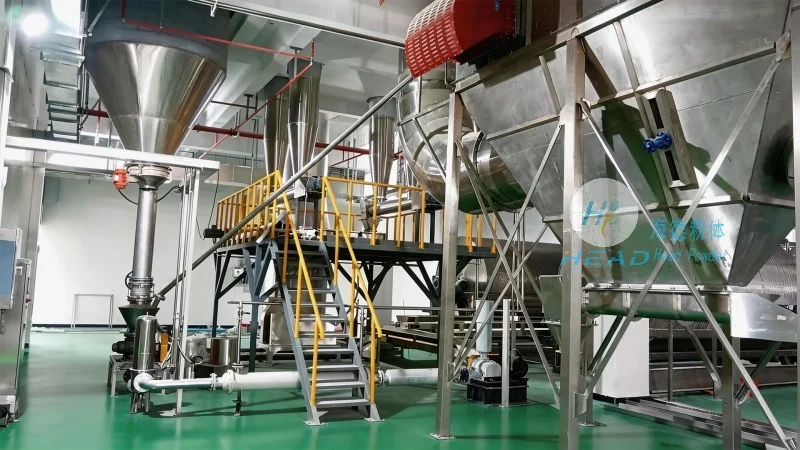
Lightweight aggregate powder pneumatic conveying lines are widely used in the construction industry for transporting materials used in lightweight concrete, insulation products, and other building materials. For example, in the production of lightweight concrete, the system can efficiently transport expanded clay or perlite from storage to mixing plants. Similarly, in the manufacturing of insulation boards, the line ensures a consistent supply of vermiculite or other lightweight fillers to the production line. The ability to handle large volumes of material with minimal downtime and maintenance makes these systems ideal for high-volume construction projects.
Proper maintenance is crucial to ensure the long-term efficiency and reliability of a lightweight aggregate powder pneumatic conveying line. Regular inspection of components such as the air compressor, conveying line, and rotary valves is necessary to detect and address issues like wear, leaks, or blockages. Filters and cyclone separators should be cleaned or replaced regularly to prevent clogging and maintain air quality. Additionally, monitoring system parameters such as pressure and flow rate helps identify potential problems early, reducing the risk of system downtime. The use of corrosion-resistant materials for the conveying line and components is also important, as lightweight aggregates can be abrasive and may cause wear over time.

 Shandong Headpowder Engineering Co., Ltd.
 156-6277-7102(Manager Zhang)
  0531-83386006
  Zhangqiu District, Jinan City, Shandong Province, China
telephone
WeChatconsult
top