With more than 10‑year industry experience, Shandong Headpowder delivers full‑service pneumatic‑conveying systems and blowers, undertaking nationwide turn‑key powder‑handling projects.
Shandong HeadPowder Engineering Co., Ltd., commonly known as headpowder, is a professional manufacturer based in Shandong, China, specializing in the design, development, and production of advanced automatic quantitative material conveying lines. These systems are integral to modern industrial processes, offering precise material handling solutions that enhance productivity and operational efficiency.
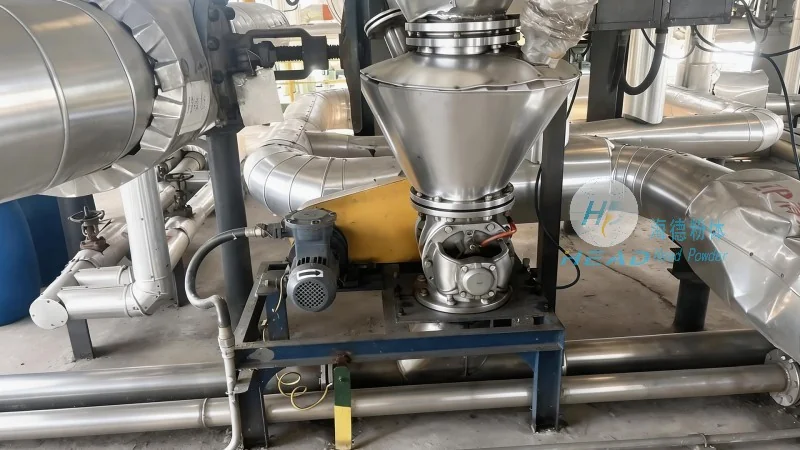
Automatic quantitative material conveying lines are sophisticated industrial systems engineered to transport and measure bulk materials with high accuracy and consistency. These lines are widely used in sectors such as pharmaceuticals, food processing, chemical manufacturing, and logistics, where the uniformity and precision of material handling are critical to product quality and regulatory compliance. The primary goal of these systems is to ensure that materials are conveyed at a controlled rate, with exact quantities delivered to the next stage of production or packaging.
The operation of an automatic quantitative material conveying line relies on a combination of specialized components working in harmony. The core elements typically include: (1) an inlet hopper or feeder, which receives raw materials and prepares them for processing; (2) a quantitative control unit, which measures and regulates the flow of material; (3) a conveyor system, which transports the material from the quantitative unit to the discharge point; (4) a control panel or system, which monitors and adjusts the entire process based on real-time data; and (5) an output hopper or container, which collects the measured material. Each component is designed to interact seamlessly, ensuring that the material flow is uninterrupted and the measurement is accurate.
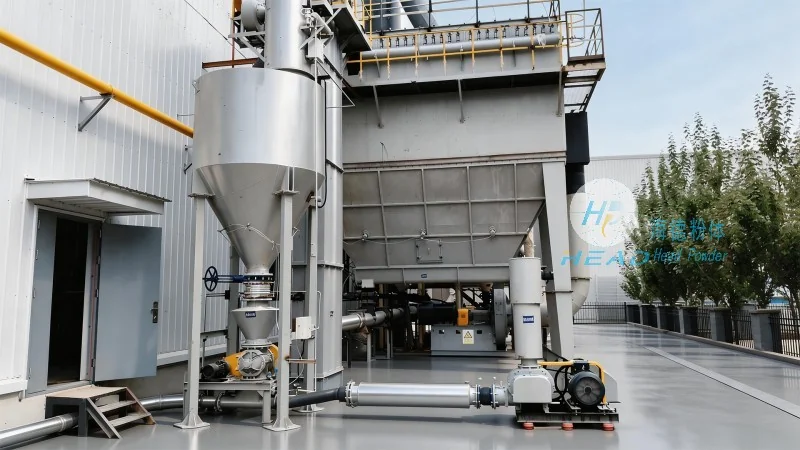
The operation of an automatic quantitative material conveying line follows a systematic sequence of steps. Initially, bulk materials are fed into the inlet hopper from a storage silo or bulk container. The feeder then regulates the flow of material into the quantitative control unit. In the quantitative unit, sensors such as load cells or flow meters detect the weight or volume of material passing through, providing real-time data to the control system. The control system compares the measured quantity against the target setpoint and adjusts the feeder speed or conveyor speed accordingly to maintain the desired flow rate. Once the target quantity is reached, the material is transferred to the conveyor system and directed to the output hopper. The system may also include safety features, such as emergency stop buttons and overload protection, to prevent accidents and ensure operational safety.
The quantitative control mechanism is the heart of the automatic material conveying line, responsible for achieving precise material measurement. This mechanism typically employs a combination of mechanical and electronic components. For instance, a load cell, which is a type of strain gauge, measures the weight of material in the quantitative chamber. The load cell converts the weight into an electrical signal, which is then processed by a digital controller. The controller calculates the flow rate based on the weight change over time and adjusts the feeder or conveyor speed to maintain the target flow rate. Additionally, feedback loops are used to correct any deviations in the measurement, ensuring that the output quantity remains consistent even under varying conditions, such as changes in material density or feeder load. Advanced systems may also incorporate algorithms to compensate for material variations, further enhancing measurement accuracy.
Automatic quantitative material conveying lines offer several technical advantages that make them indispensable in modern manufacturing. These include high measurement accuracy, typically within ±0.5% of the target quantity, which minimizes material waste and ensures consistent product quality. The systems also provide high throughput, allowing for continuous operation without manual intervention, thereby increasing production efficiency. Additionally, the automated nature of these lines reduces the risk of human error, improves workplace safety, and enables remote monitoring and control. The adaptability of these systems allows them to handle a wide range of materials, from powders and granules to bulk solids, making them suitable for diverse industrial applications.
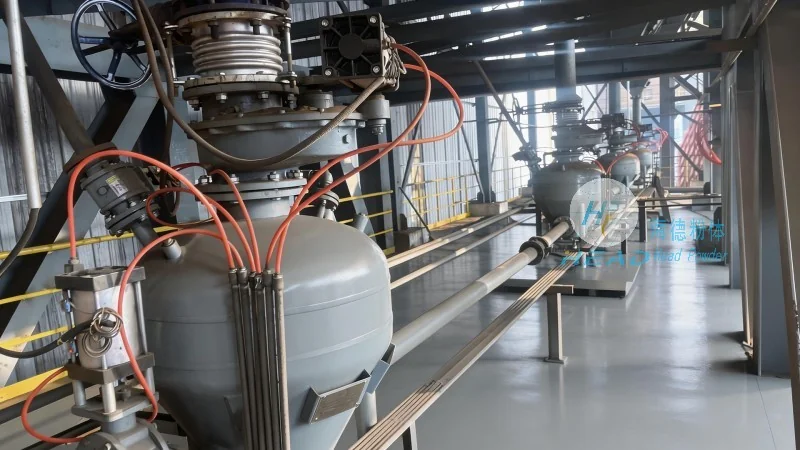
In the pharmaceutical industry, for example, automatic quantitative material conveying lines are used to handle active pharmaceutical ingredients (APIs) and excipients with strict purity and dosage requirements. The precision of these systems ensures that the correct amount of each ingredient is added to the production batch, meeting regulatory standards. In the food processing sector, they are employed to convey ingredients such as flour, sugar, and spices, maintaining consistent flavor and texture in final products. Similarly, in chemical manufacturing, these lines are used to handle raw materials like chemicals and reagents, ensuring accurate formulation and reducing the risk of product contamination.
Automatic quantitative material conveying lines are essential equipment for modern industrial operations, providing reliable and efficient material handling solutions. The systems, manufactured by Shandong HeadPowder Engineering Co., Ltd., leverage advanced technology to deliver high precision, consistent performance, and operational efficiency. By integrating sophisticated quantitative control mechanisms and robust system architectures, these lines meet the demanding requirements of various industries, from pharmaceuticals to food processing and beyond. As a leading manufacturer based in Shandong, China, headpowder continues to innovate and provide tailored solutions to meet the evolving needs of its clients, ensuring that their material handling processes are optimized for quality, productivity, and compliance.

 Shandong Headpowder Engineering Co., Ltd.
 156-6277-7102(Manager Zhang)
  0531-83386006
  Zhangqiu District, Jinan City, Shandong Province, China
telephone
WeChatconsult
top