With more than 10‑year industry experience, Shandong Headpowder delivers full‑service pneumatic‑conveying systems and blowers, undertaking nationwide turn‑key powder‑handling projects.
For industries that require efficient and reliable material handling, vacuum material conveying lines offer a sophisticated solution. These systems are designed to transport bulk materials over long distances with minimal maintenance and energy consumption. In this article, we will explore the operation process and working principle of vacuum material conveying lines, highlighting the key components and the technology behind their functionality.
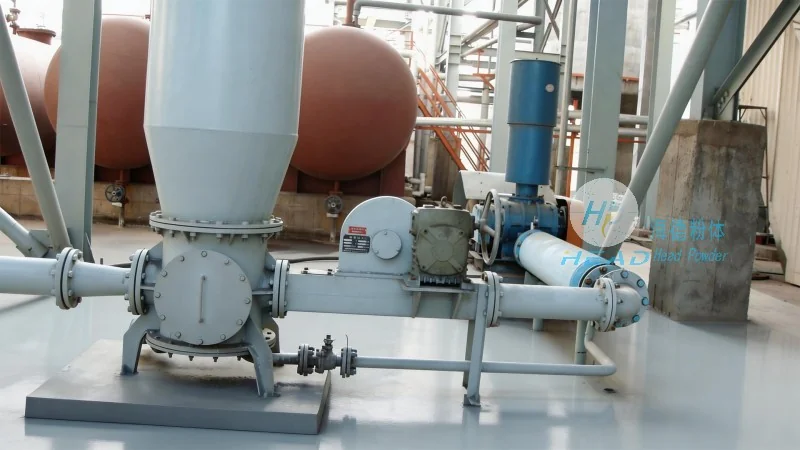
Vacuum material conveying lines are advanced industrial equipment used to transport dry bulk materials such as powders, granules, and small particles from one location to another. Unlike traditional pneumatic conveying systems that use positive pressure, vacuum systems operate by creating a negative pressure environment within the conveying line. This approach allows for the collection of materials from multiple sources and the transportation of them to a central processing or storage area. The primary advantage of vacuum conveying is its ability to handle a wide range of materials, including those that are sensitive to air exposure or have high moisture content. By maintaining a negative pressure, the system prevents material degradation and ensures a clean, controlled environment for material transfer.
The effectiveness of a vacuum material conveying line depends on several critical components that work in harmony to achieve efficient material transport. The main components include the vacuum pump, material feed hopper, conveying line, material receiver, and control system. Each component plays a vital role in the overall operation of the system.
The vacuum pump is the heart of the system, responsible for creating the negative pressure that draws material into the conveying line. It generates a suction force that pulls air and material particles from the feed hopper into the pipeline. The type of vacuum pump used can vary, with common options including rotary vane pumps, roots blowers, and scroll pumps, each offering different levels of suction capacity and efficiency. The material feed hopper is where the bulk material is loaded, and it typically features a hopper with a discharge valve or a rotary valve to control the flow of material into the system. The conveying line itself is usually made of stainless steel or other corrosion-resistant materials to ensure durability and to prevent contamination of the material. The line may include bends, elbows, and straight sections, all designed to guide the material smoothly from the feed point to the receiver. The material receiver is the destination where the conveyed material is deposited, often equipped with a discharge valve or a rotary valve to control the release of material. Finally, the control system manages the operation of the vacuum pump, feed hopper, and receiver, ensuring that the system operates safely and efficiently. This system may include sensors to monitor pressure, flow, and material level, providing real-time feedback to the operator.
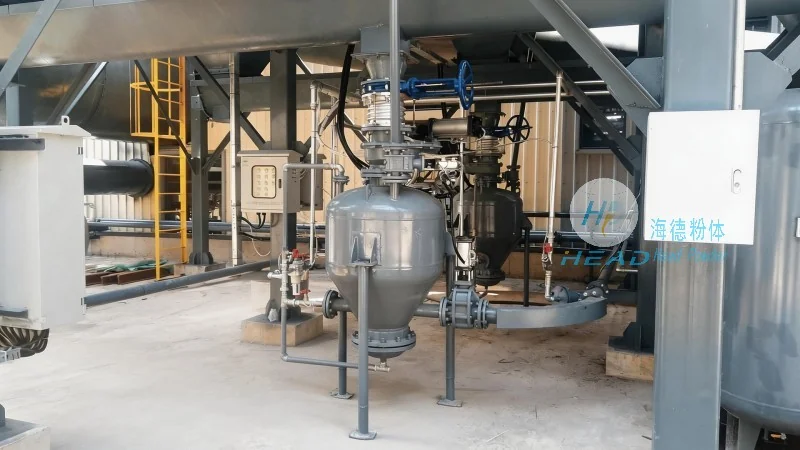
The operation process of a vacuum material conveying line involves several sequential steps that ensure the smooth and continuous transport of materials. The process begins with the loading of bulk material into the feed hopper. The operator then activates the vacuum pump, which starts to create a negative pressure within the conveying line. As the pressure differential is established, the material in the feed hopper is drawn into the line by the suction force. The material travels through the conveying line, passing through any bends or elbows as designed. The material is then deposited into the receiver at the end of the line. The process is typically automated, with the control system regulating the flow rate and pressure to maintain optimal performance. The entire operation is designed to be continuous, allowing for uninterrupted material transfer from the source to the destination. The system can handle varying material loads and flow rates, adapting to the specific requirements of the application. The operation process is also designed to minimize downtime and maintenance, ensuring high availability and productivity.
The working principle of vacuum material conveying lines is based on the fundamental laws of fluid dynamics and pressure differentials. The system operates by creating a pressure difference between the feed point and the receiver. The vacuum pump creates a low-pressure environment in the conveying line, which is lower than the atmospheric pressure at the feed hopper. This pressure difference causes the material to be drawn into the line as a suspension of particles in air. The material particles are carried along the pipeline by the airflow generated by the vacuum pump. As the material travels through the line, it may encounter changes in direction or elevation, which are accommodated by the design of the conveying line. The receiver is positioned at a lower pressure than the feed hopper, ensuring that the material continues to move towards the receiver due to the pressure gradient. The control system monitors the pressure and flow rates, adjusting the vacuum pump speed or the feed rate to maintain the desired conveying velocity. The working principle allows for the efficient transport of materials over long distances, even with varying particle sizes and densities. The system is also capable of handling materials that are difficult to convey using positive pressure systems, such as fine powders that tend to clog or agglomerate.

Vacuum material conveying lines offer several advantages over traditional positive pressure systems, making them a preferred choice for many industrial applications. One of the key advantages is the ability to handle a wide range of materials, including those that are sensitive to air exposure or have high moisture content. By maintaining a negative pressure, the system prevents material degradation and ensures a clean, controlled environment for material transfer. Another advantage is the reduced energy consumption compared to positive pressure systems, as the vacuum pump operates at lower pressures and flow rates. The system also requires less maintenance, as there are fewer moving parts and less wear on components. Additionally, vacuum conveying is more flexible, allowing for the collection of materials from multiple sources and the transportation of them to a central processing or storage area. The system is also more environmentally friendly, as it does not release dust or particles into the atmosphere during operation. These advantages make vacuum material conveying lines an ideal solution for industries such as pharmaceuticals, food processing, and chemical manufacturing, where material purity and safety are critical.
Vacuum material conveying lines are widely used in various industries due to their versatility and efficiency. In the pharmaceutical industry, these systems are used to transport active pharmaceutical ingredients (APIs) and excipients, ensuring that the materials are handled in a sterile and controlled environment. The vacuum system prevents contamination and maintains the purity of the materials, which is essential for pharmaceutical manufacturing. In the food processing industry, vacuum conveying is used to transport dry food products such as powders, granules, and spices. The system is designed to handle food-grade materials and maintain hygiene standards, ensuring that the products are safe for consumption. In the chemical industry, vacuum material conveying lines are used to transport various chemicals, including powders and granules. The system is capable of handling corrosive and hazardous materials, providing a safe and efficient way to transport them. Other applications include the transport of minerals, plastics, and other bulk materials in manufacturing and processing plants. The versatility of vacuum material conveying lines makes them suitable for a wide range of industrial applications, from small-scale operations to large-scale production facilities.
Vacuum material conveying lines are advanced industrial systems that offer efficient and reliable material handling solutions. By understanding the operation process and working principle of these systems, users can appreciate the technology behind their functionality and the benefits they provide. The key components, operation steps, and working principles of vacuum material conveying lines are designed to ensure optimal performance and efficiency. The advantages of these systems, including their ability to handle a wide range of materials, reduced energy consumption, and minimal maintenance, make them a preferred choice for many industries. As technology continues to advance, vacuum material conveying lines will likely become even more efficient and versatile, providing further benefits to industrial applications. For companies seeking to improve their material handling processes, vacuum material conveying lines from Shandong HeadPowder Engineering Co., Ltd. offer a reliable and effective solution.

 Shandong Headpowder Engineering Co., Ltd.
 156-6277-7102(Manager Zhang)
  0531-83386006
  Zhangqiu District, Jinan City, Shandong Province, China
telephone
WeChatconsult
top