With more than 10‑year industry experience, Shandong Headpowder delivers full‑service pneumatic‑conveying systems and blowers, undertaking nationwide turn‑key powder‑handling projects.
Resin pneumatic conveying is a specialized material handling technology that utilizes air or gas to transport resin powders and granules through a pipeline system. This method is particularly effective for handling fine, abrasive, or sensitive materials like resin, which are often challenging to move using traditional mechanical conveyors. The core principle involves creating a flow of air that carries the resin particles through the system, ensuring efficient and consistent transport. Understanding the fundamentals of resin pneumatic conveying, including its classification and practical applications, is essential for industries that rely on reliable and clean material transport processes.
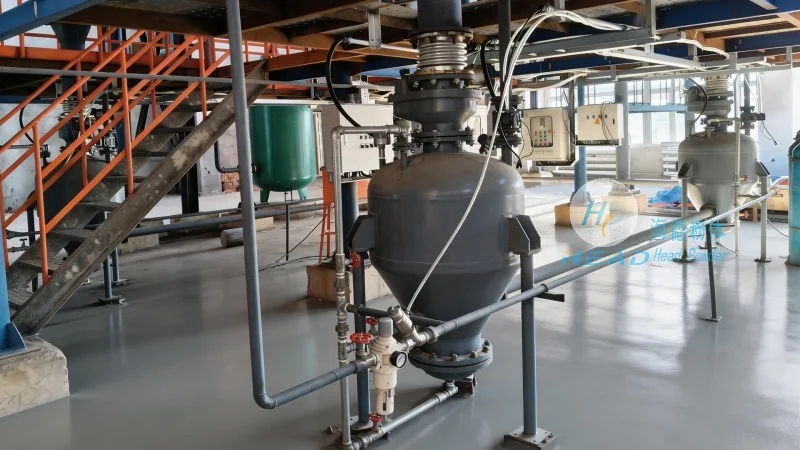
Pneumatic conveying systems are broadly categorized into two main types based on the direction of material flow and the pressure applied: pressure systems and vacuum systems. Pressure systems operate by using compressed air to push material through the pipeline, making them suitable for transporting materials over longer distances and higher loads. These systems typically use positive pressure, where the air pressure is higher than the ambient pressure, ensuring a continuous flow of resin. On the other hand, vacuum systems use a vacuum to pull material from the source, which is often more effective for short-distance or low-volume transport. Vacuum systems are particularly useful for handling materials that are sensitive to pressure or for applications requiring a closed-loop system to minimize dust emissions. Additionally, hybrid systems that combine both pressure and vacuum capabilities are available, offering flexibility for complex material handling scenarios. The choice of system type depends on factors such as the resin's properties, the distance to be covered, and the required material flow rate.
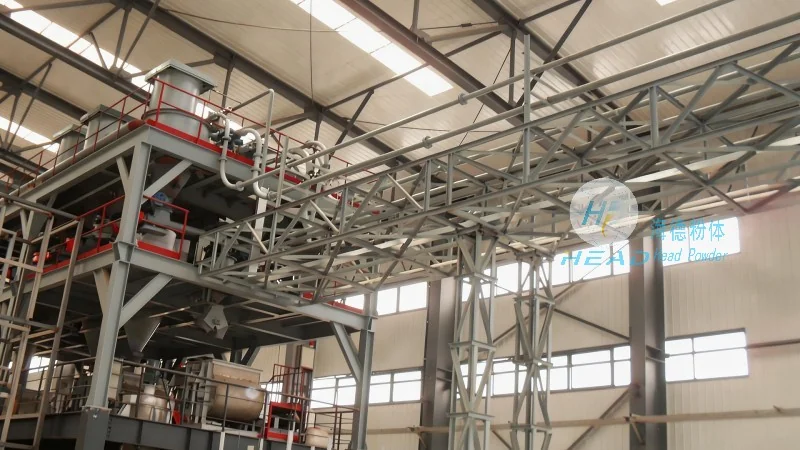
The performance and efficiency of a resin pneumatic conveying system are determined by several critical components. The material feed device, such as a hopper or rotary valve, is responsible for introducing resin into the system in a controlled manner, preventing material bridging or blockages. The conveying line, usually constructed from stainless steel or specialized polymers, must be resistant to the abrasive and chemical properties of resin particles to avoid wear and degradation. The air supply system, which includes compressors and filters, provides the necessary pressure or vacuum and maintains air quality by removing contaminants. The air filter is crucial to prevent resin particles from entering the compressor and damaging it. The pipeline system may also include bends, elbows, and expansion joints to accommodate changes in direction and pressure, ensuring smooth material flow. Proper maintenance of these components, such as regular cleaning and inspection, is essential to prolong the system's lifespan and maintain optimal performance.
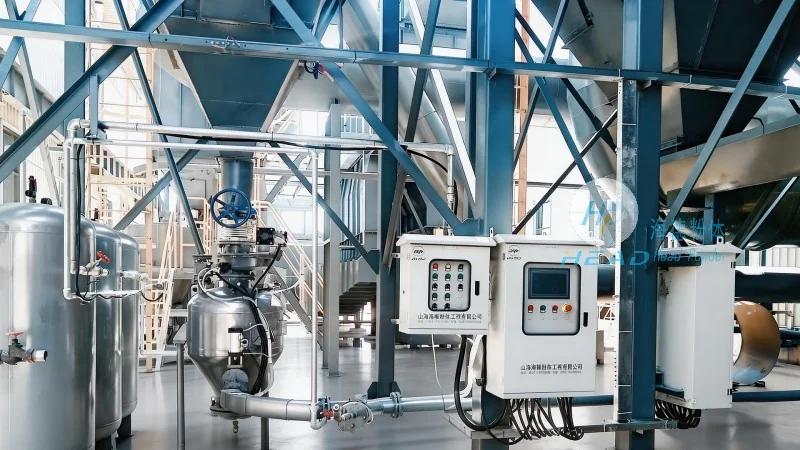
Resin pneumatic conveying finds extensive applications across various industries, including plastics manufacturing, pharmaceuticals, and food processing. In the plastics industry, it is commonly used to transport resin pellets from storage silos to processing machines like extruders and injection molding equipment. This ensures a continuous and clean feed, which is vital for maintaining product quality and consistency. The system helps minimize exposure to moisture and contaminants, which can affect the final product's properties. In the pharmaceutical sector, resin pneumatic conveying is employed for handling active pharmaceutical ingredients (APIs) and excipients, where hygiene and precision are paramount. The vacuum system is often preferred here to prevent cross-contamination and ensure accurate dosing. Food processing industries also utilize this technology for transporting food-grade resins and additives, adhering to strict sanitary standards. The closed-loop operation of pneumatic conveying reduces dust and improves workplace safety, making it suitable for food applications. Furthermore, the system's flexibility allows it to handle different resin types and particle sizes, adapting to diverse production needs.
Compared to traditional mechanical conveying methods, resin pneumatic conveying offers several significant advantages. One of the primary benefits is its ability to handle fine or abrasive resin particles without causing excessive wear or damage to the system components. This is particularly important for resins that are highly abrasive and can degrade other conveying materials. The system also provides a closed-loop operation, effectively reducing dust emissions and enhancing workplace safety. Additionally, pneumatic conveying allows for flexible routing of the material flow, enabling complex layouts in industrial facilities without the need for multiple mechanical components. The process is generally faster and more energy-efficient than mechanical methods, as it can transport materials over longer distances with minimal energy loss. Furthermore, the system can be easily integrated with other processing equipment, such as mixers and extruders, enhancing overall production efficiency. These advantages make resin pneumatic conveying a cost-effective and reliable solution for many resin handling applications, leading to improved productivity and product quality.
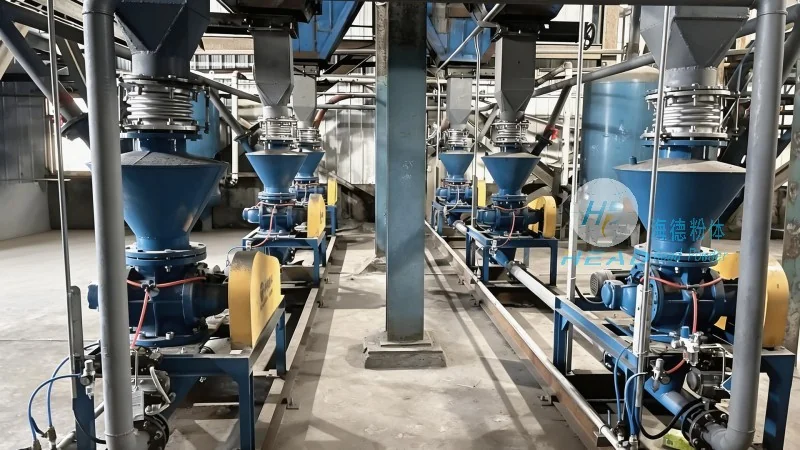
Despite its benefits, resin pneumatic conveying also presents certain challenges that require careful consideration. One of the main concerns is the potential for material buildup or blockages in the pipeline, especially with high-viscosity or sticky resin. Regular maintenance, including cleaning and inspection, is necessary to prevent these issues and ensure smooth operation. Another challenge is the need for proper air filtration to maintain air quality and prevent contamination of the resin. The system must be designed to handle the specific properties of the resin, such as its particle size, density, and moisture content. Additionally, the initial investment cost for pneumatic conveying systems can be higher than mechanical alternatives, though the long-term operational savings often justify this expense. Understanding these challenges and implementing appropriate solutions, such as using anti-static materials and regular system checks, is essential for successful resin handling. Furthermore, the system's performance may be affected by variations in air pressure or temperature, requiring proper control mechanisms to maintain consistent operation.

 Shandong Headpowder Engineering Co., Ltd.
 156-6277-7102(Manager Zhang)
  0531-83386006
  Zhangqiu District, Jinan City, Shandong Province, China
telephone
WeChatconsult
top