With more than 10‑year industry experience, Shandong Headpowder delivers full‑service pneumatic‑conveying systems and blowers, undertaking nationwide turn‑key powder‑handling projects.
HeadPowder, a leading engineering company based in Shandong, China, specializes in the design and implementation of advanced pneumatic conveying systems tailored for various industrial applications. This article explores the fundamental principles of pneumatic conveying lines used for sodium chloride material handling, along with the key characteristics of their operational environments.
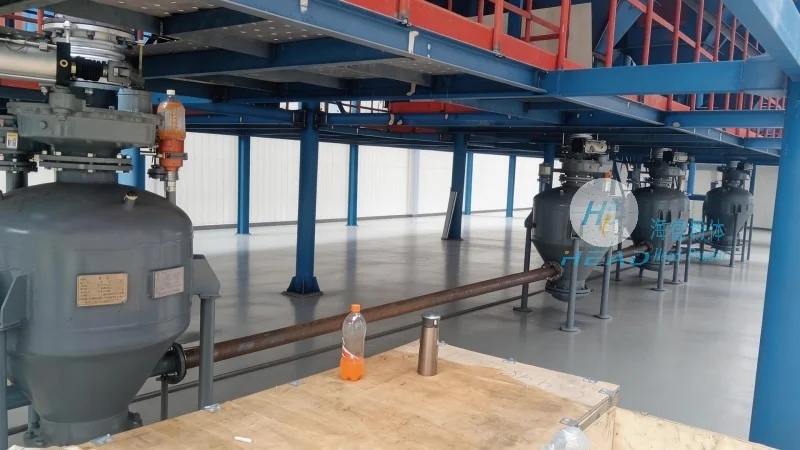
Pneumatic conveying is a method of transporting bulk materials, such as sodium chloride, through a pipeline using air or gas as the conveying medium. The system operates by creating a pressure differential between the inlet and outlet of the pipeline, which propels the material forward. There are two primary types of pneumatic conveying systems: positive pressure and negative pressure. Positive pressure systems introduce air or gas under pressure at the material inlet, while negative pressure systems create a vacuum at the material outlet to draw the material through the pipeline.
For sodium chloride, a common salt used in various industries, the pneumatic conveying line works by first feeding the material into a hopper or feeder. The material is then accelerated by the moving air stream within the pipeline. The velocity of the air must be sufficient to overcome the gravitational force and frictional resistance of the material particles, ensuring stable and efficient transport. The system typically includes components like a blower or compressor to generate the necessary air pressure, a filter to remove dust and particles from the air stream, and a receiver or discharge hopper to collect the material at the destination.
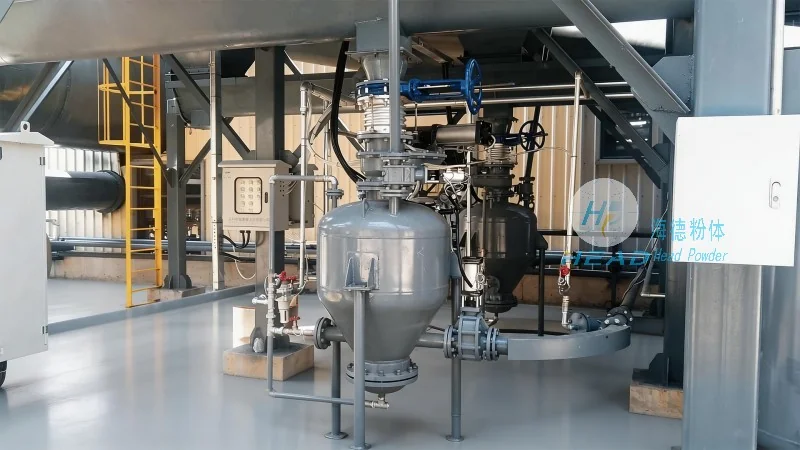
The operational environments for sodium chloride pneumatic conveying systems vary based on the application. In industrial settings, such as chemical plants or food processing facilities, the systems are often integrated into larger production lines, requiring precise control over material flow rates and pressure. The working scenes may involve high-volume material handling, where the system must maintain consistent performance over extended periods. Additionally, the systems are designed to handle the physical properties of sodium chloride, including its particle size, density, and moisture content, which can affect the conveying efficiency. For example, in pharmaceutical applications, the system must ensure minimal contamination and particle size uniformity, while in chemical manufacturing, it may need to handle higher temperatures or corrosive environments.
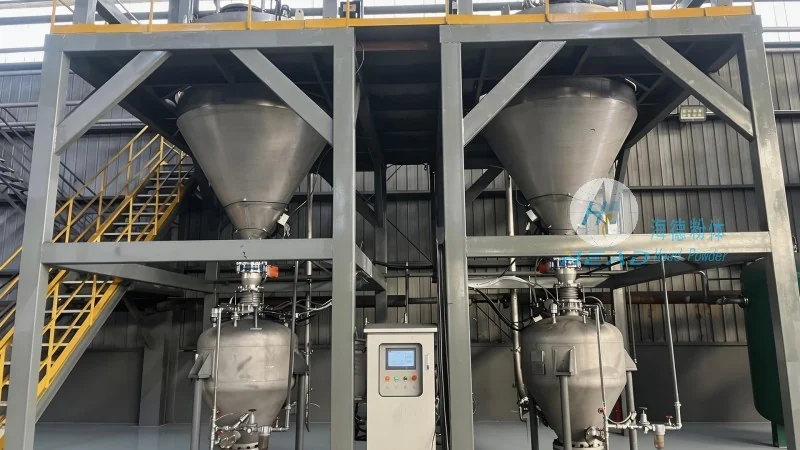
The use of pneumatic conveying lines for sodium chloride offers several advantages over traditional methods like belt conveyors or bucket elevators. These systems provide a closed-loop operation, which minimizes dust emissions and improves safety in the workplace. They also allow for flexible routing of the material, enabling the system to be adapted to different production layouts. In terms of practical applications, sodium chloride pneumatic conveying is widely used in the chemical industry for transporting raw materials to reactors, in the food industry for processing salt into various products, and in the pharmaceutical sector for handling raw salt in drug formulations. The systems are particularly suitable for applications where material cleanliness and hygiene are critical, as the enclosed pipeline prevents contamination from external sources.
HeadPowder's expertise in designing and implementing sodium chloride pneumatic conveying lines ensures that industrial facilities can achieve efficient, reliable, and safe material handling. By understanding the principles and characteristics of these systems, companies can optimize their operations and meet the demands of modern industrial production. The company's commitment to quality and innovation helps deliver solutions that are tailored to the specific needs of each client, contributing to improved productivity and reduced operational costs.

 Shandong Headpowder Engineering Co., Ltd.
 156-6277-7102(Manager Zhang)
  0531-83386006
  Zhangqiu District, Jinan City, Shandong Province, China
telephone
WeChatconsult
top