With more than 10‑year industry experience, Shandong Headpowder delivers full‑service pneumatic‑conveying systems and blowers, undertaking nationwide turn‑key powder‑handling projects.
HeadPowder, a leading engineering firm based in Shandong, China, specializes in the design and implementation of advanced pneumatic conveying systems for handling titanium dioxide powders. This technical analysis delves into the core technologies and operational differences between positive pressure and negative pressure conveying modes, providing a comprehensive overview for industry professionals seeking to optimize material handling processes.
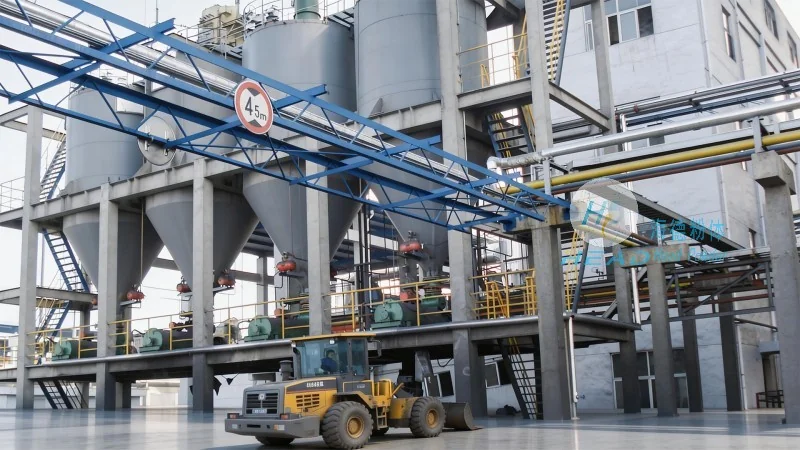
Titanium dioxide (TiO₂) is a high-value, fine powder widely used in coatings, pigments, and various industrial applications. Its properties, such as high density, fine particle size, and potential for dust generation, make it a challenging material to transport efficiently. Traditional bulk material handling methods often fall short in maintaining product quality and operational efficiency. Pneumatic conveying systems offer a solution by utilizing air to move powders through pipelines, reducing the need for mechanical components and minimizing product contamination.
Positive pressure conveying operates by blowing air into the material stream, creating a pressure differential that propels the powder forward. In this mode, the conveying line is under positive pressure relative to the ambient environment. HeadPowder's systems typically employ high-pressure blowers or compressors to generate the necessary air pressure, ensuring consistent material flow. The primary advantages of positive pressure systems include high conveying capacity, ability to handle long distances and multiple branches, and suitability for abrasive or corrosive powders like titanium dioxide. These systems are particularly effective when the material needs to be transported over significant distances or through complex network configurations.
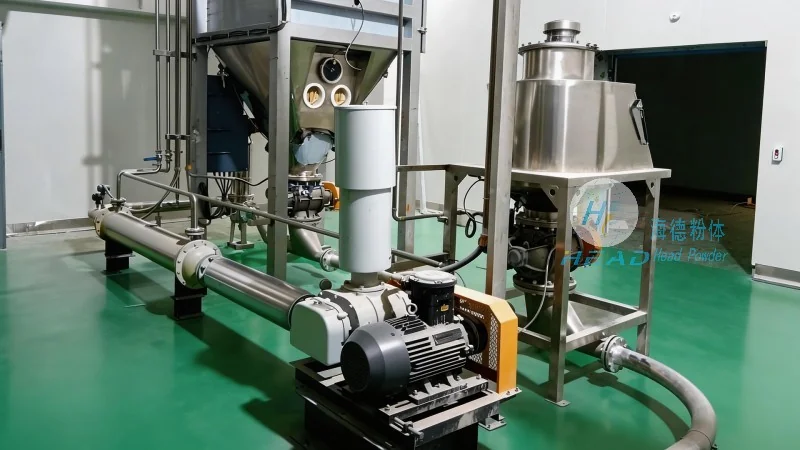
Negative pressure conveying, also known as vacuum conveying, works by creating a vacuum in the conveying line, drawing the powder into the system. The material is then transported by the vacuum force, which pulls the powder from the source to the destination. This mode is often preferred for applications requiring gentle handling of delicate or sensitive powders, as the low air velocity reduces particle breakage and agglomeration. HeadPowder's vacuum systems utilize high-efficiency vacuum pumps to maintain the required vacuum levels, ensuring reliable material transport. The key advantages of negative pressure systems include low noise operation, reduced dust emissions, and the ability to handle powders with low flowability or high moisture content. These systems are ideal for short-distance transport or when the material is to be collected from multiple points.
When selecting between positive and negative pressure conveying modes for titanium dioxide powders, several factors must be considered. The choice depends on the specific application requirements, including material characteristics, distance, system complexity, and operational costs. Positive pressure systems are generally more suitable for high-volume, long-distance transport due to their higher conveying capacity and ability to handle abrasive materials. Negative pressure systems, on the other hand, excel in applications requiring gentle handling, low noise, and minimal dust generation. HeadPowder's engineering team conducts thorough assessments of each project to determine the optimal mode, ensuring that the selected system aligns with the client's operational goals and material handling needs.
The design of a pneumatic conveying system for titanium dioxide powders involves careful consideration of several technical aspects. First, the selection of the appropriate blower or vacuum pump is critical, as it must match the material's flow properties and the required conveying pressure or vacuum level. HeadPowder utilizes advanced computational fluid dynamics (CFD) modeling to simulate material flow and optimize system performance. Second, the pipeline design, including pipe diameter, length, and bends, directly impacts system efficiency. Proper sizing of the pipeline ensures minimal pressure drop and consistent material velocity. Third, the inclusion of components such as filters, cyclones, and dust collectors is essential to maintain product quality and comply with environmental regulations. These components help prevent particle degradation and ensure that the powder remains in its original state throughout the conveying process.
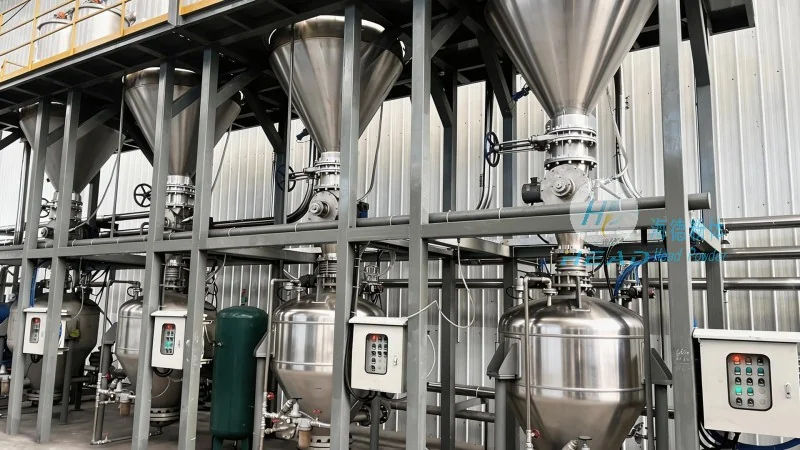
HeadPowder has successfully implemented pneumatic conveying systems for titanium dioxide powders in various industrial settings. For example, a client in the coatings industry required a system to transport TiO₂ from storage silos to production lines over a distance of 200 meters. By employing a positive pressure system with a high-pressure blower, HeadPowder achieved a conveying capacity of 10 tons per hour, meeting the client's production demands while maintaining product quality. Another application involved a negative pressure system for transporting TiO₂ from a raw material storage area to a processing plant, where the system's low noise and dust emission characteristics were crucial for maintaining a safe working environment. These case studies highlight the effectiveness of both positive and negative pressure modes in addressing specific operational challenges and delivering measurable benefits.
Both positive pressure and negative pressure conveying modes offer viable solutions for handling titanium dioxide powders, each with distinct advantages and applications. HeadPowder's expertise in designing and implementing these systems ensures that clients can select the most appropriate technology to meet their specific needs. By leveraging advanced engineering principles and tailored system designs, HeadPowder helps industries optimize material handling processes, improve operational efficiency, and maintain product quality. As the demand for high-performance titanium dioxide powders continues to grow, the importance of reliable and efficient conveying systems becomes increasingly critical. HeadPowder remains committed to providing innovative solutions that address the evolving challenges of the industry, ensuring that clients can achieve their operational goals with confidence.

 Shandong Headpowder Engineering Co., Ltd.
 156-6277-7102(Manager Zhang)
  0531-83386006
  Zhangqiu District, Jinan City, Shandong Province, China
telephone
WeChatconsult
top