With more than 10‑year industry experience, Shandong Headpowder delivers full‑service pneumatic‑conveying systems and blowers, undertaking nationwide turn‑key powder‑handling projects.
Perlite, a lightweight, porous volcanic glass, is widely used in construction, horticulture, and industrial applications due to its excellent thermal insulation and lightweight properties. Efficient and reliable material handling is crucial for optimizing production processes in perlite processing facilities. Pneumatic conveying systems offer a non-contact, dust-free method for transporting perlite, with two primary modes: positive pressure and negative pressure. This article provides a technical analysis of these two modes, highlighting their characteristics, advantages, and practical applications in the context of perlite handling.
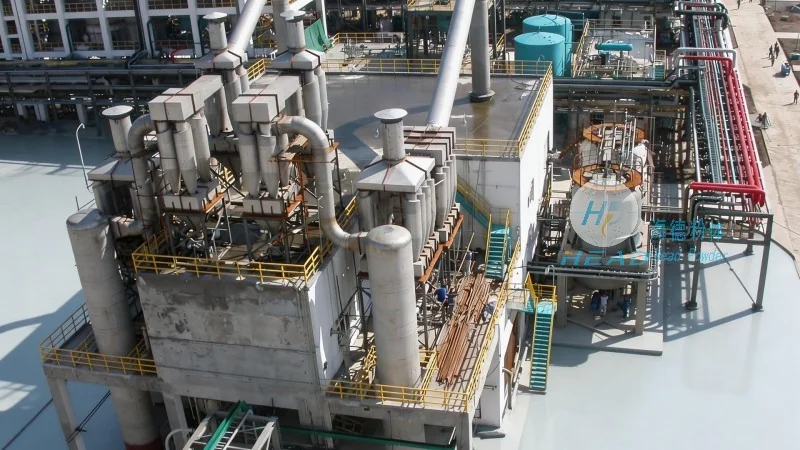
Perlite is a naturally occurring or synthetically produced material that expands when heated, creating a lightweight, insulating product. In industrial settings, perlite is often processed into various grades for different applications. Pneumatic conveying systems are essential for moving perlite from storage, processing, and packaging stages. The choice between positive and negative pressure systems depends on factors such as material properties, system layout, and operational requirements.
Positive pressure conveying systems operate by blowing air or a carrier gas into the conveying line, creating a pressure higher than the ambient air. This method is particularly effective for transporting light, low-density materials like perlite. The primary mechanism involves a blower or compressor that forces air through the pipeline, carrying the perlite particles along. The system typically includes a hopper, a feeder, and a conveying line, with the air flow directed from the blower to the discharge point.
Key advantages of positive pressure systems include high conveying capacity, ability to handle long distances and multiple branches, and suitability for abrasive or dusty materials. The positive pressure environment helps maintain material integrity and prevents dust contamination. However, these systems require robust equipment to handle the pressure and airflow, and they may generate more noise and require proper ventilation to manage air emissions.
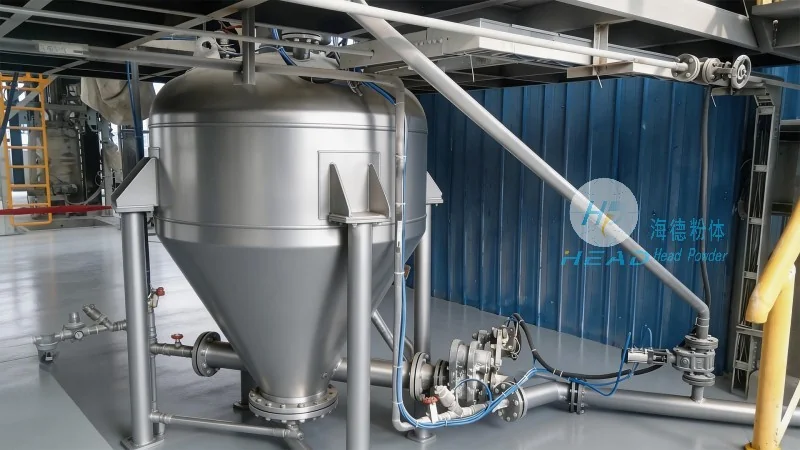
Negative pressure conveying systems, also known as vacuum systems, operate by creating a vacuum in the conveying line, drawing material from the source into the system. The vacuum is generated by a vacuum pump or fan, which pulls air and material particles through the pipeline. This method is often preferred for applications where the material is to be collected from a dispersed source or where the system layout involves multiple collection points.
Advantages of negative pressure systems include lower initial cost for shorter distances, reduced noise levels compared to positive pressure systems, and the ability to handle fine powders without excessive pressure. However, they have limitations in conveying long distances or high volumes, as the vacuum can lead to material degradation or blockages if the system is not properly designed. Negative pressure systems also require careful maintenance to prevent dust leakage and ensure efficient operation.
When selecting a pneumatic conveying system for perlite, it is essential to compare the characteristics of positive and negative pressure modes. Positive pressure systems are generally more suitable for high-volume, long-distance conveying, especially in industrial settings where perlite is processed in large quantities. They offer better control over material flow and can handle abrasive perlite particles without significant wear. On the other hand, negative pressure systems are advantageous for applications requiring dust-free collection or where the material is to be transported from multiple sources to a central collection point.
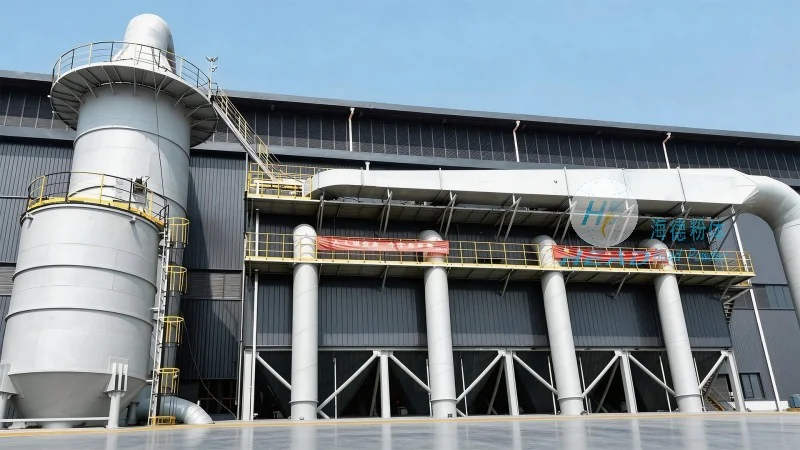
The choice between the two modes also depends on the system layout and available space. Positive pressure systems are more flexible in terms of layout, allowing for multiple branches and complex piping configurations. Negative pressure systems, while simpler in design for short distances, may require additional equipment to manage the vacuum and prevent air leakage.
Several factors must be considered when designing a pneumatic conveying system for perlite. Material properties, such as particle size, density, and moisture content, influence the choice of system. For example, fine perlite particles may require higher air velocities in negative pressure systems to prevent blockages. System layout, including the distance between the source and destination, number of branches, and elevation changes, also plays a critical role. Additionally, the environmental impact and noise levels must be evaluated, as both positive and negative pressure systems have specific requirements for air handling and emissions control.
In conclusion, both positive and negative pressure pneumatic conveying systems are viable options for handling perlite, each with distinct advantages and limitations. Positive pressure systems offer higher capacity and flexibility for long-distance transport, while negative pressure systems are more cost-effective for shorter distances and dust-free collection. The optimal choice depends on the specific operational requirements, material characteristics, and system constraints. By understanding the technical aspects of each mode, industrial facilities can select the most suitable pneumatic conveying system to enhance efficiency, reduce downtime, and ensure safe and reliable perlite handling.

 Shandong Headpowder Engineering Co., Ltd.
 156-6277-7102(Manager Zhang)
  0531-83386006
  Zhangqiu District, Jinan City, Shandong Province, China
telephone
WeChatconsult
top