With more than 10‑year industry experience, Shandong Headpowder delivers full‑service pneumatic‑conveying systems and blowers, undertaking nationwide turn‑key powder‑handling projects.
Denitrification urea is a critical component in modern industrial processes, particularly in power plants and chemical manufacturing facilities where nitrogen oxide reduction is essential. The efficient and reliable transport of this material from storage to processing units is paramount for maintaining operational efficiency and environmental compliance. Pneumatic conveying systems have emerged as a preferred solution due to their ability to handle bulk materials like urea with minimal dust generation and reduced risk of contamination. This article provides a technical analysis of two primary conveying modes—positive pressure and negative pressure systems—highlighting their operational principles, advantages, and applications in the context of denitrification urea handling.
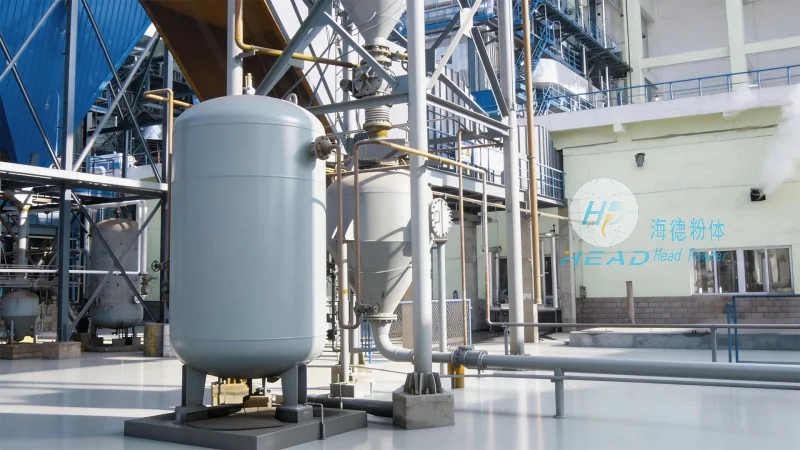
Pneumatic conveying systems utilize air or gas to transport bulk materials through a pipeline network. The two main categories are positive pressure (or pressure) systems and negative pressure (or vacuum) systems. In positive pressure systems, air is blown into the conveying line, creating a pressure higher than the ambient air, which propels the material forward. Conversely, negative pressure systems draw material into the line using a vacuum created by a fan or blower at the discharge end. Each mode has distinct characteristics that influence its suitability for different industrial applications, particularly when dealing with denitrification urea, which requires careful handling to prevent caking or degradation.
Positive pressure pneumatic conveying systems operate by injecting compressed air into the material stream, creating a pressure differential that moves the urea through the pipeline. This mode is often preferred for long-distance or high-capacity conveying due to its ability to maintain consistent flow rates and handle abrasive or sticky materials like denitrification urea. The primary advantages include: 1) Higher conveying velocities, which reduce the risk of material buildup and clogging; 2) Improved control over material flow, allowing for precise dosing and batching; 3) Lower maintenance requirements compared to negative pressure systems, as there is no need for high-efficiency filtration at the intake. However, positive pressure systems require robust air filtration and compression equipment to prevent dust emissions and ensure compliance with environmental regulations. The system typically consists of a storage silo, a rotary valve feeder, a positive displacement blower, and a pipeline network leading to the processing unit. The air-to-material ratio is carefully controlled to optimize efficiency and minimize energy consumption.
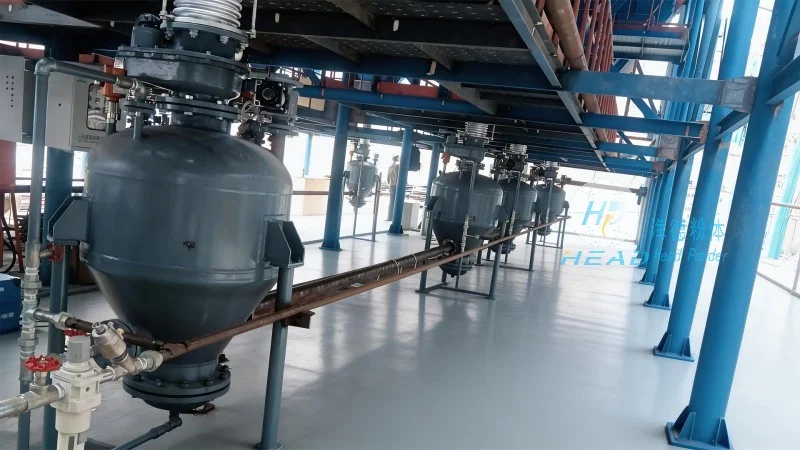
Negative pressure systems, also known as vacuum conveying, operate by creating a vacuum at the discharge end, which draws the urea from the storage silo into the pipeline. This mode is particularly suitable for applications where dust control is a top priority, as the intake is sealed and the material is drawn into the system without exposing it to ambient air. Negative pressure conveying is often used in environments where air quality must be maintained, such as in pharmaceutical or food processing facilities, although it is also applicable to denitrification urea handling in power plants. The key advantages of negative pressure systems include: 1) Reduced dust generation at the intake point, as the material is drawn into the system rather than being blown out; 2) Lower air velocity requirements, which can reduce energy consumption and wear on components; 3) Flexibility in pipeline layout, as the intake can be located at a higher elevation than the discharge point. However, negative pressure systems are generally less efficient for long-distance conveying and may require more complex filtration at the intake to prevent dust from entering the system. The system typically includes a vacuum pump, a filter unit, a storage silo with a rotary valve, and a pipeline network that connects to the processing unit. The vacuum level is monitored to ensure consistent material flow and prevent air leaks that could compromise efficiency.
When selecting a pneumatic conveying system for denitrification urea, the choice between positive and negative pressure modes depends on several factors, including the distance between the storage and processing units, the required flow rate, the environmental regulations in the operating location, and the overall cost of ownership. Positive pressure systems are generally more suitable for long-distance or high-capacity applications where energy efficiency and minimal maintenance are critical. They are particularly effective when the intake and discharge points are at the same elevation or when the material needs to be conveyed over obstacles. Negative pressure systems, on the other hand, excel in applications where dust control and environmental compliance are paramount, such as in indoor processing facilities or when the intake is located at a higher elevation than the discharge point. The choice also depends on the specific properties of the denitrification urea, including its moisture content, particle size, and tendency to cake or agglomerate. For example, if the urea is prone to caking, a positive pressure system with higher air velocities may be preferred to prevent material buildup, while a negative pressure system with gentle air flow may be better suited for delicate or moisture-sensitive materials.
The successful implementation of a denitrification urea pneumatic conveying system requires careful consideration of several technical and operational factors. First, the material properties of the urea must be thoroughly evaluated, including its bulk density, flowability, and tendency to agglomerate. This information is critical for determining the appropriate air-to-material ratio and conveying velocity to prevent clogging and ensure consistent flow. Second, the system layout must be optimized to minimize pressure losses and energy consumption. This includes selecting the correct pipe diameter, ensuring smooth transitions between components, and avoiding sharp bends or restrictions that could impede material movement. Third, the selection of components, such as rotary valves, blowers, and filters, must be based on the specific application requirements. For example, a positive pressure system may use a positive displacement blower for high-pressure operation, while a negative pressure system may employ a vacuum pump with a high-efficiency filter to maintain low dust levels. Fourth, the system must be equipped with appropriate safety features, including pressure relief valves, dust collection systems, and emergency shutdown mechanisms, to prevent accidents and ensure compliance with safety regulations. Finally, regular maintenance and monitoring are essential to ensure the system operates at peak efficiency and to detect any issues before they lead to downtime or material loss.
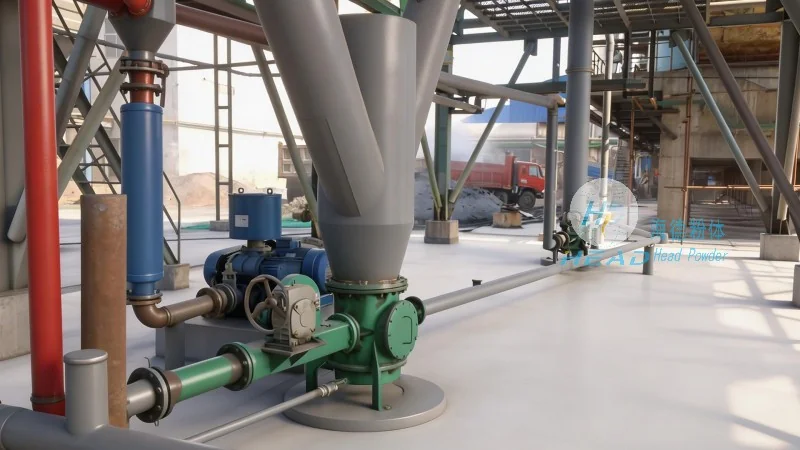
Shandong HeadPowder Engineering Co., Ltd. recently implemented a positive pressure pneumatic conveying system for a large power plant in China. The plant required the transport of 200 tons of denitrification urea per day from a storage silo to the ammonia injection system, with a conveying distance of 500 meters. The system was designed to operate at an air-to-material ratio of 6:1, with a conveying velocity of 20 meters per second. The positive pressure system was chosen due to the long distance and high flow rate requirements, as it could maintain consistent flow rates and handle the abrasive nature of the urea without clogging. The system included a 50 cubic meter storage silo, a rotary valve feeder, a positive displacement blower with a capacity of 10,000 cubic meters per hour, and a pipeline network with a diameter of 200 mm. The system was installed in a dedicated conveying room to minimize dust emissions and ensure compliance with local environmental regulations. After commissioning, the system achieved a conveying efficiency of 98%, with minimal material loss and no clogging incidents. The energy consumption was optimized by adjusting the air-to-material ratio based on real-time flow measurements, resulting in a 15% reduction in operating costs compared to a negative pressure system. This case study demonstrates the effectiveness of positive pressure systems in large-scale industrial applications and highlights the importance of proper system design and maintenance.
Another successful application of a negative pressure pneumatic conveying system was implemented by Shandong HeadPowder Engineering Co., Ltd. for a chemical manufacturing facility in China. The facility required the transport of 50 tons of denitrification urea per day from a storage silo to a processing unit, with the intake located 10 meters above the discharge point. The negative pressure system was chosen due to the need for strict dust control and the higher elevation of the intake point. The system included a vacuum pump with a capacity of 8,000 cubic meters per hour, a high-efficiency filter with a dust collection efficiency of 99.9%, and a pipeline network with a diameter of 150 mm. The system was installed in an indoor processing area to maintain a clean environment and prevent contamination of the urea. After commissioning, the system achieved a conveying efficiency of 95%, with minimal dust emissions and no material degradation. The energy consumption was optimized by using a variable frequency drive (VFD) to control the vacuum level, resulting in a 20% reduction in operating costs compared to a positive pressure system. This case study illustrates the advantages of negative pressure systems in applications where dust control and environmental compliance are critical, and highlights the importance of selecting the appropriate system based on the specific operational requirements.

 Shandong Headpowder Engineering Co., Ltd.
 156-6277-7102(Manager Zhang)
  0531-83386006
  Zhangqiu District, Jinan City, Shandong Province, China
telephone
WeChatconsult
top