With more than 10‑year industry experience, Shandong Headpowder delivers full‑service pneumatic‑conveying systems and blowers, undertaking nationwide turn‑key powder‑handling projects.
Urea granule pneumatic conveying systems are critical in modern industrial operations, particularly in the fertilizer and chemical sectors. These systems efficiently transport urea granules from storage to processing or packaging units, ensuring smooth and reliable material handling. The choice between positive pressure and negative pressure conveying modes is a key technical decision that impacts system efficiency, cost, and operational safety. This article provides a detailed technical analysis of these two modes, highlighting their characteristics, advantages, and practical applications.
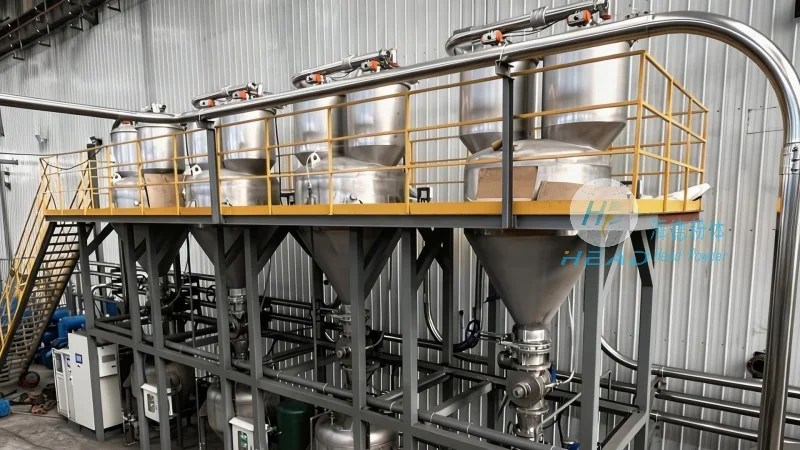
HeadPowder, a leading engineering company based in Shandong, China, specializes in the design, manufacturing, and installation of advanced pneumatic conveying solutions. With years of experience in the industry, HeadPowder has developed expertise in optimizing urea granule transport systems to meet the diverse needs of clients. The company's commitment to innovation and quality ensures that their systems deliver high performance and durability, making them a trusted partner for businesses in the fertilizer and chemical industries.
Pneumatic conveying systems use air or gas to transport bulk materials like urea granules. The two primary modes are positive pressure and negative pressure systems. Each mode has distinct operating principles and is suitable for different scenarios based on factors such as material characteristics, system layout, and operational requirements.
In a positive pressure system, air is supplied under pressure to the conveying line, and the material is drawn into the line by the moving air. This mode is often referred to as "blow-through" or "pressure-assisted" conveying. The system operates by creating a pressure differential between the inlet and outlet, ensuring that the material is propelled forward. Positive pressure systems are typically used for short to medium-distance transport and are suitable for materials that are free-flowing and non-abrasive. The main advantages of positive pressure systems include high conveying capacity, ability to handle abrasive materials, and suitability for vertical and horizontal transport combinations.
HeadPowder's positive pressure urea granule conveying systems are engineered to maximize efficiency and reliability. The company's designs incorporate advanced components such as high-pressure blowers, robust conveying pipes, and efficient separation equipment. These systems are capable of handling large volumes of urea granules with minimal pressure drop, ensuring consistent performance even under varying load conditions. The positive pressure mode is particularly effective in applications where the material needs to be transported to multiple destinations or where the system layout involves complex routing.
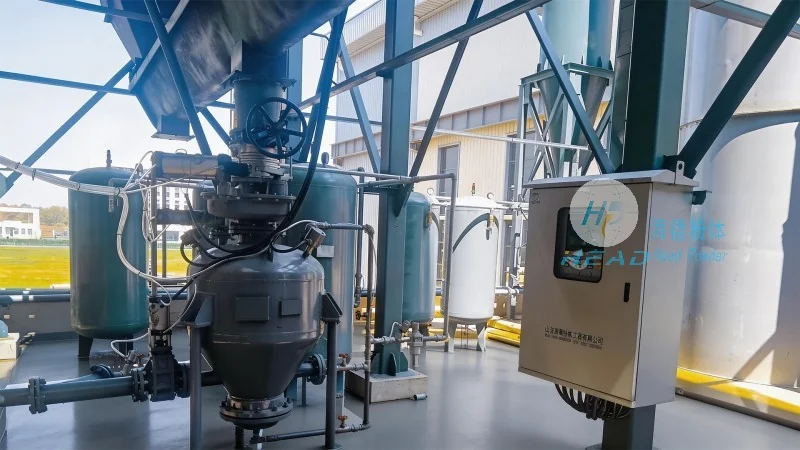
Conversely, a negative pressure system operates by creating a vacuum in the conveying line, which draws the material into the line. This mode is also known as "suction" or "vacuum-assisted" conveying. The system works by maintaining a lower pressure inside the line compared to the ambient air, causing the material to be pulled into the system. Negative pressure systems are commonly used for long-distance transport and are ideal for materials that are light and dusty, as the vacuum helps to control dust emissions. The primary benefits of negative pressure systems include lower energy consumption for long runs, reduced risk of material spillage, and better control over dust generation.
HeadPowder's negative pressure urea granule conveying systems are designed to provide efficient and cost-effective transport solutions. The company's systems utilize high-efficiency vacuum pumps and advanced filtration technology to maintain a stable vacuum level while minimizing energy usage. These systems are particularly suitable for applications where the urea granules need to be transported over long distances or where the system layout includes multiple branches and turns. The negative pressure mode is also preferred in environments where dust control is a critical concern, as the sealed system prevents material leakage and maintains a clean working environment.
When selecting between positive and negative pressure conveying modes for urea granule transport, several factors must be considered. The first is the distance and layout of the system. Positive pressure systems are generally more suitable for shorter distances and complex layouts, while negative pressure systems excel in long-distance applications. The second factor is the material characteristics, including particle size, density, and abrasiveness. Positive pressure systems are better suited for abrasive materials, whereas negative pressure systems are ideal for light, dusty materials. The third consideration is energy consumption and operational costs. Negative pressure systems typically consume less energy for long runs, but positive pressure systems may have lower initial costs and higher conveying capacity.
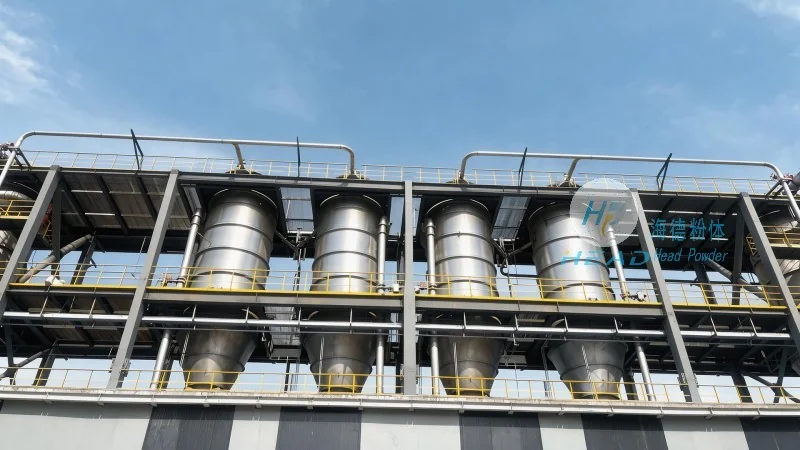
HeadPowder provides comprehensive technical support to help clients choose the most appropriate conveying mode based on their specific requirements. The company's engineers conduct thorough assessments of the system layout, material properties, and operational goals to recommend the optimal solution. This approach ensures that the selected system not only meets the current needs of the business but also accommodates future expansion and technological advancements.
Both positive and negative pressure conveying modes have distinct advantages and limitations that influence their suitability for urea granule transport. Positive pressure systems offer high conveying capacity, robustness, and the ability to handle abrasive materials. However, they may require higher energy input and can generate more dust, especially if the system is not properly sealed. Negative pressure systems, on the other hand, provide lower energy consumption, better dust control, and suitability for long-distance transport. The main limitations include higher initial costs, potential for material spillage if the system is not properly maintained, and reduced conveying capacity compared to positive pressure systems.
HeadPowder's expertise lies in balancing these advantages and limitations to deliver customized solutions. The company's engineers work closely with clients to understand their operational constraints and preferences, ensuring that the chosen system maximizes efficiency while minimizing costs and risks. By leveraging advanced technology and innovative design, HeadPowder's systems provide reliable and sustainable urea granule transport solutions that meet the highest industry standards.
Choosing between positive pressure and negative pressure conveying modes for urea granule transport is a critical decision that impacts system performance, cost, and safety. Positive pressure systems offer high capacity and robustness, while negative pressure systems provide energy efficiency and better dust control. HeadPowder, with its extensive experience and technical expertise, offers comprehensive solutions that cater to the diverse needs of the fertilizer and chemical industries. By understanding the characteristics and applications of each mode, businesses can select the most appropriate system to ensure efficient and reliable urea granule transport, ultimately enhancing their operational productivity and profitability.

 Shandong Headpowder Engineering Co., Ltd.
 156-6277-7102(Manager Zhang)
  0531-83386006
  Zhangqiu District, Jinan City, Shandong Province, China
telephone
WeChatconsult
top