With more than 10‑year industry experience, Shandong Headpowder delivers full‑service pneumatic‑conveying systems and blowers, undertaking nationwide turn‑key powder‑handling projects.
Masterbatch is a critical component in the plastic processing industry, often requiring efficient and reliable transportation methods to ensure consistent quality and process stability. Pneumatic conveying systems have emerged as a preferred solution for handling masterbatch materials due to their ability to transport powders and granules over long distances with minimal product degradation. This article provides a technical analysis of masterbatch pneumatic conveying systems, focusing on the comparison between positive pressure and negative pressure conveying modes. The discussion aims to help industry professionals understand the operational principles, advantages, and limitations of each mode, enabling informed decisions when selecting the most suitable system for their specific applications. Shandong HeadPowder Engineering Co., Ltd., a leading manufacturer of pneumatic conveying systems, specializes in providing customized solutions for masterbatch handling, leveraging decades of experience in material handling technology.
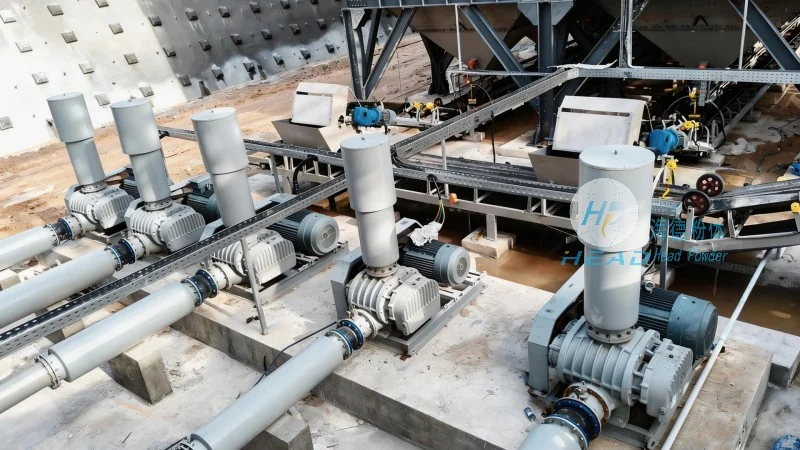
Masterbatch, composed of colorants, additives, and other functional components, is typically supplied in powder or granular form. The efficient handling of these materials is critical for maintaining product uniformity and preventing contamination during the manufacturing process. Pneumatic conveying systems utilize air or gas to transport bulk materials through a network of pipes, offering advantages such as reduced labor costs, improved safety, and the ability to handle materials in a closed system, minimizing dust exposure and environmental impact. For masterbatch applications, the choice of conveying mode—positive pressure or negative pressure—significantly influences system performance, energy consumption, and operational complexity.
Positive pressure conveying systems operate by generating air or gas pressure at the material inlet, typically using a blower or compressor to force the material through the pipeline. The material is carried by the high-pressure air stream, which ensures consistent flow and prevents material settling or blockage. This mode is particularly effective for transporting masterbatch over long distances or through complex piping networks, as the high pressure maintains material suspension and reduces the risk of clogging. A key feature of positive pressure systems is their ability to handle a wide range of material properties, including abrasive or sticky masterbatch, without requiring extensive maintenance or modifications to the system. The positive pressure approach also allows for the integration of multiple material feed points, enabling the simultaneous transport of different masterbatch types to a central processing unit.
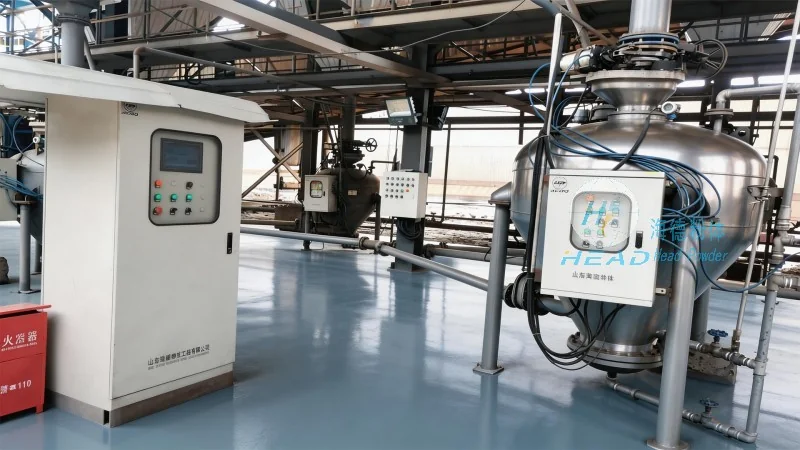
Negative pressure conveying systems, also known as vacuum conveying, operate by creating a low-pressure environment at the material outlet, drawing the material into the pipeline using a vacuum pump. The material is then carried by the suction force generated by the vacuum, which pulls the material from the source to the destination. This mode is commonly used for shorter conveying distances or when the material source is located at a higher elevation than the destination. Negative pressure systems are particularly advantageous for handling fine powders or sensitive masterbatch, as the low-pressure environment minimizes material attrition and maintains product integrity. The vacuum approach also allows for the collection of material from multiple points, as the suction can be directed to different feed locations, making it suitable for applications where the material source is scattered or difficult to access.
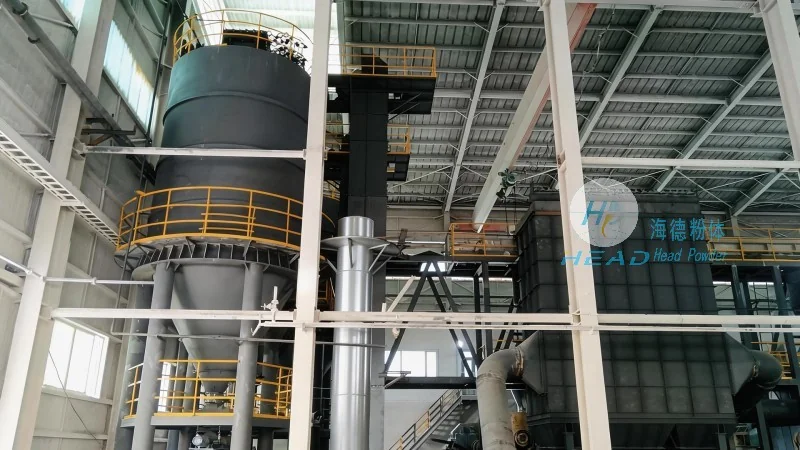
When selecting a pneumatic conveying system for masterbatch applications, the choice between positive pressure and negative pressure modes depends on several factors, including the distance between the material source and destination, the material properties, and the required system efficiency. Positive pressure systems generally offer higher conveying rates and are more suitable for long-distance transport, while negative pressure systems are more energy-efficient for shorter distances and are better suited for handling fine or sensitive materials. In terms of energy consumption, positive pressure systems typically require more power due to the need to generate high-pressure air, whereas negative pressure systems consume less energy but may have higher maintenance costs associated with the vacuum pump. Additionally, positive pressure systems are more resistant to clogging and material buildup in the pipeline, as the high pressure helps to keep the material in suspension, whereas negative pressure systems may be more prone to blockage if the material is sticky or has high moisture content.
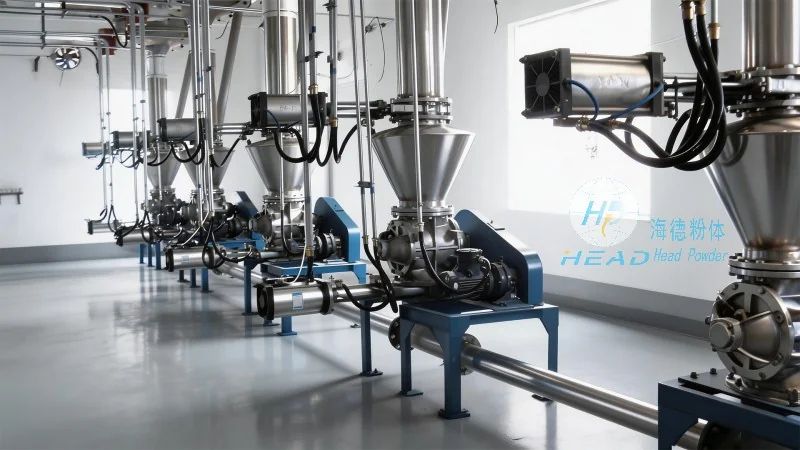
Both positive and negative pressure conveying systems require careful system design to ensure optimal performance and reliability. For positive pressure systems, the selection of the blower or compressor is critical, as it must be capable of generating sufficient pressure to transport the masterbatch over the required distance without excessive energy consumption. The pipeline layout, including the number and size of bends, is also important, as excessive bends can cause pressure drop and material settling. For negative pressure systems, the vacuum pump must be selected based on the material's suction characteristics and the system's required flow rate. The pipeline design must also consider the risk of material clogging at the suction point, as the low pressure may not be sufficient to prevent material accumulation. In both cases, the inclusion of filters and cyclones is essential to remove dust and prevent system blockage, ensuring long-term operational efficiency.
Masterbatch pneumatic conveying systems are essential for efficient material handling in the plastic processing industry, and the choice between positive pressure and negative pressure modes significantly impacts system performance and operational costs. Positive pressure systems are ideal for long-distance transport and handling of abrasive or sticky masterbatch, offering high conveying rates and reduced clogging risk. Negative pressure systems, on the other hand, are more energy-efficient for shorter distances and are better suited for fine or sensitive materials, providing lower material attrition and improved product integrity. When selecting a system, it is crucial to consider the specific application requirements, including the distance between source and destination, material properties, and required flow rate. Additionally, regular maintenance and system monitoring are essential to ensure optimal performance and minimize downtime. By understanding the operational principles and advantages of each conveying mode, industry professionals can make informed decisions that enhance process efficiency and product quality. Shandong HeadPowder Engineering Co., Ltd. offers a range of customized pneumatic conveying solutions tailored to meet the unique needs of masterbatch handling applications, combining advanced technology with expert engineering to deliver reliable and efficient material transport systems.

 Shandong Headpowder Engineering Co., Ltd.
 156-6277-7102(Manager Zhang)
  0531-83386006
  Zhangqiu District, Jinan City, Shandong Province, China
telephone
WeChatconsult
top