With more than 10‑year industry experience, Shandong Headpowder delivers full‑service pneumatic‑conveying systems and blowers, undertaking nationwide turn‑key powder‑handling projects.
For those in the industrial sector, understanding the nuances of material handling systems is crucial for operational efficiency and cost-effectiveness. Among the various methods available, pneumatic conveying stands out as a versatile solution for transporting bulk materials like precipitated barium sulfate. This article delves into the specifics of precipitated barium sulfate pneumatic conveying, exploring its classification, applications, and the role of specialized engineering companies in optimizing these processes.
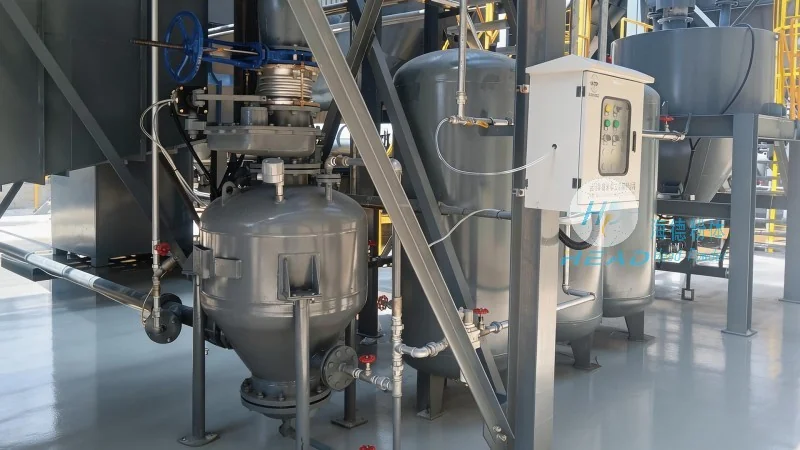
Precipitated barium sulfate, often abbreviated as BaSO₄·xH₂O, is a white crystalline powder widely used in industries such as pharmaceuticals, coatings, and ceramics. Its primary applications stem from its high purity and excellent opacity, making it a preferred choice for applications requiring precise material properties. The material's particle size distribution and flow characteristics are critical factors that influence the effectiveness of pneumatic conveying systems designed to handle it.
Pneumatic conveying is a technology that uses air or other gases to transport bulk materials through a pipeline system. Unlike mechanical conveying methods, which rely on physical contact and friction, pneumatic systems utilize pressure differentials to move materials. This method is particularly advantageous for materials that are dusty, abrasive, or require minimal contact with equipment, such as precipitated barium sulfate. The process typically involves a source of air (blower or compressor), a material feed system, a conveying line, and a discharge point.
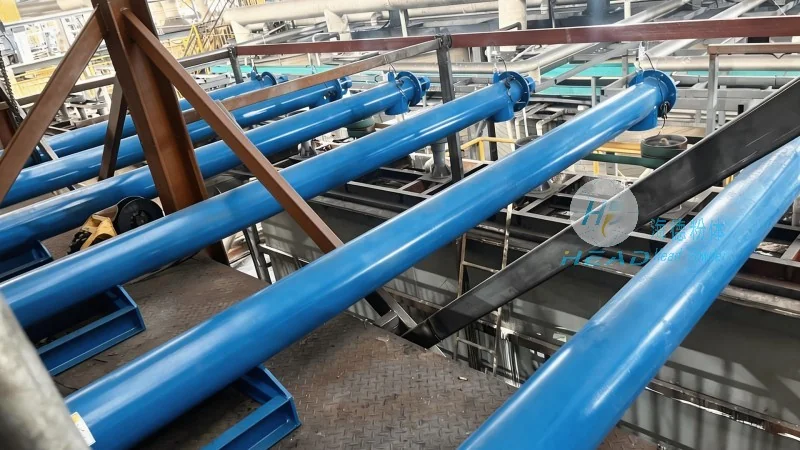
Pneumatic conveying systems are broadly classified into two main categories: pressure and vacuum systems. Pressure systems operate by forcing air and material through the pipeline under positive pressure, while vacuum systems use suction to draw material into the line. Within these categories, further subtypes exist, such as dilute-phase and dense-phase conveying. Dilute-phase systems are suitable for low to medium material loads, where the material is suspended in air as a fine mist. Dense-phase systems, on the other hand, transport material in a more concentrated form, often as a slurry or solid plug, which is more efficient for high-density materials like precipitated barium sulfate.
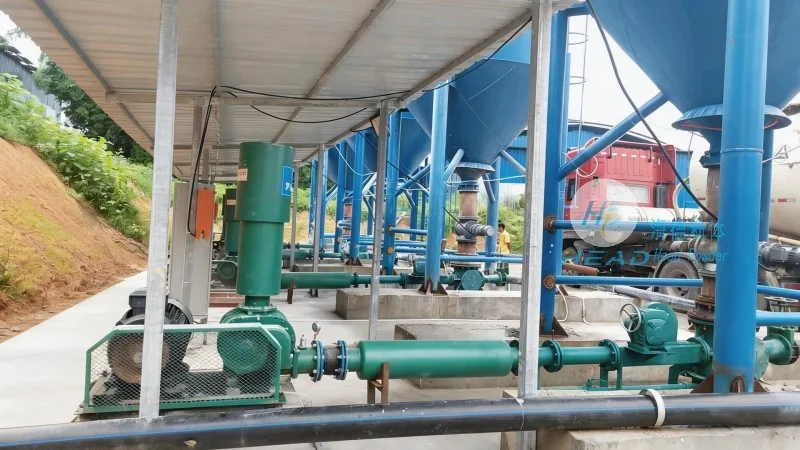
The application of pneumatic conveying for precipitated barium sulfate is widespread across multiple industries. In the pharmaceutical industry, for instance, the material is used as a filler or opacifier in drug formulations, and pneumatic systems ensure precise dosing and minimal contamination. In the coatings industry, the material is incorporated into pigments to enhance opacity and durability, with pneumatic conveying facilitating smooth integration into production lines. Additionally, in the ceramics and glass industries, precipitated barium sulfate is used as a flux or opacifier, and the efficiency of pneumatic systems ensures consistent quality in final products.
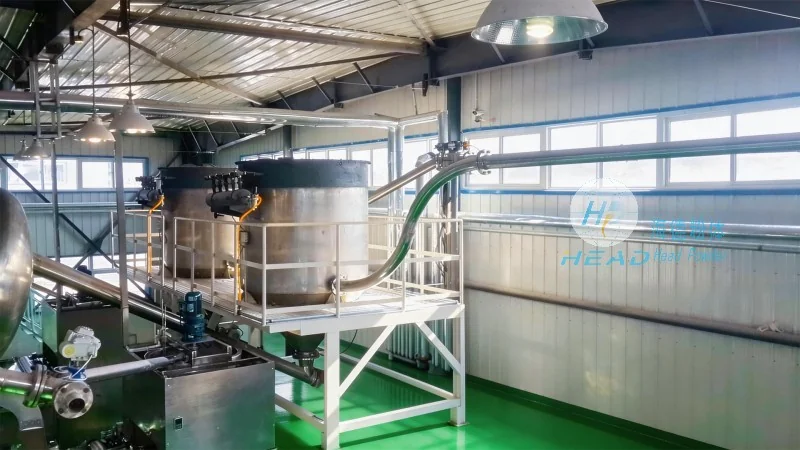
Implementing an effective pneumatic conveying system for precipitated barium sulfate requires specialized expertise. Companies like Shandong HeadPowder Engineering Co., Ltd., commonly known as HeadPowder, play a pivotal role in designing, manufacturing, and commissioning such systems. With a focus on material-specific solutions, HeadPowder engineers consider factors such as particle size, flowability, and the desired conveying distance to develop customized systems. Their expertise extends to selecting appropriate equipment, such as high-efficiency blowers, specialized feeders, and robust pipeline materials, ensuring long-term reliability and performance.
Precipitated barium sulfate pneumatic conveying is a critical technology in modern industrial operations, offering efficient and reliable material handling solutions. By understanding the classification of pneumatic systems and their applications, industries can optimize their processes to enhance productivity and product quality. Companies like Shandong HeadPowder Engineering Co., Ltd. contribute significantly to this by providing tailored engineering solutions that meet the unique demands of handling precipitated barium sulfate and other bulk materials.

 Shandong Headpowder Engineering Co., Ltd.
 156-6277-7102(Manager Zhang)
  0531-83386006
  Zhangqiu District, Jinan City, Shandong Province, China
telephone
WeChatconsult
top