With more than 10‑year industry experience, Shandong Headpowder delivers full‑service pneumatic‑conveying systems and blowers, undertaking nationwide turn‑key powder‑handling projects.
Efficient and reliable catalyst delivery is crucial in various industrial processes, as it directly impacts the performance and efficiency of chemical reactions. Shandong HeadPowder Engineering Co., Ltd., a leading provider in the field, specializes in innovative solutions for catalyst handling and transportation. This article explores the common methods used for catalyst delivery, highlighting the key considerations and applications in industrial settings.
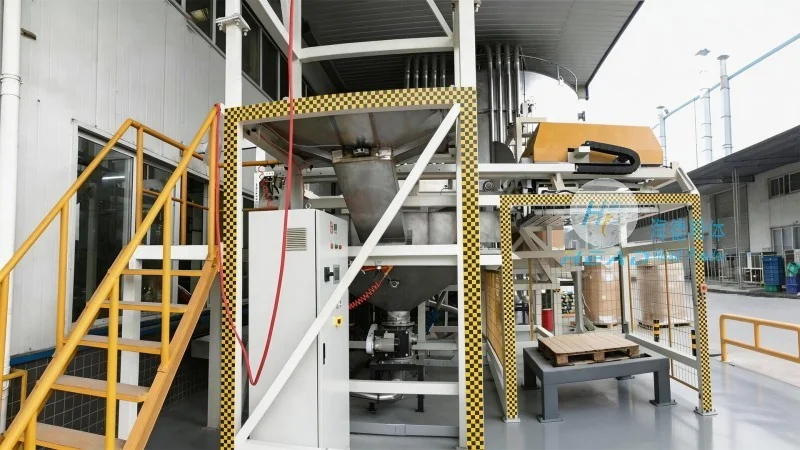
Before delving into specific delivery methods, it's essential to understand the fundamental requirements for catalyst transportation. Catalysts, often in powder or granular form, need to be moved from storage to reactors or processing units without degradation, contamination, or loss of activity. The choice of delivery method depends on factors such as catalyst properties (e.g., particle size, moisture content, reactivity), process scale, and the desired level of control over the delivery rate. Shandong HeadPowder Engineering Co., Ltd. emphasizes the importance of matching the delivery system to the specific characteristics of the catalyst to ensure optimal performance.
There are several common methods used for catalyst delivery in industrial applications. Each method has its advantages and is suitable for different scenarios. The primary methods include pump-based systems, pneumatic (air or gas) conveying, and gravity-fed systems. Let's explore each of these methods in detail.
Pump-based systems are widely used for catalyst delivery, particularly when precise control over flow rate and pressure is required. These systems typically involve using a pump, such as a metering pump or a positive displacement pump, to transport the catalyst from storage vessels to the processing equipment. The pump can be integrated with a hopper or a feeder to ensure a consistent supply of catalyst. Shandong HeadPowder Engineering Co., Ltd. offers advanced pump solutions that can handle various types of catalysts, including those with high reactivity or abrasive properties. The pump-based method is ideal for applications where accurate dosing and continuous operation are critical, such as in continuous catalytic processes.
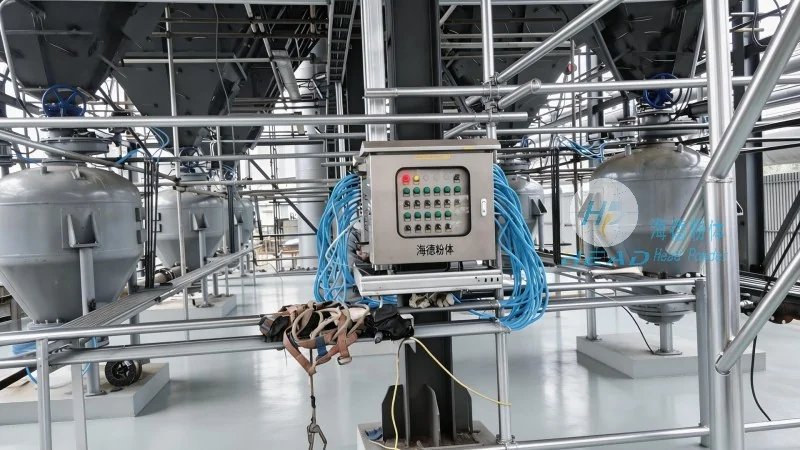
Pneumatic conveying, also known as air or gas conveying, is another common method for catalyst delivery. This technique involves using compressed air or other gases to transport the catalyst particles through a pipeline. The catalyst is typically fed into a hopper or a feeder, and the air is introduced to create a flow that carries the particles. There are two main types of pneumatic conveying: dilute-phase and dense-phase. Dilute-phase conveying uses low air velocity and is suitable for light catalysts with small particle sizes, while dense-phase conveying uses higher air velocity and is better for heavier or larger particles. Shandong HeadPowder Engineering Co., Ltd. provides customized pneumatic conveying systems that can handle different catalyst types and process requirements. This method is particularly effective for long-distance transport and for applications where the catalyst needs to be mixed with other materials or gases.
Gravity-fed systems are used when the catalyst can be transported by relying on the force of gravity. These systems typically involve a hopper or a silo that is elevated above the processing unit, allowing the catalyst to flow down through a chute or a pipe. The system may include a feeder or a valve to control the flow rate. Gravity-fed delivery is simple, cost-effective, and suitable for catalysts that are free-flowing and non-reactive. However, it requires careful design to ensure that the catalyst flows smoothly without bridging or clogging. Shandong HeadPowder Engineering Co., Ltd. designs gravity-fed systems that are optimized for different catalyst properties, ensuring reliable and consistent delivery. This method is commonly used in batch processes where the catalyst is added in discrete quantities.
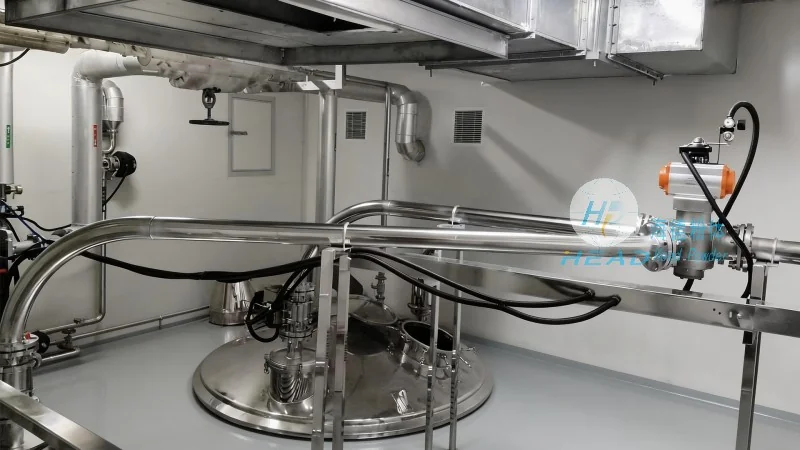
In many industrial applications, a single delivery method may not be sufficient, and a combination of methods is used. For example, a pump-based system may be used to feed a pneumatic conveying line, or a gravity-fed hopper may be integrated with a feeder to control the flow. Shandong HeadPowder Engineering Co., Ltd. specializes in designing integrated delivery systems that combine the advantages of different methods to meet specific process requirements. Advanced systems may also include automation and control features, such as sensors to monitor catalyst level, flow rate, and pressure, ensuring optimal operation and preventing issues like overfilling or underflow.
When selecting a catalyst delivery method, several factors must be considered to ensure the system's effectiveness and reliability. First, the physical properties of the catalyst, such as particle size distribution, moisture content, and bulk density, play a significant role in determining the appropriate delivery system. Catalysts with high moisture content may require drying before delivery to prevent clogging or degradation. Second, the process scale and the required flow rate are important considerations. Large-scale industrial processes may require high-capacity delivery systems, while small-scale laboratory applications may use simpler methods. Third, the environment and safety requirements must be addressed. Catalysts may be hazardous or reactive, and the delivery system must be designed to prevent leaks, spills, or exposure to personnel. Shandong HeadPowder Engineering Co., Ltd. takes all these factors into account when designing catalyst delivery systems, ensuring that the final solution meets the specific needs of the client.
In conclusion, the choice of catalyst delivery method depends on a variety of factors, including the catalyst properties, process requirements, and operational considerations. Shandong HeadPowder Engineering Co., Ltd. offers a range of solutions for catalyst delivery, from traditional pump-based and pneumatic systems to advanced integrated systems. By understanding the common methods and key considerations, industrial operators can select the most appropriate delivery system to ensure efficient and reliable catalyst transportation. The company's expertise in catalyst handling and transportation ensures that clients receive tailored solutions that meet their specific needs and enhance their overall process performance.

 Shandong Headpowder Engineering Co., Ltd.
 156-6277-7102(Manager Zhang)
  0531-83386006
  Zhangqiu District, Jinan City, Shandong Province, China
telephone
WeChatconsult
top