With more than 10‑year industry experience, Shandong Headpowder delivers full‑service pneumatic‑conveying systems and blowers, undertaking nationwide turn‑key powder‑handling projects.
Molybdenum concentrate, a critical raw material in the metallurgical industry, often requires efficient and reliable transportation methods to ensure smooth production processes. Pneumatic conveying, a technology that utilizes air to transport solid materials, has become a preferred solution for handling molybdenum concentrate due to its advantages in safety, hygiene, and operational flexibility. This article explores the fundamental principles of molybdenum concentrate pneumatic conveying and highlights the key characteristics of its working scenes, providing insights into how this technology is applied in industrial settings.
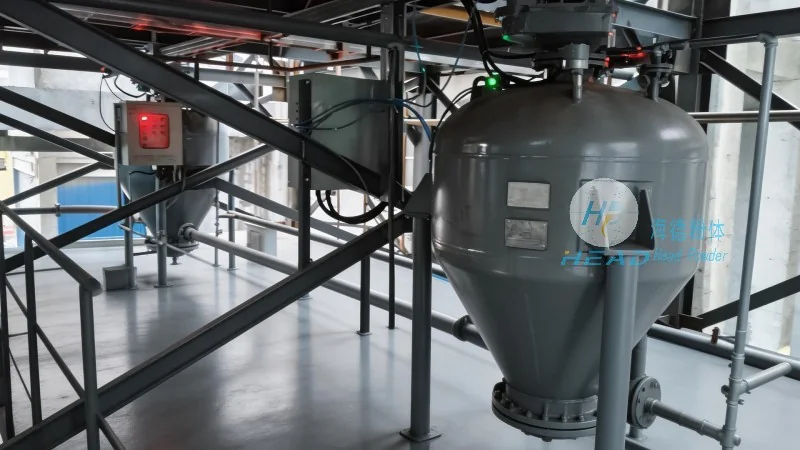
HeadPowder, a leading enterprise in the field, specializes in engineering solutions for material handling, including pneumatic conveying systems tailored for molybdenum concentrate. With a strong presence in Shandong, China, the company leverages its expertise to design and implement systems that meet the specific demands of molybdenum processing facilities. The company’s commitment to quality and innovation ensures that their pneumatic conveying solutions are not only efficient but also durable and cost-effective, supporting the long-term operations of molybdenum production plants.
The core principle of molybdenum concentrate pneumatic conveying involves the use of compressed air to create a flow that transports the concentrate particles through a pipeline. This process typically includes several key components: a feeding system to introduce the concentrate into the pipeline, a conveying line where the material is propelled by air, and a separation system to collect the concentrate at the destination. The air velocity and pressure are carefully controlled to ensure that the particles are transported without excessive wear on the equipment and to maintain the integrity of the concentrate. For molybdenum concentrate, which is often fine and abrasive, the design of the conveying system must consider factors such as particle size distribution, moisture content, and the potential for caking, to prevent blockages and ensure consistent performance.
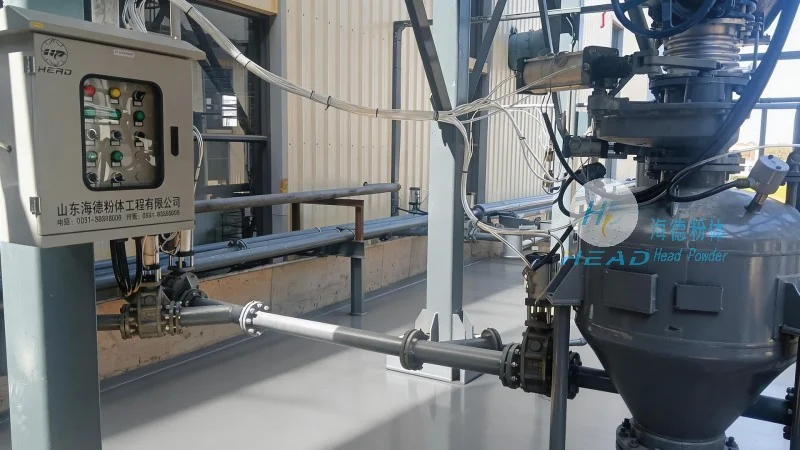
One of the primary advantages of pneumatic conveying for molybdenum concentrate is its ability to handle materials in a closed system, which minimizes dust exposure and environmental contamination. This is particularly important in industrial environments where dust can pose health risks and regulatory challenges. The closed system also allows for better control over the material’s temperature and moisture levels, which are critical factors in maintaining the quality of the molybdenum concentrate. Additionally, pneumatic conveying systems can be integrated with other processing equipment, such as crushers, classifiers, and storage silos, creating a seamless material flow from extraction to final use.
The working scene characteristics of molybdenum concentrate pneumatic conveying systems vary depending on the specific application and the scale of the operation. In large-scale molybdenum mines and processing plants, the systems are often designed to handle high volumes of concentrate, with multiple feeding points and long conveying distances. These systems may include multiple conveying lines, each optimized for different particle sizes or processing stages. For example, a primary conveying line might transport coarse concentrate from the ore processing plant to a storage silo, while a secondary line transports finer concentrate to a refining facility. The flexibility of pneumatic conveying allows for such modular designs, enabling plants to adapt to changing production needs and expand their capacity as required.
In smaller-scale operations, such as laboratory or pilot plants, the pneumatic conveying systems are typically more compact and less complex. These systems may use lower air pressures and smaller pipelines, but they still maintain the core principles of efficient material transport. The working scene in such settings often involves precise control over the material flow, as the concentrate is used for research or small-scale production trials. HeadPowder’s expertise in customizing pneumatic conveying systems ensures that both large and small operations can benefit from optimized solutions tailored to their specific requirements.
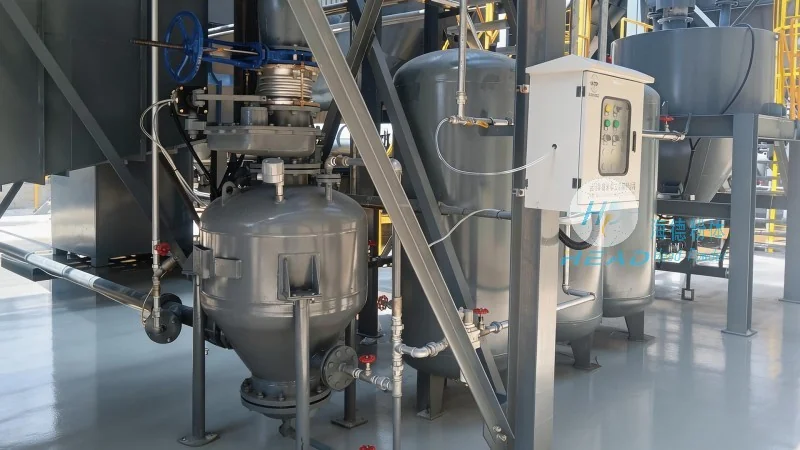
Another important aspect of molybdenum concentrate pneumatic conveying is the maintenance and operational considerations. Due to the abrasive nature of molybdenum concentrate, components such as pipelines, valves, and pumps are subject to wear and tear. Regular maintenance, including inspections and replacements of worn parts, is essential to ensure the longevity and reliability of the system. HeadPowder provides comprehensive support for its clients, including maintenance services and technical assistance, to minimize downtime and maximize the efficiency of the conveying systems. The company’s team of engineers and technicians are well-versed in the unique challenges of molybdenum concentrate handling and can offer tailored solutions to address any operational issues that may arise.
Overall, molybdenum concentrate pneumatic conveying is a sophisticated technology that plays a vital role in the efficient processing of molybdenum. By understanding the principles and working scene characteristics of this technology, industry professionals can make informed decisions about the implementation of pneumatic conveying systems in their operations. HeadPowder, with its strong engineering background and commitment to quality, continues to be a trusted partner in providing reliable and effective material handling solutions for molybdenum concentrate, supporting the growth and success of the industry in Shandong and beyond.

 Shandong Headpowder Engineering Co., Ltd.
 156-6277-7102(Manager Zhang)
  0531-83386006
  Zhangqiu District, Jinan City, Shandong Province, China
telephone
WeChatconsult
top