With more than 10‑year industry experience, Shandong Headpowder delivers full‑service pneumatic‑conveying systems and blowers, undertaking nationwide turn‑key powder‑handling projects.
HeadPowder, a leading manufacturer in the field of material handling solutions, specializes in the design, development, and implementation of advanced pneumatic conveying systems. With a strong focus on industrial efficiency and material integrity, the company's expertise lies in providing tailored solutions for transporting epoxy resin and other fine powders across various industrial applications.
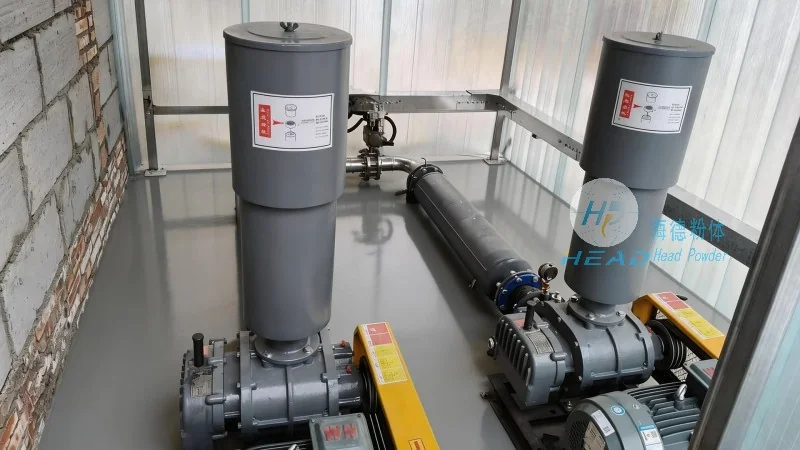
Epoxy resin, a crucial component in many manufacturing processes, often requires precise and efficient handling to maintain its quality and performance. Pneumatic conveying lines offer a reliable method for transporting epoxy resin from storage to processing equipment, ensuring minimal product degradation and consistent flow rates. The system operates by using compressed air to move the resin through a network of pipes, utilizing the principles of fluid dynamics to achieve effective material transfer.
The core principle of pneumatic conveying involves the creation of a low-pressure or high-pressure air stream that propels the epoxy resin particles through the conveying line. This method can be categorized into two main types: dilute-phase and dense-phase conveying. Dilute-phase systems use higher air velocities to suspend the resin particles, suitable for short to medium distances and low to medium particle sizes. Dense-phase systems, on the other hand, operate at lower air velocities, allowing for a higher concentration of resin in the conveying stream, which is ideal for longer distances and more delicate materials like epoxy resin.
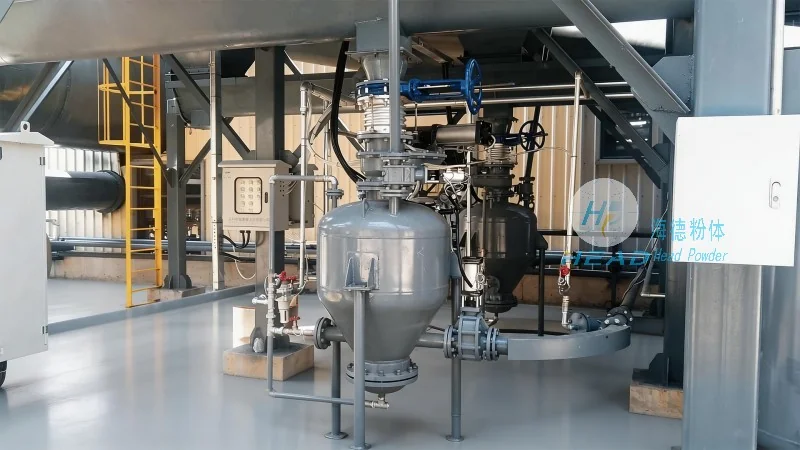
An effective epoxy resin pneumatic conveying line consists of several critical components that work in tandem to ensure smooth operation. These include the material feed hopper, which holds the resin and regulates the flow rate; the air compressor or blower, which generates the necessary air pressure; the conveying pipes, which transport the resin; and the control valves and filters, which manage the air flow and prevent contamination. Additionally, the system may incorporate features such as cyclone separators or rotary valves to separate the resin from the air and maintain a clean environment.
The working scene characteristics of epoxy resin pneumatic conveying lines are tailored to meet the specific demands of various industrial environments. For instance, in the electronics manufacturing industry, where epoxy resin is used for coating and encapsulation, the system must ensure high purity and minimal particle contamination. In the construction industry, the resin may be used for adhesives and coatings, requiring the system to handle larger quantities and maintain consistent viscosity. The versatility of pneumatic conveying allows it to adapt to these diverse applications, providing a flexible solution for material handling needs.
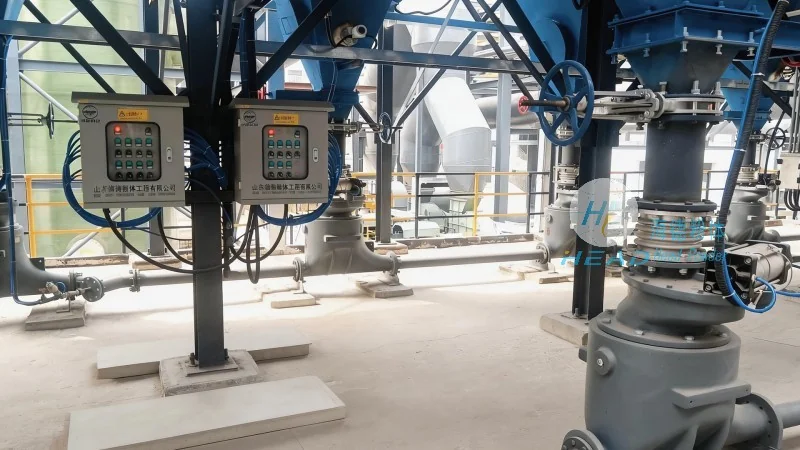
Compared to traditional mechanical conveying methods, pneumatic conveying offers several advantages when handling epoxy resin. One of the primary benefits is the ability to maintain the integrity of the resin, as the system minimizes physical contact and exposure to contaminants. This is particularly important for epoxy resin, which can be sensitive to moisture and other environmental factors. Additionally, pneumatic conveying systems are capable of handling fine powders and can operate over longer distances without significant loss of material. The system also allows for easy integration with other processing equipment, enhancing overall production efficiency.
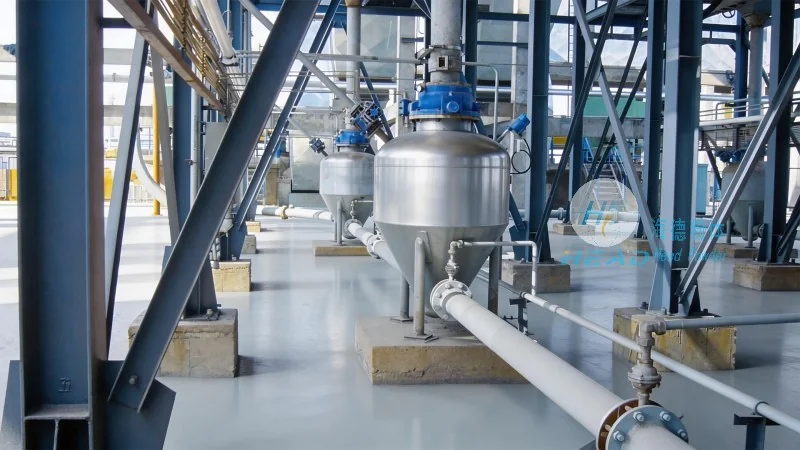
HeadPowder understands that each industrial application has unique requirements, and therefore, offers customized pneumatic conveying solutions for epoxy resin. The company's engineers work closely with clients to design systems that meet specific operational parameters, such as flow rates, pressure requirements, and material handling capacities. Whether for small-scale laboratory applications or large-scale industrial production lines, the systems can be scaled to accommodate varying production volumes. This flexibility ensures that clients receive a solution that is both efficient and cost-effective, aligning with their specific business needs.
In conclusion, epoxy resin pneumatic conveying lines are a sophisticated and efficient method for transporting epoxy resin in various industrial settings. By leveraging the principles of pneumatic conveying, these systems offer reliable performance, material integrity, and adaptability to diverse applications. HeadPowder, with its expertise in material handling solutions, continues to provide high-quality, customized systems that meet the evolving needs of industries relying on epoxy resin. The combination of advanced technology and tailored design ensures that clients achieve optimal results in their material handling processes.

 Shandong Headpowder Engineering Co., Ltd.
 156-6277-7102(Manager Zhang)
  0531-83386006
  Zhangqiu District, Jinan City, Shandong Province, China
telephone
WeChatconsult
top